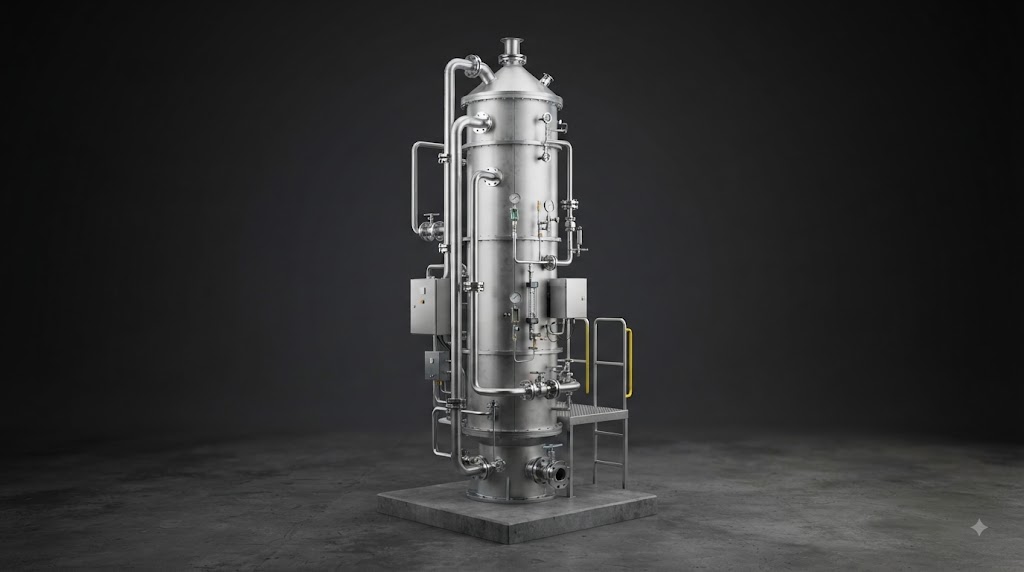
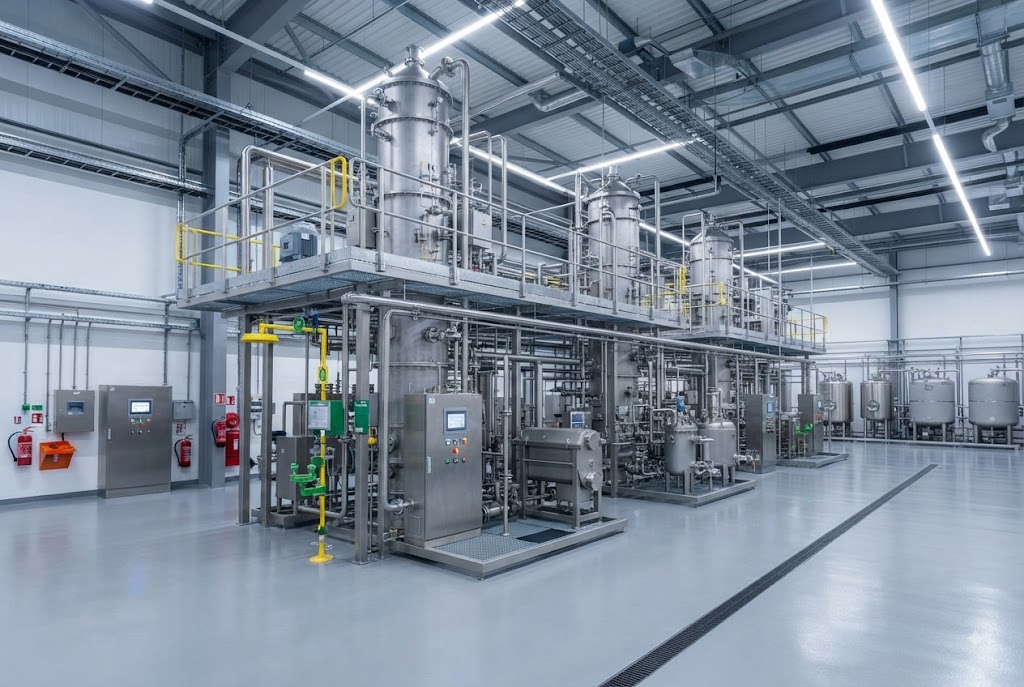
Albemarle has advanced its Atacama direct lithium extraction project with pilot recoveries exceeding 90%, marking a significant technical milestone for brine processing technology. This achievement suggests potential transformation in extraction economics pending further regulatory approvals and commercial-scale validation.
For procurement teams and chemical traders, successful DLE development represents a structural shift in long-term lithium supply dynamics. Higher recovery rates from existing brine resources could unlock substantial incremental volume without proportional environmental footprint expansion.
Buyers should monitor this technology’s progression closely while maintaining realistic timelines for commercial impact. Pilot success does not guarantee immediate supply relief, but it does validate pathways that may reshape sourcing strategies within the next decade.
Understanding the Significance of 90% Plus Recovery Rates
Traditional solar evaporation ponds in the Atacama typically achieve lithium recoveries between 40% and 60% over extended processing cycles spanning twelve to eighteen months. The reported above-90% pilot recovery represents a near-doubling of resource utilization efficiency from the same brine feedstock.
Higher recovery rates fundamentally alter project economics by spreading fixed capital and operating costs across greater output volumes. Unit cost reductions from improved yield can offset the higher processing intensity that DLE technologies inherently require versus passive evaporation.
Recovery consistency matters as much as peak performance for commercial viability. Pilot results demonstrating sustained high recovery across variable feed compositions and operating conditions provide stronger validation than single-point achievements under optimized test parameters.
The 90% threshold also carries psychological significance for investors and regulators evaluating DLE bankability. Crossing this performance barrier addresses longstanding skepticism about whether selective extraction technologies could match conventional methods on both technical and economic metrics simultaneously.
Procurement teams should recognize that pilot recoveries represent best-case scenarios that commercial operations may not immediately replicate. Scale-up factors, equipment reliability and operational learning curves typically reduce realized performance below laboratory or pilot benchmarks during early production phases.
How DLE Technology Differs From Conventional Evaporation
Direct lithium extraction employs selective sorbents, ion exchange resins or membrane systems to isolate lithium ions directly from brine rather than relying on sequential evaporative concentration. This active separation enables processing timelines measured in hours or days rather than months or years.
Water consumption profiles differ substantially as DLE systems typically reinject depleted brine rather than losing vast quantities to atmospheric evaporation. This characteristic addresses growing regulatory and community concerns about aquifer depletion in arid lithium-producing regions.
Footprint requirements shrink dramatically compared to multi-hectare evaporation pond networks. Concentrated processing facilities enable higher production density per unit of land area, reducing surface disturbance and visual impact in environmentally sensitive areas.
Product quality control improves through continuous processing versus batch-wise pond harvesting subject to weather variability and contamination risks. Consistent battery-grade specifications become more achievable when extraction occurs in controlled industrial environments rather than open-air basins.
Energy intensity increases relative to passive solar evaporation, creating different cost sensitivities. DLE economics depend heavily on electricity pricing and renewable energy access, making site-specific power infrastructure critical to commercial competitiveness.
Implications for Future Lithium Supply Economics
Successful DLE commercialization at Atacama would effectively double recoverable lithium from existing concession areas without expanding permitted extraction footprints. This intensification pathway offers volume growth that sidesteps many permitting and social license challenges associated with new greenfield projects.
Lower unit costs from higher yields could establish new competitive benchmarks that pressure marginal producers globally. Operations unable to match improved recovery economics face margin compression or rationalization as industry cost curves shift downward.
Capital intensity per tonne of annual capacity may decrease despite higher upfront technology investment because smaller physical infrastructure produces equivalent output. Reduced land, pond construction and working capital requirements improve project returns and accelerate payback periods.
Geographic applicability extends beyond Atacama to other brine deposits previously considered subeconomic due to low concentrations or unfavorable chemistry. DLE selectivity enables viable extraction from resources that conventional methods cannot process profitably, expanding global reserve bases.
Buyers should model DLE-derived supply as probabilistic rather than deterministic in near-term planning. Commercial validation, regulatory approval and construction timelines suggest meaningful volume contributions remain several years away despite encouraging pilot results.
Regulatory and Validation Pathways Ahead
Chilean authorities maintain stringent oversight of lithium extraction technologies given strategic resource designation and environmental sensitivity. DLE deployment requires comprehensive environmental impact assessments demonstrating aquifer protection, energy sustainability and community benefit sharing.
Regulatory approval timelines extend beyond technical validation to include stakeholder consultation processes with indigenous communities and regional governments. Social license considerations carry equal weight to engineering feasibility in determining project advancement authorization.
Third-party verification of pilot results provides credibility necessary for financing and permitting decisions. Independent engineering firms must validate recovery claims, mass balances and environmental performance before regulators and investors accept disclosed metrics as bankable.
Technology licensing and intellectual property frameworks influence deployment speed and competitive dynamics. Proprietary DLE processes may face restrictions on transfer or replication that limit broader industry adoption regardless of technical merit.
Buyers tracking DLE progress should distinguish between technical milestones and regulatory approvals. Announcements celebrating pilot achievements frequently precede permitting decisions by years, creating information asymmetry that optimistic market participants may misinterpret as imminent supply.
DLE advancement represents long-term structural change rather than near-term tactical opportunity. Procurement strategies must balance current supply security needs with positioning for eventual technological disruption without premature commitment to unproven capacity.
Monitor Albemarle’s quarterly disclosures and regulatory filings for concrete validation milestones rather than relying solely on press release headlines announcing pilot achievements.
Maintain diversified sourcing portfolios that do not assume DLE-derived volume will materialize within current contract planning horizons despite encouraging technical indicators.
Engage technology developers and project sponsors early to understand qualification requirements and potential offtake structures for future DLE production.
Evaluate how DLE economics might alter competitive positioning among existing suppliers and adjust vendor assessment criteria to reflect evolving cost curve expectations.
Participate in industry forums and technical working groups to build internal expertise on DLE capabilities and limitations before commercial negotiations begin.
Strategic patience combined with active learning positions buyers to capitalize on DLE opportunities when they mature commercially. Premature reliance on emerging technologies creates supply risk while complete dismissal forfeits first-mover advantages in relationship building and technical understanding.
Timeline Realities Versus Market Expectations
Pilot-to-commercial progression for novel extraction technologies historically spans five to ten years even under favorable conditions. Engineering design, environmental permitting, financing closure and construction execution each consume substantial calendar time independent of technical readiness.
Scale-up challenges frequently emerge when transitioning from controlled pilot environments to continuous industrial operations. Equipment reliability, maintenance protocols and workforce competency development require iterative refinement that extends ramp-up periods beyond initial projections.
Market expectations often compress realistic timelines based on enthusiasm for technological solutions to supply constraints. Buyers anchoring procurement plans to optimistic commercialization forecasts risk coverage gaps when inevitable delays occur.
Conservative modeling should assume minimum three-year lag between definitive regulatory approval and meaningful commercial volume contribution. Earlier availability represents upside scenario rather than base case for supply planning purposes.
Communication from project sponsors naturally emphasizes progress milestones while downplaying remaining hurdles. Critical evaluation of disclosure language helps distinguish between achieved results and aspirational targets that remain subject to execution risk.
Positioning for Long-Term Supply Structure Evolution
DLE advancement exemplifies how technological innovation gradually reshapes commodity supply landscapes over extended timeframes. Procurement organizations building adaptive capability now position themselves advantageously for eventual market transformation.
Supplier engagement strategies should evolve alongside technology maturation stages. Early-stage relationships focused on learning and qualification transition to commercial negotiations only after regulatory and financing milestones confirm project viability.
Contract structures for emerging supply sources require flexibility mechanisms accommodating uncertain timing and volume trajectories. Rigid take-or-pay obligations create unacceptable risk when delivery schedules remain contingent on unresolved technical and regulatory variables.
Internal capability development in extraction technology assessment provides sustainable competitive advantage. Organizations understanding DLE fundamentals evaluate supplier claims critically and identify genuine breakthroughs versus incremental improvements marketed as transformative.
Cross-functional alignment between procurement, technical and sustainability teams ensures coherent evaluation of DLE opportunities across commercial, operational and ESG dimensions. Siloed assessment misses integrated value propositions that define next-generation supply partnerships.
Ready to source lithium carbonate from verified global suppliers? Explore competitive offers on our platform today.