What Is Aluminium Stearate?
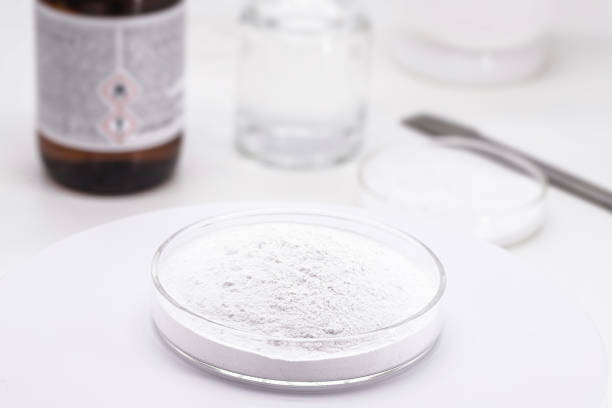
Aluminium stearate is a metallic soap formed by the reaction of aluminium ions with stearic acid, a long‑chain fatty acid. The resulting compound is a white, free‑flowing powder that is insoluble in water but disperses readily in organic solvents. Its unique combination of lubricity, thermal stability and film‑forming ability makes it a cornerstone in many industrial formulations.
How Aluminium Stearate Is Produced
The manufacturing process typically follows a two‑step route:
Neutralisation: Aluminium hydroxide or aluminium sulfate is reacted with stearic acid under controlled temperature (80‑120°C) to form a basic aluminium stearate slurry.
Drying and Milling: The slurry is filtered, washed to remove by‑products, then dried in a rotary dryer. Final milling yields a fine powder with particle sizes between 5‑30 µm, optimised for specific applications.
Modern plants employ continuous reactors and inert‑gas handling to minimise oxidation and ensure consistent product quality, a critical factor for high‑performance paint additives and plastic lubricant chemicals.
Major Applications of Aluminium Stearate
1. Paint and Coating Additive
In the coatings industry, aluminium stearate functions as a:
Dispersant – it helps pigment particles stay evenly distributed, preventing sedimentation.
Anti‑settle agent – improves the rheology of water‑borne and solvent‑based paints, giving a smoother finish.
Corrosion‑inhibitor – the aluminium component forms a protective barrier on metal substrates.
These properties translate into better colour stability, lower VOC emissions and longer shelf life for the final product.
2. Plastic Lubricant Chemical
Aluminium stearate is widely used in polyolefins, PVC and engineering plastics. Its lubricating action reduces friction during extrusion and injection moulding, resulting in:
Improved surface gloss and reduced die build‑up.
Lower energy consumption due to smoother polymer flow.
Enhanced dimensional stability of the finished part.
Because it decomposes at temperatures above 250 °C, it does not leave residues that could compromise the mechanical properties of high‑performance plastics.
3. Rubber Mould Release Agent
In rubber manufacturing, especially for automotive seals and industrial hoses, aluminium stearate acts as a mould release agent. It forms a thin, non‑sticky film on the mould surface, enabling:
Easy demoulding of complex geometries.
Reduced surface blemishes and improved product aesthetics.
Extended mould life due to decreased wear.
Its compatibility with sulfur‑cured and peroxide‑cured rubbers makes it a versatile choice across the rubber sector.
Why Demand Patterns Are Shifting in 2026
Several macro‑level forces are reshaping the aluminium stearate market:
Stringent Environmental Regulations: The push for low‑VOC and water‑based coatings is driving formulators toward metal‑soap chemicals that can replace traditional solvent‑heavy additives.
Growth of Sustainable Plastics: Bi‑based polymers and recycled plastics require effective lubricants that do not introduce heavy metals. Aluminium stearate’s low toxicity profile positions it well against alternatives such as zinc stearate.
Automotive Electrification: Electric vehicle (EV) production demands lightweight, high‑performance rubber seals and plastics. The efficiency gains from aluminium stearate‑based lubricants directly support weight‑reduction targets.
Supply‑Chain Diversification: Post‑pandemic disruptions have prompted manufacturers to source raw stearic acid from renewable feedstocks, stabilising the supply of aluminium stearate.
Consequently, the global market is projected to grow at a CAGR of 4.5% through 2028, with Asia‑Pacific accounting for over 55% of total demand.
Key Considerations for Buyers and Formulators
When selecting aluminium stearate, stakeholders should evaluate:
Purity Level: High‑purity grades (<99%) are essential for optical coatings, while lower grades may suffice for bulk rubber applications.
Particle Size Distribution: Finer particles enhance dispersibility in paints, whereas coarser grades improve melt flow in plastics.
Surface Treatment: Some manufacturers offer surface‑modified aluminium stearate (e.g., silica‑coated) to further improve compatibility with specific polymer matrices.
Partnering with suppliers that provide technical support and batch‑to‑batch consistency can shorten development cycles and reduce formulation risk.
Future Outlook
Innovation is expected to focus on:
Hybrid metal‑soap systems that combine aluminium stearate with biodegradable fatty acids.
Nanostructured aluminium stearate particles for enhanced barrier properties in high‑performance coatings.
Integration of digital twin modelling to predict the performance of aluminium stearate in complex formulations.
These trends will reinforce the role of aluminium stearate as a multi‑functional additive, cementing its place in the evolving landscape of metal‑soap chemicals.