Anti-Caking Agents: The Overlooked Category Facing New Silica Regulations
Anti-caking agents rarely attract the same attention as sweeteners, colors or preservatives, but they perform an essential function across the food-ingredient supply chain. Now, renewed regulatory scrutiny of silicon dioxide is forcing manufacturers to look more closely at a category that has traditionally been treated as a low-cost formulation input.
Powdered food ingredients create a deceptively difficult manufacturing problem.
Salt needs to remain free-flowing.
Milk powder must not form hard lumps.
Spices need to move consistently through dosing equipment.
Protein powders must remain dispersible.
Premixes need to maintain uniformity during storage and transportation.
Without the right physical controls, moisture, pressure and temperature can cause powders to agglomerate.
That is where anti-caking agents come in.
They are added in relatively small quantities, but their impact on manufacturing efficiency can be significant.
Among the most widely recognized is silicon dioxide, commonly referred to as silica and identified as E551 in the European Union.
What Does an Anti-Caking Agent Actually Do?
Anti-caking agents help prevent powdered or granulated materials from sticking together.
They can work by:
Absorbing small amounts of moisture
Creating physical separation between particles
Reducing surface adhesion
Improving powder flow
Limiting agglomeration during storage
The objective is simple:
Keep the powder behaving like a powder.
For food manufacturers, that can mean more consistent filling, dosing, blending and packaging.
Silicon Dioxide Has Been a Major Workhorse
Silicon dioxide is one of the established anti-caking ingredients used in food applications.
EFSA describes E551 specifically as an anti-caking agent that prevents dry powdered foods from sticking together.
Its usefulness comes from the physical properties of fine silica particles.
When appropriately dispersed through a powder, silica can reduce the tendency of particles to form larger aggregates.
This makes it valuable across products such as:
Salt
Spices
Seasoning blends
Powdered drink mixes
Food supplements
Dry ingredients
Powdered preparations
The Regulatory Story Is More Complicated Than a "Silica Ban"
One of the most important developments for buyers is that the regulatory conversation should not be described simply as a ban on silica.
EFSA's 2024 follow-up assessment concluded that silicon dioxide E551 did not raise a safety concern at current reported uses and use levels, including for infants below 16 weeks. At the same time, EFSA identified technical data issues and supported amendments to the specifications for the additive.
That distinction matters.
The regulatory direction is better understood as:
Continued authorization + tighter characterization and specification requirements
rather than:
Immediate removal of E551 from the food market.
Why Specifications Matter
EFSA's earlier assessment identified shortcomings in the EU specifications used to characterize E551, including the need for clearer characterization of particle-size distribution.
This is important because "silicon dioxide" does not describe a single material with identical physical characteristics.
Different manufacturing processes can produce silica with different:
Particle sizes
Surface areas
Structures
Moisture characteristics
Surface chemistry
Aggregation behavior
Those differences can affect both technical performance and regulatory characterization.
Synthetic Amorphous Silica Is the Key Category
Food-grade E551 generally concerns synthetic amorphous silica (SAS).
This should not automatically be confused with crystalline silica.
The distinction is important from both technical and regulatory perspectives.
Synthetic amorphous silica can include forms such as:
Fumed silica
Precipitated silica
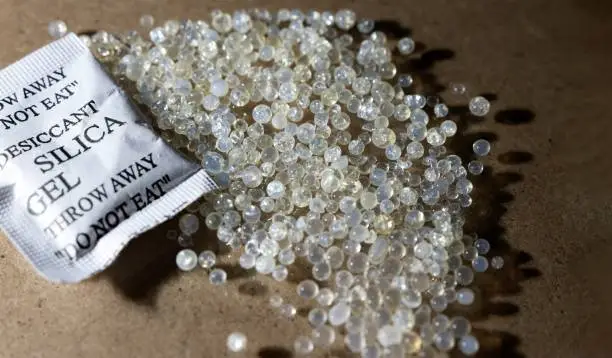
Silica gel
Hydrated silica
EFSA's scientific assessment specifically considered these forms within the E551 category.
Therefore, headlines about "silica regulation" need to be interpreted carefully.
Not every silica-containing material falls into the same regulatory category.
Particle Size Is Becoming a Procurement Issue
For years, many food buyers could treat anti-caking agents as relatively standardized commodities.
That approach is becoming less reliable.
Particle-size distribution can influence:
As regulators request better characterization, buyers may increasingly need more detailed technical documentation from suppliers.
A specification sheet that simply says "silicon dioxide, food grade" may no longer provide enough information for sophisticated procurement programs.
Nano-Scale Characteristics Add Complexity
One reason particle characterization matters is the presence of nanoscale dimensions or aggregates in some silica materials.
EFSA's assessments have highlighted uncertainties associated with toxicological evaluation and the characterization of nanosize aggregates.
This does not mean that food-grade E551 has been determined to be unsafe.
Instead, it means regulators require better information about exactly what material is being assessed.
That creates a new documentation burden for suppliers.
Manufacturers Need to Know What They Are Buying
A food manufacturer purchasing an anti-caking agent should increasingly ask:
What is the material?
How is it produced?
What is the particle-size distribution?
What impurities are present?
What specifications does it meet?
Which regulatory jurisdictions authorize its use?
These questions move anti-caking procurement from commodity purchasing toward technical qualification.
Impurities Are Another Regulatory Focus
EFSA's follow-up work also supported changes to specifications, including attention to undesirable elements and impurities.
This matters because the regulatory risk may not come from the primary ingredient itself.
It can come from contaminants associated with raw materials or manufacturing processes.
Potential areas of supplier scrutiny therefore include:
For food manufacturers, supplier certificates of analysis can become increasingly important.
Why Anti-Caking Agents Matter More Than Their Dosage Suggests
Anti-caking agents are usually used at relatively low concentrations.
That can make them appear commercially insignificant.
But their operational importance can be much larger.
A small failure in anti-caking performance can result in:
Powder agglomeration
↓
Poor flow
↓
Dosing inconsistency
↓
Production interruption
↓
Higher waste
The cost of the ingredient is therefore not the same as the cost of its failure.
Salt Is a Good Example
Salt is one of the clearest examples of why flowability matters.
Salt crystals can absorb moisture and form bridges between particles.
If the material becomes difficult to handle, automated filling and dosing systems can become less efficient.
Anti-caking systems help maintain consistent flow through processing and packaging equipment.
For large-scale food manufacturers, this is an equipment-efficiency issue as much as an ingredient issue.
Seasonings Create an Even More Complex Problem
Seasoning blends can contain many different powdered components.
For example:
Salt + spices + flavor ingredients + acids + carriers
Each component can interact differently with humidity.
The blend may therefore be more prone to caking than an individual ingredient.
An anti-caking agent has to work across the entire powder matrix.
This makes formulation optimization more important.
Food Supplements Are Another Major Application
Powdered nutritional and food-supplement products can be particularly sensitive to flowability.
Manufacturers need consistent:
Filling
Tablet production
Capsule production
Sachet filling
Blending
Silicon dioxide has therefore been used extensively in powdered supplement systems.
However, food-supplement regulations can differ by jurisdiction and product category.
A supplier's food-grade documentation should therefore be matched to the intended application.
Clean-Label Pressure Is Creating a Second Challenge
Regulatory scrutiny is not the only pressure facing anti-caking agents.
Consumers are also increasingly interested in shorter and more recognizable ingredient lists.
That can make some brands reluctant to use ingredients perceived as highly processed or chemically named.
The result is a two-sided challenge:
Regulators want better characterization.
Consumers want simpler labels.
Ingredient suppliers must respond to both.
Natural Alternatives Are Attracting Attention
Manufacturers can consider alternatives to silica depending on the product.
Potential anti-caking approaches include:
However, alternatives are not automatically superior.
Each has different:
Functional performance
Regulatory status
Cost
Labeling implications
Sensory effects
Moisture behavior
Replacing E551 is therefore a formulation decision rather than a simple procurement switch.
Calcium Silicate Is an Important Alternative
Calcium silicate is another mineral-based anti-caking agent.
It can provide strong moisture-adsorption properties in selected applications.
But manufacturers need to consider whether the ingredient is authorized for their specific food category and market.
An alternative that is technically effective may still be unsuitable because of regulatory restrictions or labeling requirements.
Starch-Based Alternatives Offer a Different Strategy
Some manufacturers may explore starches or other food-derived materials as anti-caking aids.
The attraction is obvious:
Recognizable food ingredient + simpler consumer perception
But starch-based systems can have limitations.
They may contribute:
For a formulation designed around very low carbohydrate content, the trade-off may not be attractive.
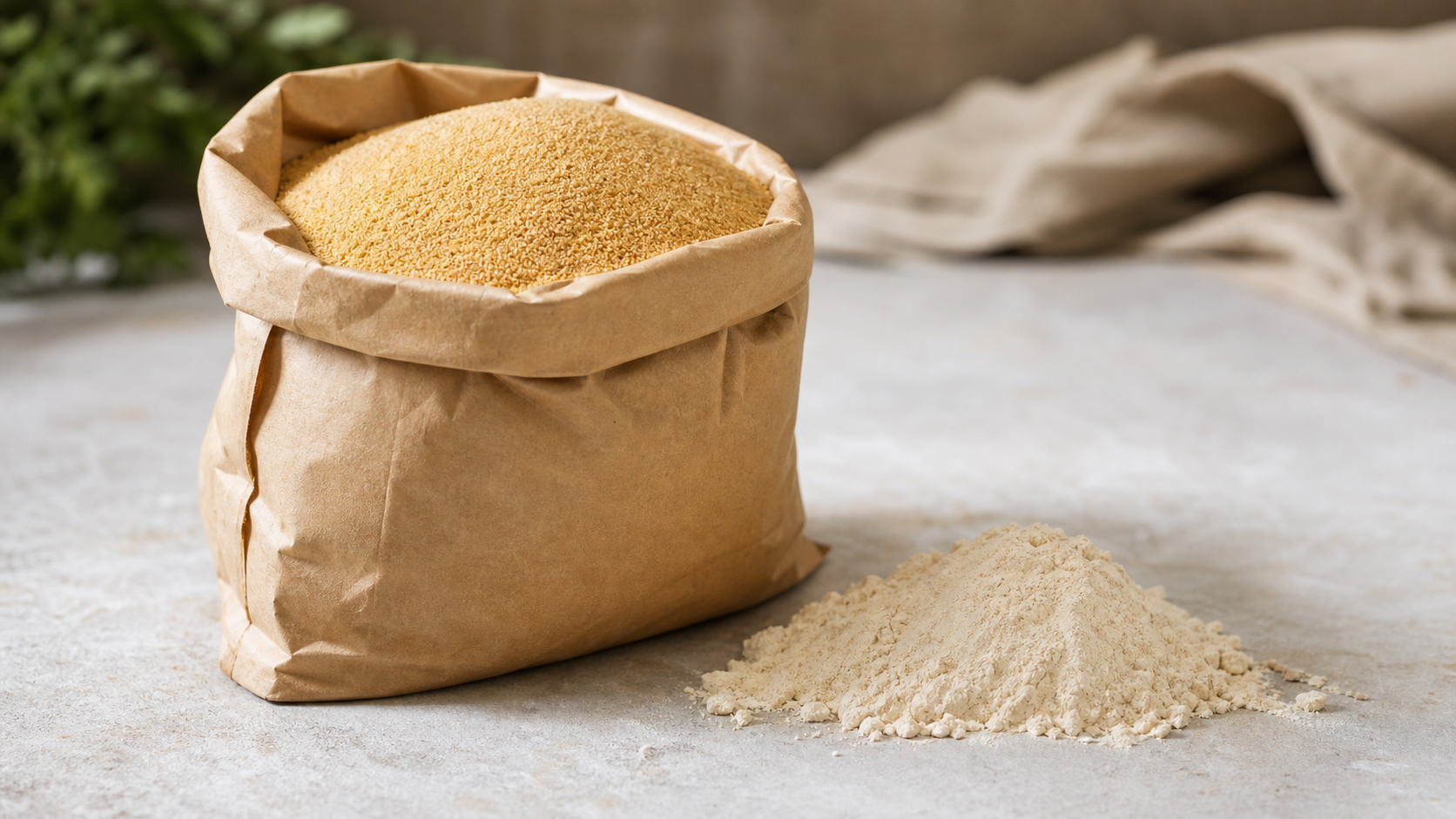
Rice-Based Anti-Caking Ingredients Can Support Clean-Label Positioning
Rice-derived powders can sometimes be used to improve powder flow and reduce caking.
They may be particularly attractive in products positioned around:
However, manufacturers need to evaluate allergen controls, sourcing, microbial specifications and supply consistency.
The Alternative May Cost More
One of the biggest barriers to replacing established silica systems is economics.
E551 is a mature industrial ingredient with established supply chains.
A premium natural alternative may cost considerably more.
The decision therefore becomes:
Lower ingredient cost + established functionality
versus
Higher ingredient cost + marketing or labeling value
For mass-market products, that calculation can be decisive.
A multinational food company may sell the same powder product across multiple markets.
But additive rules can differ.
The EU, United Kingdom, United States and other jurisdictions do not necessarily use identical authorization systems or specifications.
The UK, for example, maintains its own regulated-food authorization information for E551.
This means a global manufacturer may need to maintain jurisdiction-specific compliance documentation.
A manufacturer may face a choice between:
One formulation for all markets
or
Region-specific formulations
The second approach can increase manufacturing complexity.
But it may become necessary when regulations, customer requirements or clean-label positioning differ by market.
Supplier Documentation Will Become More Important
Anti-caking suppliers should expect greater demand for technical documentation.
Procurement teams may request:
For premium food products, traceability may also become a purchasing requirement.
The Manufacturing Route Matters
Not all silica is produced through the same process.
Manufacturing routes can affect physical characteristics.
Suppliers should therefore be able to explain:
Raw material → Production process → Purification → Drying → Milling → Classification → Final food-grade material
Understanding this chain helps buyers assess both technical performance and regulatory risk.
Manufacturers should avoid evaluating an anti-caking agent solely by reading a specification sheet.
Performance should be measured.
Useful tests include:
Flowability
How easily does the powder move through equipment?
Caking Strength
How much force is required to break agglomerates?
Moisture Sensitivity
How does performance change under high humidity?
Storage Stability
Does the powder remain free-flowing over time?
Dispersion
Does the anti-caking agent distribute uniformly?
Dosing Accuracy
Can automated equipment maintain consistent dosing?
These measurements turn anti-caking from a passive ingredient into a measurable process-control variable.
Humidity Is the Enemy
Many caking problems begin with moisture.
Relative humidity can influence:
Surface moisture
Particle adhesion
Dissolution
Crystal growth
Agglomeration
Therefore, anti-caking performance should be tested under realistic storage conditions.
A material that performs well in a dry laboratory may behave differently in a humid warehouse.
Packaging Is Part of the Solution
The anti-caking agent is only one part of powder stability.
Manufacturers should also evaluate:
A strong anti-caking system cannot compensate indefinitely for poor moisture protection.
Supply Chain Concentration Is Another Risk
Silica is a global industrial commodity, but food-grade material requires specific production and quality controls.
A buyer should therefore distinguish between:
Global silica capacity
and
Qualified food-grade silica capacity
The second figure is much more relevant to procurement.
If a manufacturer qualifies only one grade from one supplier, its practical supply risk can be considerably higher than the global commodity market suggests.
Dual Sourcing Requires Technical Qualification
Adding a second supplier sounds straightforward.
But changing silica suppliers can alter:
The replacement may meet the same chemical specification while performing differently in the finished product.
Therefore, alternate suppliers should be tested before being needed.
The Regulatory Change Could Reshape Supplier Competition
If specifications become more detailed, suppliers with strong analytical capabilities may gain an advantage.
The competitive landscape could increasingly favor companies able to provide:
This could make technical capability as important as production scale.
Procurement Should Track Regulation Proactively
Food companies should not wait until a regulation changes before reviewing their anti-caking portfolio.
A useful monitoring system should track:
EFSA opinions
European Commission regulations
National food-additive rules
Supplier specification changes
Customer clean-label requirements
This allows R&D teams to prepare alternatives before a compliance deadline creates pressure.
The European Commission maintains an ongoing re-evaluation program for food additives authorized under the EU framework.
What Buyers Should Ask Today
A procurement checklist for E551 should include:
What exact form of silicon dioxide is supplied?
Is it synthetic amorphous silica?
What is the particle-size distribution?
What are the limits for lead and other undesirable elements?
What manufacturing route is used?
What food categories is the product authorized for?
Does the specification meet current EU requirements?
What documentation is available for other markets?
What alternative grades are available?
Is a second production source qualified?
These questions can identify regulatory exposure before it becomes a supply problem.
Should Manufacturers Move Away From Silica?
Not necessarily.
EFSA's 2024 follow-up assessment did not identify a safety concern at current reported uses and use levels.
The stronger conclusion is that manufacturers should understand and control the exact material they are purchasing.
For many applications, E551 may continue to offer an excellent combination of:
Low dosage
Strong functionality
Established supply
Competitive cost
Regulatory familiarity
The key issue is whether the supplier can meet evolving specifications.
The More Strategic Approach
Food manufacturers should divide anti-caking strategies into three levels.
Level 1 — Maintain
Continue using qualified E551 where it performs well and remains compliant.
Level 2 — Qualify
Develop a second silica supplier or alternative E551 grade.
Evaluate non-silica alternatives where clean-label positioning or future regulatory requirements justify the cost.
This approach avoids unnecessary reformulation while reducing long-term risk.
Conclusion
Anti-caking agents may be one of the least visible categories in food formulation, but they are essential to the performance of thousands of powdered products.
Silicon dioxide E551 has been a major workhorse because it provides effective control of powder flow and caking at relatively low use levels. EFSA's recent work does not amount to a blanket ban; rather, it reinforces the importance of better characterization and tighter specifications for the material.
That distinction is important for food manufacturers.
The immediate challenge is not necessarily finding a replacement for silica.
It is understanding exactly what is being supplied, how it is manufactured, what particle characteristics it has, what impurities it contains and whether it meets the evolving regulatory requirements of each target market.
At the same time, clean-label trends are encouraging manufacturers to investigate starches, rice-derived ingredients and other mineral-based alternatives.
The result is a category entering a more sophisticated phase.
Anti-caking agents are no longer simply inexpensive processing aids added at the end of a formulation.
They are becoming part of the broader conversation around regulatory compliance, ingredient transparency, supply security and formulation resilience.
For procurement teams, the lesson is straightforward:
Do not wait for silica regulation to become a reformulation crisis. Map the specification, qualify the supply and test the alternatives now.