The 2026 Gulf supply shock has changed the way specialty chemical producers think about feedstock security. Disrupted Middle East petrochemical flows have tightened supplies of naphtha and other inputs while increasing freight costs and delivery uncertainty across downstream chemical markets.
That pressure is particularly relevant for biobased coatings, adhesives and lubricants, where formulators can replace selected petroleum-derived building blocks with renewable oils, polyols, fatty acids, starch derivatives and other biomass-based materials.
The strategy is not simply about sustainability. Producers are increasingly using biobased chemistry as a second feedstock route, giving procurement teams another option when fossil-derived raw materials become expensive or difficult to secure.
For decades, petroleum-derived chemistry has provided the foundation for a huge portion of coatings, adhesives and lubricant formulations.
The 2026 disruption exposed the vulnerability of that model. Middle East shipping constraints have affected petrochemical supply routes while higher oil, gas, freight and insurance costs have pushed raw-material costs higher for downstream manufacturers.
This creates a different procurement calculation.
Instead of asking only whether a biobased ingredient is cheaper than a conventional equivalent, formulators can now ask whether it reduces exposure to a concentrated fossil feedstock supply chain.
That distinction matters because a renewable ingredient can have strategic value even when its spot price remains above the petroleum-derived alternative.
Coatings provide one of the clearest examples of this shift.
Bio-based coating systems can use vegetable oils, natural polyols, lignin derivatives and other renewable inputs to produce alkyds, polyurethanes, polyesters and other functional materials. Research published in 2026 highlights bio-based polymers for corrosion protection, mechanical performance and other demanding coating applications.
The market is also moving beyond the idea that sustainability alone will justify adoption.
Arkema's coatings business described the sector in June 2026 as moving beyond a "green premium niche" approach, with commercial adoption increasingly dependent on combining performance, sustainability and affordability.
That is important for buyers.
A renewable resin that cannot match durability, curing behavior or weather resistance will struggle to replace an established petroleum-based product. The strongest candidates are materials that can enter an existing formulation with limited disruption.
Vegetable Oils Are Becoming Strategic Chemical Feedstocks
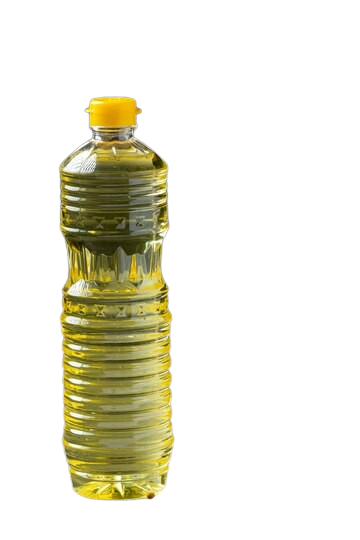
Vegetable oils provide one of the most established routes into biobased specialty chemistry.
Soybean, sunflower, linseed, castor and coconut oils can serve as starting materials for resins, polyols, esters and other functional intermediates. Researchers are also modifying these oils chemically to produce materials with properties closer to those expected from conventional specialty chemicals.
Bio-based alkyd coatings, for example, can use vegetable oils as renewable components while maintaining the oxidative curing behavior required for protective coatings.
For chemical traders, this expands the importance of agricultural feedstocks.
The competitive landscape increasingly links oleochemicals with coatings and materials markets. Availability, purity, origin and consistency of renewable oils can therefore influence downstream specialty chemical production.
Adhesives Are Targeting Drop-In Bio-Based Alternatives
Adhesives present an especially attractive substitution opportunity because formulators do not always need to redesign an entire product.
A renewable raw material that can replace a fossil-derived solvent, resin component or additive with limited formulation changes can accelerate adoption considerably.
Henkel and Swedish chemical company Sekab demonstrated this approach in February 2026 through a strategic collaboration focused on replacing conventional ethyl acetate with a bio-based alternative for industrial adhesives. Henkel described the material as a drop-in solution intended to support customer sustainability goals while reducing reliance on fossil raw materials.
This model could become increasingly important.
Procurement teams generally prefer alternatives that do not require major equipment changes or lengthy customer requalification. Drop-in or near-drop-in renewable ingredients can reduce the commercial barriers to substitution.
Bio-Based Adhesive Chemistry Is Expanding Beyond Solvents
The substitution opportunity extends beyond solvents.
Researchers are developing adhesives based on renewable feedstocks including soybean oil, lignin, cellulose derivatives, tannic acid and plant-based polymers. Recent work on bio-based polyurethane chemistry has also demonstrated adhesive systems derived from carbonated soybean oil.
These materials can potentially provide useful combinations of adhesion, flexibility, moisture resistance and mechanical strength.
However, formulation teams still need to address durability, microbial resistance, reproducibility and production economics. A recent review of bio-based additives for adhesives and coatings identifies these issues as important barriers to broader commercial deployment.
For buyers, this means qualification remains essential.
The renewable origin of an ingredient should be treated as one procurement criterion rather than the entire specification.
Lubricants are particularly interesting because vegetable oils and biomass-derived molecules can possess naturally useful lubricating properties.
Renewable oils can provide high lubricity and biodegradability in suitable applications, while chemical modification can improve oxidation stability, temperature performance and other technical characteristics.
Research published in 2026 assessed a lignocellulosic biomass route for producing furan-based bio-lubricants. The study estimated a 28.2% to 54.3% reduction in global warming potential compared with fossil-derived polyalphaolefin in the scenarios examined.
This does not make every bio-lubricant suitable for every industrial application.
High-performance machinery can impose demanding requirements around viscosity, oxidation stability, thermal resistance and equipment compatibility. But where specifications permit renewable chemistry, the supply-chain diversification benefit can be substantial.
The most commercially attractive biobased materials are not necessarily those with the highest renewable content.
They are often the products that combine several advantages:
Feedstock diversification: The manufacturer gains an alternative source of carbon.
Drop-in compatibility: Existing equipment and formulations require minimal changes.
Performance parity: The alternative meets the customer's technical specification.
Supply security: The raw material comes from a diversified geographic supply base.
Carbon benefits: Renewable content supports customer or corporate emissions targets.
This combination can turn biobased chemistry into a procurement strategy rather than a marketing exercise.
Biobased Does Not Mean Supply Risk Disappears
Switching from petroleum to biomass changes the risk profile. It does not eliminate risk.
Agricultural feedstocks can experience weather-related disruptions, crop competition, seasonal price movements and regional shortages. Transport can also become an issue when renewable materials must travel long distances to reach chemical production sites.
Procurement teams therefore need to compare the full supply chain.
A biobased ingredient sourced from a single agricultural region may not provide meaningful resilience if that region faces its own disruption.
Diversification matters more than the label "biobased."
The strongest sourcing strategies will combine multiple renewable feedstocks, supplier regions and production partners where practical.
Coatings, Adhesives and Lubricants Have Different Adoption Paths
The three categories are moving toward biobased substitution, but their commercial requirements differ.
Coatings can incorporate renewable oils, polyols, resins and additives where they deliver required durability, curing and protection.
Adhesives benefit from renewable solvents, resin components and functional additives, particularly where suppliers can provide drop-in alternatives.
Lubricants can use renewable oils and chemically modified bio-based molecules in applications where thermal and oxidation performance remain within specification.
This means buyers should avoid applying one substitution strategy across all three markets.
Each category requires its own technical qualification process.
The Feedstock Opportunity Extends Into Oleochemicals
The growth of biobased specialty formulations strengthens the connection between oleochemicals and downstream materials.
Fatty acids, glycerine, vegetable oils and fatty alcohols can serve as intermediates for numerous specialty applications. As formulators seek renewable alternatives, these feedstocks can move further up the value chain.
For traders, this creates several potential opportunities.
A supplier with dependable access to renewable oils may be able to serve customers across coatings, adhesives, lubricants, surfactants and other formulation markets. That diversification can make the feedstock portfolio more resilient than reliance on a single downstream application.
The commercial opportunity therefore sits not only in finished specialty products but also in the renewable building blocks behind them.
Procurement Teams Need New Qualification Criteria
Traditional chemical procurement often focuses on price, specification, lead time and supplier reliability.
Biobased sourcing adds several additional questions.
Buyers should evaluate:
Renewable content: How much of the molecule or formulation comes from renewable feedstock?
Feedstock origin: Which agricultural or biomass source supports production?
Supply concentration: Does the supplier depend on one region or crop?
Technical equivalence: Can the material replace the incumbent without compromising performance?
Certification: Can the supplier substantiate renewable-content claims?
Scale: Can production support commercial volumes?
Price exposure: How does the renewable feedstock respond to agricultural and energy markets?
Qualification time: How long will customer testing take before commercial adoption?
These criteria can help buyers distinguish genuine supply-chain alternatives from products that remain laboratory-scale technologies.
The Gulf Shock Could Accelerate Long-Term Substitution
The immediate effect of the 2026 disruption is higher feedstock and logistics risk.
The longer-term effect could be a change in formulation philosophy.
S&P Global reported that Middle East disruptions affected petrochemical exports and forced some producers to cut operating rates because of feedstock shortages. The company also expects shipping bottlenecks and uncertainty to continue influencing chemical trade flows.
That environment encourages manufacturers to reconsider single-source dependence.
A formulator that previously viewed a renewable raw material as an optional sustainability upgrade may now view it as a strategic hedge.
This is where the feedstocks market connects directly with specialty chemical formulation.
Cost Will Still Determine Which Alternatives Scale
Biobased substitution cannot rely indefinitely on a supply-risk argument.
Industrial customers ultimately need commercially competitive products. If a renewable alternative costs substantially more while offering no measurable performance benefit, adoption can remain limited once the immediate supply crisis fades.
The most promising materials will therefore continue to improve on both sides of the equation.
Manufacturers need larger production volumes and more efficient conversion processes. Suppliers need reliable renewable feedstock networks. Formulators need products that meet established performance requirements.
Recent coating research makes the same point: bio-based materials need reproducibility, large-scale production, performance and competitive cost to become market-ready alternatives.
What Chemical Traders Should Watch Next
The most useful signals will come from actual procurement and production decisions rather than sustainability announcements.
Traders should monitor:
New renewable-feedstock supply agreements.
Commercial launches of drop-in bio-based ingredients.
Expansion of vegetable-oil-based chemical capacity.
New bio-based resin and polyol plants.
Adhesive producers switching fossil solvents.
Lubricant companies qualifying renewable base stocks.
Coating manufacturers increasing bio-based resin content.
These developments can reveal where substitution has moved from R&D into commercial purchasing.
Companies that establish dependable supply early may gain an advantage as more formulators seek alternatives to volatile fossil feedstocks.
The Bottom Line for Specialty Chemical Buyers
The 2026 Gulf supply shock has given biobased chemistry a stronger commercial rationale. Coatings, adhesives and lubricants are particularly relevant because their formulations can incorporate renewable oils, polyols, solvents, resins and functional additives without necessarily abandoning established performance requirements.
The next phase of substitution will depend on more than sustainability claims. Reliable supply, technical performance, competitive economics and feedstock diversification will determine which biobased materials move from niche products into mainstream industrial formulations.