Chemical Logistics Hits $318 Billion: What's Actually Driving Growth in a Down Cycle
The global chemical industry is navigating a difficult operating environment in 2026. Capacity additions, weak margins, volatile energy costs, changing trade policies and uneven downstream demand are putting pressure on chemical producers. Yet one part of the value chain continues to expand: chemical logistics.
The global chemical logistics market is estimated at approximately $317.92 billion in 2026, up from $303.06 billion in 2025, according to The Business Research Company. It is projected to reach $381.22 billion by 2030, representing a 4.6% CAGR. (Research and Markets)
Other market estimates vary considerably because research firms use different definitions and market boundaries. For example, Fortune Business Insights estimates the 2026 market at $241.57 billion, while Coherent Market Insights puts it at $313.10 billion. (Fortune Business Insights)
The important signal is therefore not the exact headline number. It is that chemical logistics is growing even while parts of the chemical manufacturing cycle remain under pressure.
Why Logistics Can Grow During a Chemical Down Cycle
At first glance, the trend appears contradictory.
If chemical producers are facing weak demand and lower utilization, why would logistics companies benefit?
The answer is that chemical logistics demand depends on more than chemical production growth. It is also influenced by where chemicals are produced, where they are consumed, how far they must travel and how complicated the supply chain has become.
Chemical supply chains are becoming more geographically fragmented.
A manufacturer may source:
Feedstock from the Middle East
Intermediates from China
Specialty additives from Europe
Packaging from Southeast Asia
Final products from India
Customers across North America and Europe
Even if total chemical consumption grows slowly, this kind of fragmented network can increase transportation, warehousing and handling requirements.
Driver 1: Chemical Trade Is Becoming More Complex
One of the strongest structural drivers is the increasing complexity of international chemical trade.
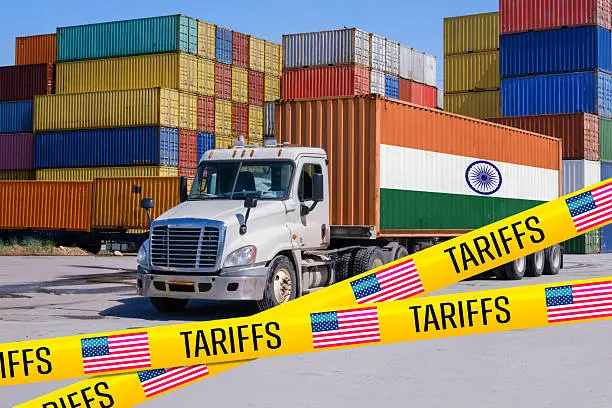
Trade restrictions, tariffs, geopolitical tensions and supply-chain disruptions are pushing companies to diversify sourcing and manufacturing locations.
Instead of relying on a single supplier or production hub, buyers are increasingly developing multi-origin supply networks.
That creates additional logistics requirements:
More suppliers → more shipping lanes → more inventory points → more warehouses → more transportation coordination.
For chemical logistics providers, this creates demand even when overall chemical volumes are not growing rapidly.
Driver 2: Hazardous Chemicals Require Specialized Logistics
Chemical transportation is fundamentally different from conventional freight.
Hazardous materials require specialized packaging, certified vehicles, trained personnel, segregation, documentation, emergency-response procedures and regulatory compliance.
This creates a relatively high barrier to entry.
The latest market research indicates that hazardous chemicals account for a substantial share of chemical logistics activity, while demand for specialized services continues to increase. (Mordor Intelligence)
For logistics providers, this specialization can protect margins better than standardized freight markets where competition is largely based on price.
Driver 3: Storage Is Becoming More Strategic
Warehousing is no longer simply a place where chemicals wait before delivery.
Companies increasingly use storage capacity as a supply-chain buffer.
When shipping routes are disrupted or lead times become unpredictable, maintaining inventory closer to customers can reduce production interruptions.
This is particularly important for:
Chemical logistics providers that can combine transportation with compliant storage can therefore capture more value from each shipment.
Driver 4: Supply-Chain Resilience Has a Price
The pandemic, Red Sea disruptions, geopolitical tensions and tariff uncertainty have changed how chemical companies think about logistics.
Previously, procurement teams often optimized primarily for:
Lowest transportation cost.
The priority is increasingly:
Lowest total supply-chain risk at an acceptable cost.
That means companies are willing to pay for:
The result is a shift from logistics as a cost center to logistics as a resilience function.
Driver 5: Digitalization Is Creating New Value
Technology is another major growth driver.
Chemical logistics providers are increasingly deploying:
Market research identifies digitalization, IoT, automation and data analytics as important contributors to chemical logistics growth. (IMARC Group)
The value is particularly high for hazardous chemicals because customers need visibility into shipment location, temperature, handling conditions and potential delays.
Driver 6: Specialty Chemicals Are Changing the Revenue Mix
Not all chemical logistics is commodity freight.
Specialty chemicals increasingly require higher service levels because they may be:
This creates opportunities for logistics companies to charge for specialized services rather than simply transportation.
The shift is important because weak commodity-chemical margins can coexist with stronger demand for high-value logistics services.
Asia-Pacific Remains a Major Growth Engine
Asia-Pacific remains one of the most important regions for chemical logistics.
Fortune Business Insights estimates that Asia-Pacific accounted for 63.83% of the global chemical logistics market in 2025, while other research firms also identify the region as a major growth market. (Fortune Business Insights)
China remains a major chemical manufacturing center, while India and Southeast Asia are expanding their chemical production and downstream manufacturing capabilities.
This is creating new logistics corridors across:
China → Southeast Asia → India → Middle East → Europe
The growth of chemical hubs in Singapore and Malaysia is also supporting cross-border logistics activity across Asia. (Coherent Market Insights)
The Growth Is Not Just About More Trucks
One misconception is that chemical logistics growth simply means more transportation.
The market is actually expanding across several layers:
Logistics Layer | Growth Opportunity |
|---|
Transportation | Bulk chemical and hazardous-material movement |
Warehousing | Regional inventory buffers |
ISO tanks | Cross-border bulk liquid transportation |
Intermodal | Rail-road-sea combinations |
Temperature control | Specialty and sensitive chemicals |
Customs | Increasing cross-border complexity |
Digital visibility | Real-time tracking and analytics |
Compliance | Documentation and regulatory management |
Green logistics | Lower-emission transportation |
Transportation and distribution remain the largest service segment in several market estimates, but specialized and value-added services are becoming increasingly important. (Coherent Market Insights)
Green Logistics Is Becoming Commercially Relevant
Environmental regulation is also reshaping chemical transportation.
Chemical companies increasingly have to measure and reduce supply-chain emissions, while logistics providers are investing in:
Alternative-fuel vehicles
Electric fleets
Rail transportation
Intermodal networks
Route optimization
Energy-efficient warehouses
Lower-carbon shipping options
This is particularly relevant in Europe, where chemical producers face increasing pressure to reduce Scope 3 emissions.
The result could be a new competitive distinction:
Lowest-cost logistics vs. lowest-carbon compliant logistics.
What a $318 Billion Market Means for Chemical Procurement
For chemical buyers, the growth of logistics spending has an important implication.
The purchase price of a chemical is no longer enough to determine the best supplier.
Procurement teams increasingly need to calculate:
Chemical price + freight + insurance + customs + tariffs + warehousing + handling + inventory carrying cost + compliance cost
This is the true landed cost.
A supplier offering a chemical at $900/MT may be less competitive than one offering $930/MT if the second supplier has a much cheaper and more reliable logistics route.
That makes logistics intelligence increasingly important in chemical procurement.
Digital Chemical Marketplaces Could Capture This Opportunity
The growth of chemical logistics also creates an opportunity for B2B chemical marketplaces.
A next-generation marketplace could connect:
Chemical supplier → Product → Origin → Freight → Route → Tariff → Warehouse → Landed cost
Instead of simply allowing buyers to compare chemical prices, the platform could calculate the estimated delivered cost for each supplier.
For example:
Supplier | Product Price | Freight | Duties & Fees | Estimated Landed Cost |
|---|
Supplier A | $900/MT | $100 | $80 | $1,080 |
Supplier B | $930/MT | $60 | $40 | $1,030 |
Supplier C | $875/MT | $160 | $75 | $1,110 |
In this scenario, Supplier B wins despite having the highest chemical price.
This is where logistics data becomes procurement intelligence.
The Down Cycle May Actually Accelerate Logistics Innovation
A weak chemical cycle can force manufacturers to become more efficient.
When margins are compressed, companies start examining every component of their cost structure.
Logistics is an obvious target.
Chemical producers therefore have stronger incentives to:
Consolidate shipments
Optimize routes
Reduce empty miles
Improve warehouse utilization
Increase container utilization
Use multimodal transportation
Automate documentation
Improve demand forecasting
Reduce inventory buffers where possible
Logistics companies capable of delivering these efficiencies can gain market share even when chemical volumes remain relatively weak.
The Biggest Risk: Cost Inflation
The growth story does not mean logistics providers are guaranteed higher profits.
Chemical logistics remains exposed to:
The specialized nature of chemical transportation also means that compliance costs can be significant.
Therefore, market growth can occur simultaneously with margin pressure.
Outlook
The chemical logistics market is approaching a scale of roughly $318 billion in 2026, according to The Business Research Company's estimate, with the market expected to continue expanding through the end of the decade. (The Business Research Company)
But the most important story is not simply market size.
Chemical logistics is benefiting from a structural transformation in global chemical supply chains.
More fragmented production, longer trade routes, stricter safety requirements, specialty-chemical growth, supply-chain resilience and digitalization are all increasing the amount of logistics infrastructure and intelligence required to move chemicals.
That explains why chemical logistics can continue growing even during a challenging chemical cycle.
The industry is moving from “move the product as cheaply as possible” toward “move the right product, through the right route, with the right compliance and visibility, at the lowest total landed cost.”
For chemical manufacturers, logistics providers and digital procurement platforms, that shift may ultimately be more important than the headline $318 billion market figure itself.