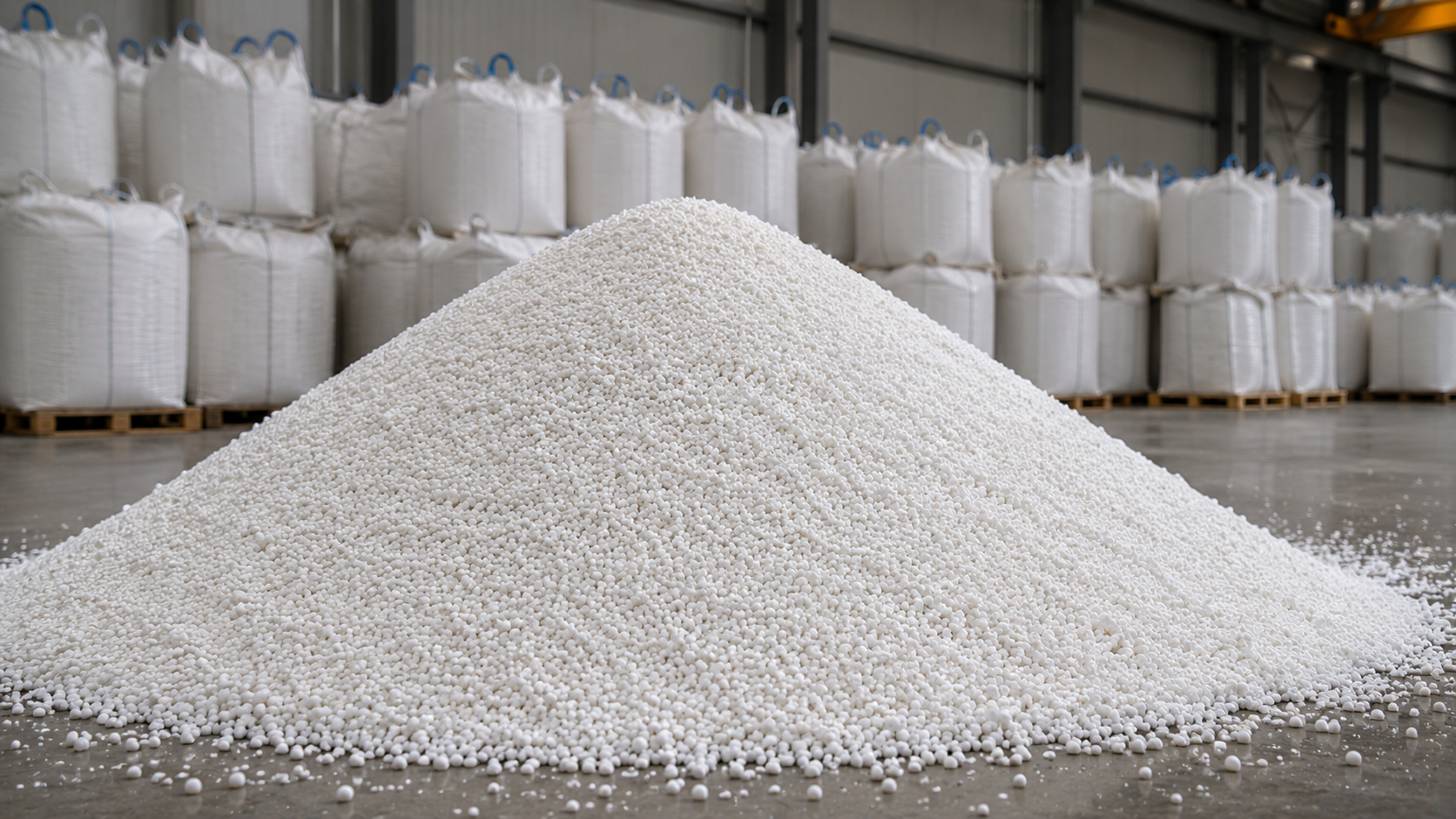
China's decision to withhold urea and phosphate exports until August is creating a significant new variable for global nitrogen chemical markets. The restriction is tightening available supply, increasing procurement pressure and sending knock-on effects into ammonia-linked petrochemical pricing.
For chemical traders, importers and industrial buyers, the issue extends beyond fertilizer availability. Urea and phosphate trade flows influence nitrogen market sentiment, feedstock economics and purchasing decisions across several connected chemical value chains. As Chinese exports remain restricted, buyers must reassess sourcing strategies, inventory levels and exposure to price movements linked to ammonia.
China’s Export Halt Changes the Nitrogen Supply Balance
China plays an important role in international fertilizer trade, so any extended reduction in export availability can quickly affect market expectations. With urea and phosphate exports being withheld until August, buyers face a narrower pool of immediately available material.
The restriction has increased attention on alternative suppliers and regional inventories. Importers that previously relied on Chinese cargoes may need to compete for replacement volumes from other producing regions, creating additional pressure on freight, availability and delivered pricing.
The impact also reaches beyond the individual products directly affected. Nitrogen chemicals operate within an interconnected chain where changes in urea supply can influence ammonia demand, production economics and pricing expectations for downstream industrial users.
Why Urea and Phosphate Restrictions Matter for Ammonia-Linked Pricing
Ammonia-linked pricing describes market relationships where ammonia costs influence the economics of downstream nitrogen chemicals and industrial products. When supply conditions change for major nitrogen products, market participants often reassess the value of the underlying feedstock and related chemical chains.
The current export halt creates several potential pressure points:
Tighter nitrogen availability: Reduced Chinese export volumes limit the amount of urea and phosphate material available to international buyers, especially those seeking prompt cargoes.
Higher replacement costs: Buyers searching for alternative supply may face higher procurement costs as competing demand moves toward other origins.
Stronger ammonia market sensitivity: Traders may pay closer attention to ammonia economics as nitrogen supply tightens and downstream purchasing requirements become more urgent.
Greater price volatility: Market participants must respond to policy-driven supply changes rather than relying only on normal production and consumption patterns.
This dynamic matters for petrochemical buyers because ammonia is not an isolated commodity. Its pricing environment can influence broader decisions across nitrogen-based chemical supply chains.
Procurement Pressure Is Building Across Global Trade Routes
The export halt changes the way buyers approach procurement. A company that normally purchases based on regular Chinese availability may now need to consider alternative origins, longer lead times and greater price uncertainty.
Procurement teams should focus on several immediate priorities:
Reviewing Chinese supply exposure: Buyers should identify how much of their current or planned nitrogen chemical supply depends on Chinese exports.
Checking replacement origins: Alternative suppliers may offer additional security, but buyers need to assess production capacity, logistics and consistency of specifications.
Monitoring inventory coverage: Lower stock levels can increase exposure to spot market movements when replacement cargoes become more expensive.
Comparing delivered economics: A lower headline price from a distant origin may not remain competitive after freight, insurance and handling costs.
The current market therefore rewards procurement teams that combine price monitoring with supply chain planning. A short-term purchasing decision can have a larger impact when global availability remains restricted.
Alternative Suppliers Gain Strategic Importance
China's export restrictions create an opportunity for other producing regions to become more important in international nitrogen chemical trade. Buyers that need to replace Chinese volumes may increasingly evaluate suppliers based on reliability rather than price alone.
This shift can create new commercial opportunities for exporters with available urea, phosphate and related nitrogen chemical capacity. However, suppliers must also consider whether additional export demand could place pressure on their own inventories and domestic markets.
For buyers, supplier diversification becomes more valuable when a single major origin faces policy restrictions. A broader sourcing network can help reduce exposure to sudden export changes, although it may also require more complex qualification and logistics management.
The key issue is not simply finding another supplier. It is building a supply base that can continue operating when major trade flows change.
Ammonia Economics Become a More Important Market Signal
Ammonia remains a central reference point for many nitrogen chemical markets. As the supply outlook for urea and phosphate changes, traders may watch ammonia-linked economics more closely when evaluating future pricing.
The relationship can affect purchasing decisions in several ways. If nitrogen chemical availability remains constrained, buyers may accept higher prices to secure supply, while producers may reassess operating rates and the economics of downstream production.
Market participants should therefore monitor:
Feedstock cost movements that affect ammonia production economics.
Changes in nitrogen chemical availability across major exporting regions.
Import demand from markets that previously depended on Chinese supply.
The timing of potential changes to Chinese export policy.
Freight conditions that influence the final delivered cost of replacement cargoes.
These factors can interact quickly. A change in one part of the supply chain can influence purchasing behavior elsewhere, particularly when inventories remain limited.
Traders Face a More Complex Pricing Environment
For chemical traders, the current market creates both risks and opportunities. Supply restrictions can support stronger pricing for available material, but volatility can also make inventory decisions more difficult.
A trader holding material may benefit from increased demand for prompt supply. At the same time, buyers may become more cautious if they expect export restrictions to ease later, creating uncertainty around the best timing for purchases.
The most important commercial questions include:
How long will supply remain restricted?
Which alternative origins can provide dependable replacement volumes?
Will buyers increase inventories to protect against further disruptions?
How quickly can freight and logistics respond to changing trade flows?
Will ammonia-linked pricing remain under pressure as nitrogen supply tightens?
The answers will shape purchasing strategies through the remainder of the restriction period and potentially beyond it.
What the Export Halt Means for International Buyers
Importers should prepare for a market where availability and timing become just as important as the nominal product price. A buyer that waits for a lower offer may face higher costs later if prompt supply becomes scarce.
Several purchasing strategies can help reduce exposure:
Secure critical volumes earlier. Buyers with fixed production requirements should assess whether they need additional coverage before market conditions become tighter.
Maintain multiple supplier relationships. A diversified supplier base can provide greater flexibility when a major origin becomes unavailable.
Track regional price differences. Delivered costs can vary significantly depending on origin, freight and local demand.
Separate strategic inventory from speculative inventory. Companies should distinguish material required for production from stock purchased purely in anticipation of higher prices.
Monitor policy developments closely. The timing of any change to Chinese export restrictions could quickly alter market sentiment.
These steps can help procurement teams manage uncertainty without relying on a single market assumption.
The Ripple Effect Could Extend Beyond Fertilizer Markets
The immediate impact of China's export halt falls on urea and phosphate supply, but the broader implications may reach other nitrogen-related chemical markets. Connected supply chains often respond to changes in availability through shifts in pricing, substitution and purchasing behavior.
When buyers cannot access their preferred origin, they may seek alternative products, alternative suppliers or different delivery schedules. Each adjustment can influence regional demand and create new pressure points for producers and traders.
The result is a market environment where fertilizer trade policy becomes relevant to a wider group of chemical businesses. Companies involved in nitrogen-based products, ammonia-linked production or industrial chemical procurement should therefore consider the export halt as part of a broader supply chain development rather than an isolated fertilizer event.
Looking Ahead to August and Beyond
The next major market focus will be the evolution of China's export position as August approaches. The possibility of continued restrictions, changes in permitted volumes or a return of broader export availability could all influence pricing expectations.
Until greater clarity emerges, buyers are likely to remain focused on securing reliable supply and managing exposure to further market movements. Traders, meanwhile, will continue evaluating how the restriction changes regional arbitrage opportunities and the relative competitiveness of different origins.
For procurement teams, the most effective response is a combination of market intelligence and practical supply planning. The companies best positioned to manage the current environment will be those that understand the connection between export policy, nitrogen availability and ammonia-linked pricing.
Ready to source Urea (Granular) - Egypt from verified global suppliers? Explore competitive offers on our platform today.