China's Tarim Complex Expansion Signals Continued Domestic Petrochemical Self-Sufficiency Push
Introduction
China is continuing to strengthen its domestic petrochemical supply chain with the expansion of the Tarim petrochemical complex in Xinjiang, reinforcing a broader strategy of increasing local production of key chemical feedstocks and reducing dependence on imported materials.
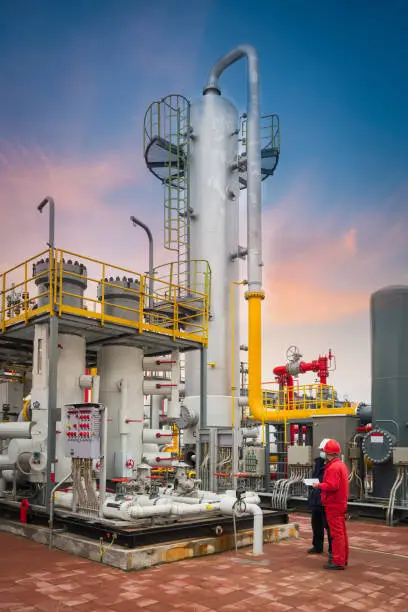
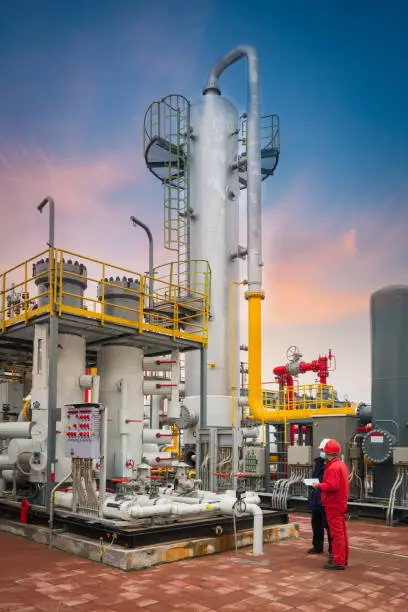
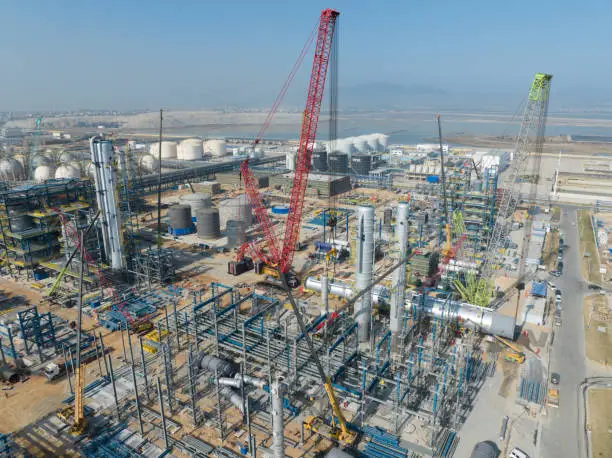
A major milestone came in July 2026 when PetroChina's Dushanzi Petrochemical Company successfully started up its 1.2 million metric tons per year Tarim Phase II ethylene project. The project completes a roughly 3-million-ton-per-year ethylene production base in the region and represents one of China's most significant recent efforts to shift petrochemical capacity toward resource-rich inland areas. (China.org.cn)
The development is important not only because of its additional capacity, but because it integrates domestic oil and gas resources, petrochemical processing, downstream plastics production and increasingly localized technology into one supply chain.
A 1.2 Million-Ton Ethylene Expansion
The Tarim Phase II project adds 1.2 million tonnes per year of ethylene capacity at the Shangku Petrochemical Industrial Park near Korla in Xinjiang.
The facility began production after receiving feedstock from supporting natural-gas processing and crude-stabilization operations connected to CNPC's Tarim Oilfield. This creates a closer link between upstream hydrocarbon resources and downstream chemical manufacturing. (China.org.cn)
The project also produces downstream petrochemical products including polyethylene and polypropylene, which are widely used in packaging, automobiles, consumer goods and industrial applications. (China Daily)
This integrated structure allows China to convert domestically produced hydrocarbon feedstocks into higher-value chemical products within the country rather than relying entirely on imported intermediates or finished petrochemicals.
Tarim Becomes a Major Inland Petrochemical Hub
The expansion has a broader geographic significance for China's petrochemical industry.
According to China's State-owned Assets Supervision and Administration Commission, the project creates the country's first 300-million-ton-class? Wait—more precisely, the Chinese source describes it as a 3-million-ton-class ethylene industrial base, not 300 million tons. The completed Tarim base therefore represents a major petrochemical center in western China. (SASAC)
This is important because China's petrochemical capacity has historically been concentrated along the eastern and coastal regions, where imported crude oil, established industrial infrastructure and major ports provide logistical advantages.
The Tarim development moves a significant amount of petrochemical production closer to domestic oil and gas resources in the country's west.
For China's supply-chain strategy, that geographic diversification can reduce some dependence on long-distance transportation between imported feedstocks, coastal processing facilities and inland consumers.
Domestic Feedstock Integration Is Central to the Strategy
One of the strongest features of the Tarim project is its integration with the Tarim Oilfield.
Rather than building an isolated petrochemical facility dependent on externally sourced feedstocks, the complex is connected to upstream natural-gas processing and crude-stabilization operations. (China Daily)
This creates an integrated pathway:
Domestic oil and gas resources → feedstock processing → ethylene production → polyethylene/polypropylene → downstream manufacturing
Such integration is strategically valuable because feedstock availability is one of the biggest determinants of petrochemical competitiveness.
It also fits China's broader effort to increase supply-chain resilience and strengthen domestic control over critical chemical production.
China's Petrochemical Self-Sufficiency Is Already Rising
The Tarim expansion comes against a wider increase in China's domestic petrochemical capacity.
A 2026 review of China's oil and gas industry reported that the country's ethylene capacity reached approximately 62.7 million tonnes per year in 2025, while its ethylene-equivalent self-sufficiency rate increased to 78.1%. (DOI)
China has continued adding large-scale ethylene and propylene capacity even as the petrochemical sector faces weak margins and intense competition.
This means the objective is not simply to maximize production. It is increasingly about building domestic capacity, supply-chain control and feedstock flexibility across strategically important chemical chains.
Technology Localization Adds Another Layer of Self-Reliance
The Tarim project also highlights China's push to reduce dependence on foreign petrochemical technology and equipment.
CNPC said that 10 of the project's 11 major production units use domestic technologies, including nine developed by the company itself. The project also includes domestically manufactured large-scale extrusion pelletizer equipment. (China Daily)
The Chinese government describes the project as having an overall 99% localization rate, further illustrating the emphasis on domestic engineering and technology capabilities. (SASAC)
For China's petrochemical sector, this matters because self-sufficiency extends beyond raw materials. Control over engineering technology, process equipment and industrial know-how can also reduce exposure to external supply restrictions.
The Green-Energy Component
The Tarim expansion is also being positioned as a lower-carbon petrochemical development.
The project is directly connected to renewable electricity from the Tarim Oilfield and is expected to consume around 1 billion kilowatt-hours of solar power annually. China.org.cn reported that the project is expected to reduce carbon emissions by approximately 1.37 million tonnes per year. (China.org.cn)
This makes the project notable because China is attempting to combine two objectives that can sometimes conflict: expanding petrochemical production while improving the energy efficiency and carbon profile of new facilities.
The project has been described as China's first petrochemical demonstration project applying a green and low-carbon approach across the entire industrial chain. (SASAC)
Why the Expansion Matters for Chemical Buyers
For chemical buyers, the Tarim expansion could have implications beyond China's domestic market.
Additional domestic ethylene, polyethylene and polypropylene production can potentially increase the availability of Chinese-origin materials and reduce China's structural requirement for imported petrochemical products.
That could influence:
Import demand for selected petrochemical intermediates
Regional polyethylene and polypropylene trade flows
China's demand for imported ethylene-equivalent feedstocks
Export competition in downstream polymers
Pricing pressure in Asian petrochemical markets
Supplier diversification for manufacturers across Asia
However, increased capacity does not automatically translate into lower prices. China's petrochemical sector is already experiencing intense competition, and profitability remains under pressure as new capacity enters the market. (DOI)
Implications for Global Petrochemical Trade
The expansion also illustrates how China's role in global petrochemical markets is changing.
As domestic capacity rises, China can increasingly satisfy its own requirements for key petrochemical products while potentially becoming a stronger exporter of selected downstream materials.
For international suppliers, this could mean a gradual reduction in access to the Chinese market for products that can be produced competitively within China.
At the same time, China's growing capacity could increase export availability when domestic demand is insufficient to absorb new production. This creates a potentially important source of additional competition for petrochemical producers elsewhere in Asia and beyond.
Supply-Chain Resilience Is Becoming a Strategic Priority
The timing of the Tarim expansion is particularly significant given recent disruptions affecting global energy and chemical supply chains.
China remains heavily connected to international oil and gas markets, but expanding domestic production and processing capacity provides an additional layer of protection against external disruptions.
The Tarim model demonstrates this approach clearly: domestic resources, inland processing, localized technology, integrated downstream production and renewable power are being combined within one industrial ecosystem.
This does not eliminate China's dependence on imported energy and chemical feedstocks. However, it can reduce exposure in selected parts of the value chain.
What It Means for China's Petrochemical Strategy
The Tarim project should therefore be viewed as part of a much larger transformation rather than as an isolated capacity addition.
China is simultaneously:
Expanding domestic ethylene and propylene capacity.
Increasing downstream polymer production.
Integrating petrochemical plants with domestic oil and gas resources.
Localizing process technology and industrial equipment.
Moving some petrochemical investment toward inland resource-rich regions.
Connecting new industrial projects with renewable electricity.
Increasing overall petrochemical supply-chain autonomy.
The result is a petrochemical industry that is becoming increasingly capable of controlling more stages of production domestically.
Conclusion
The expansion of China's Tarim petrochemical complex demonstrates that China's drive for petrochemical self-sufficiency is continuing through large-scale investment in integrated domestic production.
The start-up of the 1.2 million-ton-per-year Phase II ethylene project strengthens an inland petrochemical base that now reaches approximately 3 million tonnes of ethylene capacity. Its integration with Tarim Oilfield resources, downstream polymer production, domestic technology and solar power makes the project strategically significant beyond its headline capacity. (China.org.cn)
For the global chemical industry, the development signals that China is not simply adding petrochemical capacity—it is building greater control over the entire value chain.
As China's domestic ethylene self-sufficiency continues to rise, international chemical suppliers and Asian competitors will need to reassess how China's expanding production base could reshape import demand, regional pricing, export competition and long-term petrochemical trade flows.