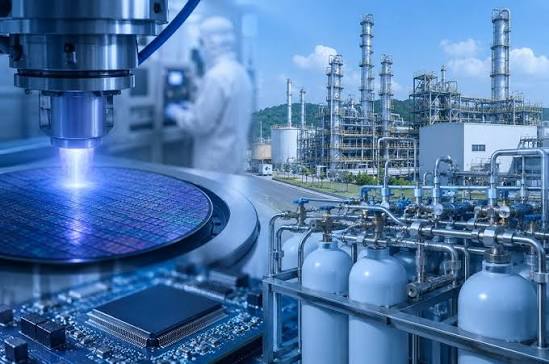
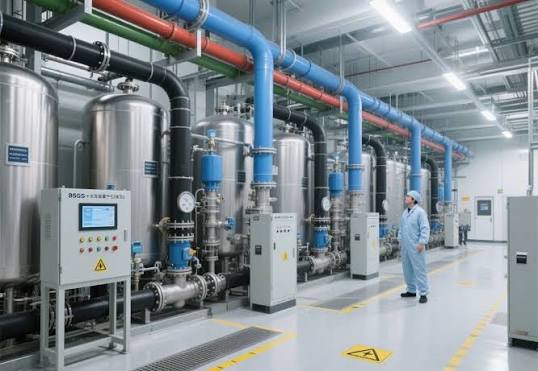
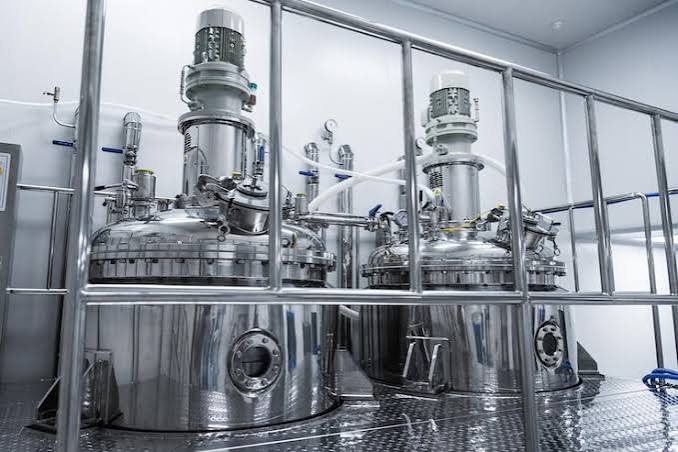
The global semiconductor localization race is moving beyond wafer fabs and chip assembly plants. Governments in the United States and India are increasingly supporting domestic production of the specialty gases and process chemicals that semiconductor manufacturers need to operate advanced facilities.
India's semiconductor push includes a ₹500-crore electronic specialty gas hub at Dholera, Gujarat, while US semiconductor policy is encouraging investment throughout the domestic manufacturing supply chain.
For chemical producers and traders, this changes the opportunity landscape.
A new semiconductor fab creates demand for high-purity gases, wet chemicals, photoresist materials, cleaning chemistry and other process inputs. Governments now increasingly view local availability of these materials as part of semiconductor security rather than simply another industrial procurement category.
Why Semiconductor Chemical Localization Matters
Semiconductor manufacturing depends on an extensive network of highly specialized materials.
A fab can require dozens of chemical products across lithography, etching, deposition, cleaning and other processes. Many must meet exceptionally strict purity specifications because trace contamination can affect wafer yields.
Historically, semiconductor manufacturers have relied on globally distributed suppliers.
That model offers efficiency but creates vulnerabilities when geopolitical tensions, transportation disruptions or export restrictions affect critical inputs.
Governments increasingly want domestic semiconductor production to have greater access to domestic or regionally secure chemical supplies.
The CHIPS Act Is Expanding the US Semiconductor Ecosystem
The US CHIPS and Science Act has helped accelerate semiconductor investment in the United States.
The policy framework does not focus solely on chip fabrication.
It also encourages development of the broader manufacturing ecosystem required to support semiconductor production.
That includes specialty chemicals and gases.
As new fabs and packaging facilities come online, chemical companies have stronger incentives to establish production and distribution capabilities close to US semiconductor clusters.
This can reduce logistics risks while creating a more integrated domestic supply network.
Specialty Gases Are a Strategic Supply Category
Specialty gases sit at the heart of several semiconductor processes.
Manufacturers use gases for deposition, etching, chamber cleaning and other highly controlled operations.
Examples include fluorinated gases, nitrogen, argon and other process-specific materials.
The commercial challenge is not simply producing the gas.
Suppliers must achieve the required purity, maintain consistent composition and deliver it through infrastructure designed for semiconductor manufacturing.
That makes electronic-grade gas production a specialized industrial capability.
India Is Building a Domestic Semiconductor Supply Chain
India's semiconductor strategy is also moving beyond chip fabrication.
The India Semiconductor Mission aims to strengthen domestic capabilities across semiconductor manufacturing, packaging and related technologies.
That creates a downstream requirement for local suppliers of gases, chemicals and other materials.
The Dholera specialty gas investment demonstrates how this ecosystem is beginning to develop.
A dedicated electronic specialty gas hub can provide a domestic source for materials that otherwise might need to travel through international supply chains.
Dholera Could Become a Chemical Supply Anchor
Dholera, Gujarat has emerged as a major location within India's semiconductor manufacturing strategy.
The planned ₹500-crore electronic specialty gas hub is particularly significant because gases represent recurring consumables for semiconductor fabs.
A local production base can offer several advantages:
Shorter supply routes for critical process gases.
Lower exposure to international logistics disruptions.
Faster replenishment during production changes.
Greater domestic technical expertise.
A platform for additional semiconductor chemical investment.
The larger significance lies in the ecosystem effect.
One specialty gas facility can encourage related suppliers to establish nearby operations.
Local Fabs Need Local Chemical Infrastructure
A semiconductor fab cannot operate as an isolated industrial project.
It needs reliable electricity, ultra-pure water, gases, chemicals, equipment, maintenance services and logistics.
That makes chemical infrastructure an important part of fab location strategy.
If chemical suppliers remain entirely dependent on distant imports, a supposedly localized semiconductor ecosystem can retain significant external exposure.
Governments therefore have an incentive to encourage chemical production alongside chip manufacturing.
India Has an Opportunity to Build Chemical Depth
India already has a substantial chemical manufacturing industry.
That gives the country an existing industrial base from which to develop semiconductor-grade materials.
However, electronic-grade chemicals require more than conventional chemical production.
Manufacturers need advanced purification, contamination control, analytical capabilities and specialized packaging.
The transition from industrial-grade production to semiconductor-grade materials can therefore create a new investment category for Indian chemical companies.
The Opportunity Extends Beyond Specialty Gases
Specialty gases are only one part of the semiconductor chemical supply chain.
As India's semiconductor capacity expands, demand can grow across multiple categories.
These include:
Each category has different technical and investment requirements.
The resulting market could support a broad network of domestic and international suppliers.
The US Has a Similar Localization Challenge
The United States faces a comparable issue.
New domestic fabs increase demand for process chemicals, but semiconductor chemical production has its own capital and qualification requirements.
A fab operator cannot simply switch from an imported chemical to a locally manufactured alternative overnight.
The new product must pass technical qualification and process validation.
This means government support for chemical manufacturing can help reduce the time required to establish domestic supply.
Dual Sourcing Can Support Localization
Companies do not need to immediately abandon established suppliers.
A more practical approach is to develop dual or multi-origin sourcing.
For example, a manufacturer could maintain an established international supplier while qualifying a domestic producer.
Once the local supplier demonstrates consistent performance, procurement teams can gradually increase its allocation.
This model balances cost competitiveness with supply resilience.
The Market for Electronic-Grade Chemicals Could Broaden
As more countries pursue semiconductor localization, demand for electronic-grade materials should expand geographically.
The United States and India are important examples, but similar strategies are developing elsewhere.
Japan, South Korea, Taiwan and European countries also maintain strong semiconductor and specialty chemical ecosystems.
This creates opportunities for chemical companies that can replicate advanced purification and manufacturing capabilities across multiple regions.
Sustainability Will Become Part of Localization
Domestic production must also address environmental requirements.
Semiconductor chemicals can involve hazardous substances, high energy consumption and demanding waste-management requirements.
New facilities therefore need strong containment, recovery and waste-treatment systems.
Suppliers that combine electronic-grade purity with efficient resource use can gain an advantage as semiconductor manufacturers tighten sustainability expectations.
Investment Should Follow the Process, Not Just the Fab
Chemical suppliers should avoid treating every semiconductor investment as an equal opportunity.
A new mature-node fab may generate different chemical demand from an advanced-node facility.
A packaging plant will require another set of materials.
An advanced memory operation will create different requirements again.
Understanding the manufacturing process allows suppliers to identify which chemical categories are likely to see the strongest demand.
What Chemical Suppliers Should Track
Companies seeking opportunities in semiconductor chemicals should monitor several signals.
Fab construction: New capacity creates future consumption.
Government incentives: Subsidy announcements can reveal where chemical localization may receive support.
Supplier qualification: New agreements with fabs can indicate emerging demand before volumes scale.
Chemical plant investment: Local purification and production projects can signal ecosystem development.
Advanced packaging: Packaging expansion creates additional demand for plating, CMP, cleaning and lithography materials.
These indicators can provide an early view of market direction.
What Procurement Teams Should Do Now
Procurement managers can prepare for localization by identifying materials most vulnerable to external disruption.
They should then:
Map current supplier concentration.
Identify domestic and regional alternatives.
Begin qualification early for strategically important materials.
Evaluate supplier expansion plans.
Consider inventory strategies during the transition.
Compare total landed cost rather than chemical price alone.
This approach helps companies capture the benefits of localization without sacrificing supply continuity.
The Next Phase of Semiconductor Localization
The semiconductor localization race is becoming a race for the entire manufacturing ecosystem.
The US CHIPS Act and India's semiconductor initiatives show how government policy can encourage investment beyond wafer fabrication and assembly.
Specialty gases are particularly important because they represent recurring, process-critical consumption.
India's ₹500-crore Dholera electronic specialty gas hub provides a concrete example of this strategy.
For US and Indian chemical suppliers, the opportunity is significant.
For global traders, the market is becoming more geographically complex, with new domestic producers competing alongside established multinational suppliers.
The Bottom Line for Specialty Chemical Suppliers
Semiconductor localization is creating a new investment cycle for specialty chemicals. The US and India are using government-backed semiconductor initiatives to encourage domestic capabilities not only in chip manufacturing but also in critical process inputs such as electronic specialty gases and high-purity chemicals.
The ₹500-crore Dholera specialty gas hub highlights India's ambition to build chemical infrastructure alongside semiconductor manufacturing. In the United States, the CHIPS Act is similarly helping create an environment in which local semiconductor supply chains can support broader domestic manufacturing ecosystems.
For chemical producers, the opportunity lies in developing semiconductor-grade purification, reliable capacity and technical support near emerging fab clusters. For traders and procurement teams, the priority should be identifying which materials need domestic or regional alternatives and qualifying those sources before supply disruptions force rushed decisions.
The semiconductor supply chain is becoming more localized, but it will not become completely domestic. The winning model will combine global competitiveness with strategically placed local capacity, giving semiconductor manufacturers both cost efficiency and greater resilience.
Ready to source Titanium Dioxide from verified global suppliers? Explore competitive offers on our platform today.