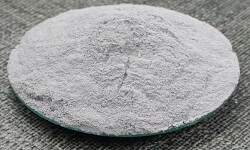
A growing body of covalent organic framework research is shifting attention from laboratory demonstrations toward materials that could support commercial batteries and electronic technologies. The latest dopant-free semiconducting COF demonstration adds to this broader transition, showing how researchers are increasingly targeting useful electronic properties without relying on additional dopants.
For chemical traders, procurement managers and advanced material buyers, this direction matters because commercialization changes the requirements around a material. Performance alone may no longer define value. Scalability, consistency, processing, supply reliability and compatibility with industrial manufacturing will become increasingly important as COFs move toward practical applications.
Why Covalent Organic Frameworks Matter for Advanced Materials
Covalent organic frameworks, commonly known as COFs, are porous crystalline materials constructed from organic building blocks connected through strong covalent bonds. Their ordered structures allow researchers to design materials with specific pore environments, chemical functionality and electronic characteristics.
This structural control makes COFs attractive for several technology areas. Battery components and electronic materials are particularly interesting because researchers can modify molecular structures to influence conductivity, charge transport and interactions with other active materials.
The commercial significance lies in this ability to design materials at the molecular level. Instead of treating a material as a fixed chemical product, developers can potentially tailor its structure around a targeted application.
From Academic Discovery to Commercial Material Development
COF research has historically focused heavily on synthesis, structural characterization and proof-of-concept performance. That foundation remains important, but the research landscape is increasingly oriented toward practical functions that could support industrial technologies.
The dopant-free semiconducting COF demonstration represents this broader direction. Semiconductor behavior is especially relevant because electronic properties can determine whether a porous organic framework has practical value in energy storage, sensing or other electronic applications.
The growing commercial focus also changes the questions procurement teams may eventually need to ask:
Can manufacturers produce the material consistently at larger volumes?
Can particle size and structural characteristics remain within defined specifications?
Can production costs support a competitive battery or electronics application?
Can suppliers provide reliable technical documentation and batch-level quality information?
Can the material integrate with existing manufacturing processes?
These questions will become more important as research moves closer to industrial adoption.
How Semiconducting COFs Could Influence Battery Materials
Battery development increasingly depends on materials that can manage ions, electrons and interfaces efficiently. COFs offer a combination of ordered porosity and chemical tunability that makes them interesting candidates for such roles.
A semiconducting COF could potentially contribute electronic functionality while maintaining a highly organized molecular structure. Researchers can also explore different organic building blocks and framework architectures to adjust the resulting material properties.
The commercial opportunity does not depend on one single battery design. Potential development pathways can include electrode-related materials, conductive framework systems and engineered interfaces where controlled molecular environments provide an advantage.
For buyers, this creates an emerging category rather than a mature commodity market. Early commercial opportunities are therefore likely to favor suppliers capable of combining advanced synthesis expertise with strong quality control.
Manufacturing Scale Could Become the Next Major Challenge
Moving a COF from laboratory research into commercial production requires more than reproducing a successful synthesis. Manufacturers need to establish repeatable processes that deliver consistent structure, purity and physical properties across larger production batches.
Scale can also introduce challenges that researchers may not encounter during small laboratory experiments. Mixing, reaction conditions, solvent management, drying and purification can all influence the final material.
For chemical traders and procurement teams, this creates several commercial considerations:
Batch consistency: Buyers will need confidence that material performance remains stable from one shipment to another.
Specification control: Structural and physical characteristics may become part of commercial purchasing specifications.
Production economics: High-performance materials still need a viable cost structure for large-scale applications.
Supply continuity: Battery manufacturers require dependable supply when materials enter qualification and production stages.
A supplier that can demonstrate reliable manufacturing at increasing volumes could gain an advantage as demand develops.
Supply Chain Implications for Chemical Buyers
The supply chain for advanced COFs differs significantly from that of established commodity chemicals. Instead of purchasing a standardized material with a long-established global market, early buyers may work with specialized producers, research-oriented manufacturers and technology-focused suppliers.
Procurement teams should therefore evaluate both the material and the supplier's development capabilities. Technical support can become just as important as price when the buyer needs help integrating a new framework into a battery or electronic material system.
Important supplier evaluation factors may include:
Production capacity and planned expansion
Raw material availability
Quality assurance procedures
Analytical characterization capabilities
Technical documentation
Custom synthesis or formulation capabilities
Ability to support qualification trials
Long-term supply commitments
This supplier relationship can be particularly important during the transition from research-scale quantities to pilot production.
What Commercialization Means for Pricing
COF pricing is unlikely to follow the same logic as mature commodity chemicals in the early stages of market development. Production scale, synthesis complexity, raw material requirements and customization can all influence the final commercial cost.
Early buyers may also pay for technical performance rather than simply purchasing material by weight. A framework that delivers a specific electronic or battery advantage could justify a higher price if it improves overall system performance.
As production expands, however, economics should become increasingly important. Larger manufacturing volumes can improve process efficiency and reduce the cost burden associated with specialized production.
This creates an important distinction for traders. The first commercial opportunities may focus on value-added performance, while later markets could become more sensitive to manufacturing efficiency and standardized specifications.
Electronics Could Expand the Addressable Market
Battery materials represent one potential commercial direction for semiconducting COFs, but electronic applications could broaden their relevance. Materials with controlled electronic properties can attract interest across areas where molecular structure and charge transport influence device performance.
The combination of porosity and semiconducting behavior is particularly significant because it offers functionality beyond conventional dense organic materials. Researchers can investigate how framework architecture influences electronic interactions while retaining the structural advantages associated with porous materials.
For chemical distributors, this diversification could create demand from multiple technology segments rather than a single end-use industry. That can make emerging COFs more strategically interesting if commercial production reaches sufficient scale.
Sustainability and Process Efficiency Will Shape Adoption
Commercial adoption will also depend on how efficiently COFs can be produced. A technically impressive material may face limited industrial uptake if synthesis requires excessive energy, expensive inputs or difficult purification processes.
Manufacturers therefore have an incentive to optimize reaction conditions, solvent use, raw material efficiency and downstream processing. These factors can influence both production economics and the environmental profile of the finished material.
Procurement teams evaluating advanced materials should consider sustainability alongside technical performance. Suppliers that can demonstrate efficient manufacturing processes may become more competitive as battery and electronics manufacturers place greater emphasis on resource efficiency.
The Road From Research Samples to Industrial Supply
The current stage of COF development can be viewed as a bridge between scientific discovery and commercial material engineering. The dopant-free semiconducting demonstration strengthens the case for treating COFs as candidates for functional technologies rather than purely experimental porous structures.
Several developments will determine how quickly this transition progresses:
Performance validation: Researchers need to demonstrate that promising electronic and battery properties translate into useful system-level performance.
Manufacturing scale-up: Producers need repeatable processes capable of supporting larger quantities without compromising material quality.
Cost optimization: Commercial production must reach economics that fit the targeted applications.
Qualification: Battery and electronics manufacturers will need to test materials under realistic operating conditions.
Supply development: Reliable specialist suppliers will become increasingly important as demand moves beyond research quantities.
Each step can create new opportunities for chemical traders that establish relationships with emerging producers early.
What Buyers Should Do Now
COF technology remains an emerging area, but its growing orientation toward battery and electronic applications gives procurement teams a reason to monitor the category closely. Buyers should not treat these materials like mature commodity products where price and immediate availability dominate every purchasing decision.
Instead, early sourcing strategies should emphasize technical compatibility, supplier capability and future scalability. Establishing relationships with qualified producers can help buyers understand how specifications, production capacity and pricing evolve as commercialization progresses.
The strongest opportunities may emerge for companies that can connect advanced material developers with battery manufacturers, electronics producers and other industrial users. As covalent organic frameworks continue moving toward practical applications, the ability to secure consistent material supply could become a competitive advantage.
The broader message for the chemical trading market is clear. COFs are developing from highly specialized research materials into a potential platform for engineered battery and electronic technologies, and the transition will create new requirements across manufacturing, sourcing and distribution. Ready to source Covalent Organic Frameworks from verified global suppliers? Explore competitive offers on our platform today.