





Pharma & Healthcare Ingredients
Jul 17, 2026schedule4 Min Read
ST Pharm and Kyongbo Expand: Reading Korea's High-Value API Manufacturing Bet
Korean firms including ST Pharm and Kyongbo are expanding facilities
Full Reportarrow_forward

Fatima Noor
Jul 17, 2026
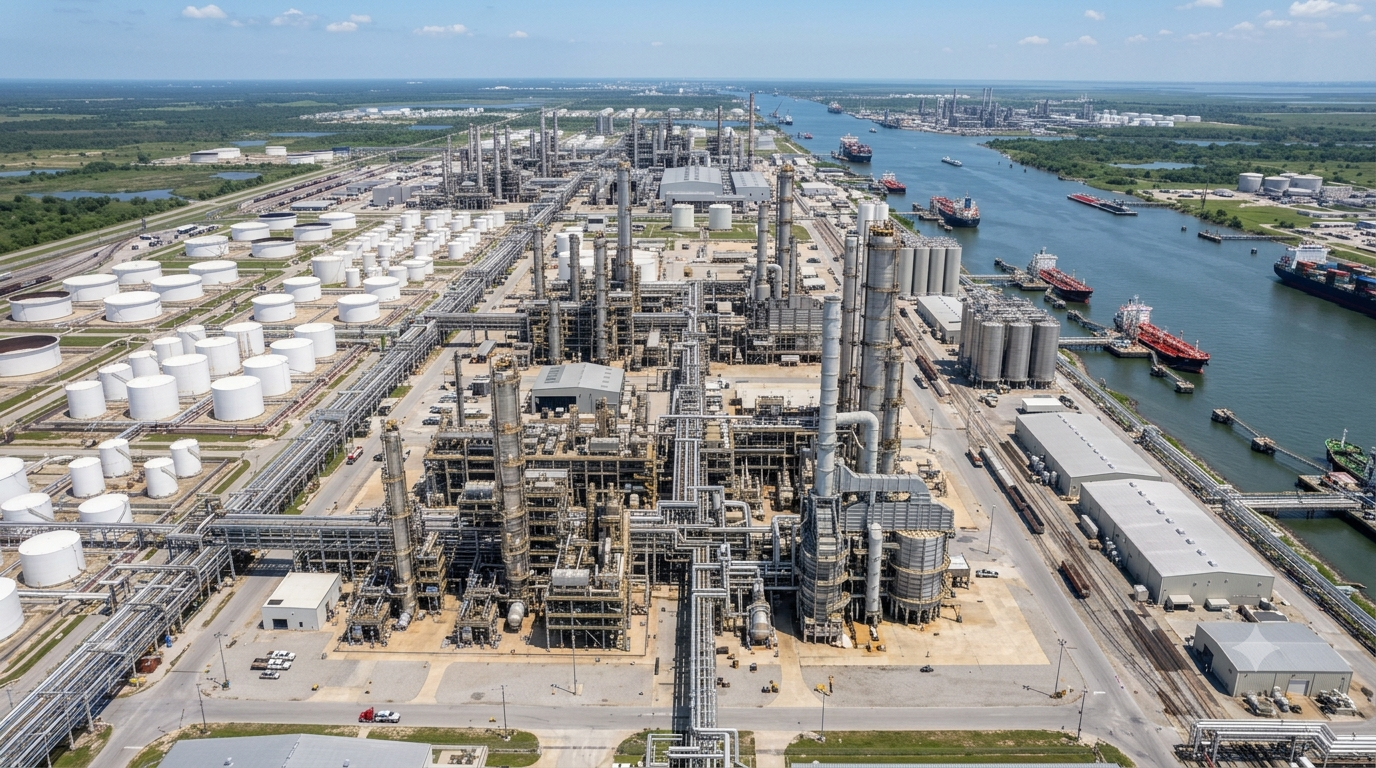
The global petrochemical industry is undergoing a fundamental restructuring as new commodity chemical plants increasingly get designed around ethane feedstock rather than the traditional naphtha that has dominated production for decades. This shift concentrates new capacity in regions with abundant natural gas liquids, primarily the United States Gulf Coast, while challenging the economic viability of naphtha-based production in Europe, Asia and other regions lacking access to low-cost ethane. For procurement teams sourcing ethylene, polyethylene, ethylene oxide and other derivatives, this feedstock transition creates permanent cost advantages for US-based suppliers that affect competitive dynamics, pricing benchmarks and strategic sourcing decisions.
The economics are straightforward. Ethane cracking delivers ethylene at cash costs $200 to $400 per ton lower than naphtha cracking depending on relative feedstock prices. This cost advantage persists across commodity cycles, fundamentally altering where companies choose to invest in new capacity and which existing facilities can compete long-term.
Ethane-based steam crackers enjoy structural cost advantages versus naphtha alternatives driven by feedstock pricing, capital efficiency and operating characteristics.
Primary cost drivers include:
Feedstock cost where ethane typically trades at $0.10 to $0.25 per pound versus naphtha at $0.35 to $0.50 per pound on energy-equivalent basis
Capital intensity with ethane crackers requiring roughly 15% to 20% less capital investment per ton of ethylene capacity than naphtha units
Energy efficiency as ethane requires less severe cracking conditions reducing fuel consumption
Yield advantages where ethane produces 75% to 80% ethylene versus 30% to 35% for naphtha with fewer low-value byproducts
These advantages compound across the production chain. An ethylene producer saving $300 per ton on feedstock and capital costs maintains profitability at prices where naphtha-based competitors operate at losses.
The cost gap fluctuates with relative feedstock pricing but the structural advantage persists even when oil prices decline or natural gas prices rise. Naphtha crackers rarely achieve sustained cost parity with ethane operations.
The United States ethane abundance stems directly from shale gas revolution that transformed North American energy markets over the past 15 years.
Natural gas from shale formations including Marcellus, Utica, Permian and Eagle Ford contains higher proportions of natural gas liquids than conventional gas. As shale production grew exponentially from 2010 onward, NGL output including ethane increased proportionally.
The supply dynamics shifted dramatically:
US ethane production grew from roughly 1 million barrels per day in 2010 to over 2 million barrels per day by 2020
Ethane prices that historically tracked crude oil became decoupled, falling to rejection value where producers would leave ethane in natural gas streams
This rejection value established floor pricing at levels making ethane-based petrochemicals extraordinarily competitive globally
The infrastructure buildout to handle ethane surplus included pipelines, fractionation capacity and export terminals enabling ethane to reach global markets. Companies could now design plants anywhere with marine access to leverage US ethane economics even if located outside North America.
Naphtha has served as the primary steam cracker feedstock globally for decades due to availability from refinery operations and suitability for flexible olefin production.
Historical advantages included:
Global availability from refineries in every major industrial region
Coproduct flexibility producing not just ethylene but substantial propylene, butadiene and aromatics
Established technology and operating experience across the industry
Integration with refining utilizing a refinery byproduct stream
European and Asian crackers were built predominantly as naphtha-fed units given limited access to ethane and abundant refinery capacity. This created integrated petrochemical-refining clusters where naphtha supply and chemical production co-located.
The decline in naphtha economics relative to ethane does not eliminate naphtha cracking entirely but shifts it toward regions where ethane is unavailable or where coproduct values from propylene and aromatics justify higher feedstock costs. New world-scale investment increasingly favors ethane where accessible.
Ethane crackers and naphtha crackers differ fundamentally in design, operating parameters and output profiles in ways that affect economics beyond simple feedstock cost.
Critical design distinctions include:
Furnace severity where ethane requires steam-to-hydrocarbon ratios of 0.3 to 0.4 versus 0.5 to 0.7 for naphtha reducing energy consumption
Separation train complexity as ethane cracking produces simpler product slates requiring less extensive fractionation
Byproduct handling where naphtha crackers need propylene recovery, C4 processing and aromatics extraction that ethane units largely avoid
Feedstock flexibility with naphtha crackers typically designed to handle multiple feedstocks while ethane crackers optimize for single feedstock
The result is that ethane crackers cost $800 million to $1.2 billion for world-scale capacity versus $1.5 billion to $2.5 billion for equivalent naphtha units. Lower capital intensity improves project returns even before operating cost advantages are considered.
New plant designers prioritize ethane capabilities, either as pure ethane crackers or as flexible units capable of processing ethane plus propane or butane. Pure naphtha crackers are rarely built outside regions with no alternative.
The geographic concentration of new ethane-based capacity reflects both feedstock availability and market access considerations.
US Gulf Coast dominates with:
ExxonMobil, Chevron Phillips, Shell and others building or recently completing ethane crackers
Direct pipeline access to Marcellus/Utica and Permian ethane supplies
Proximity to Gulf Coast export terminals for international polymer sales
Established chemical industry infrastructure reducing project costs
Other regions pursuing ethane-based development include:
Middle East where Qatar and Saudi Arabia have ethane from gas processing but face higher extraction costs than US
China importing US ethane via specialized carriers to feed coastal crackers
India evaluating ethane imports to support planned petrochemical expansions
The pattern favors locations with either domestic ethane production or efficient import infrastructure to access US supply. Regions lacking both increasingly struggle to justify new commodity petrochemical investment.
China has emerged as significant ethane importer despite lacking domestic production, creating a hybrid model accessing US feedstock advantages without US location.
Chinese companies including Satellite Chemical and others built ethane import terminals and dedicated crackers processing US ethane shipped via specialized pressurized carriers. This allows Chinese producers to achieve feedstock costs approaching US levels while serving domestic Asian markets.
The model faces limitations including:
Shipping costs adding $50 to $100 per ton to delivered ethane price
Supply chain risk from long-distance maritime logistics and US export infrastructure dependence
Capital intensity of specialized storage and handling facilities
Geopolitical exposure to US export policy and trade relations
Despite these challenges, the economics still favor ethane imports over naphtha cracking for Chinese coastal locations with market access. The model demonstrates how feedstock logistics innovation can partially decouple plant location from feedstock source.
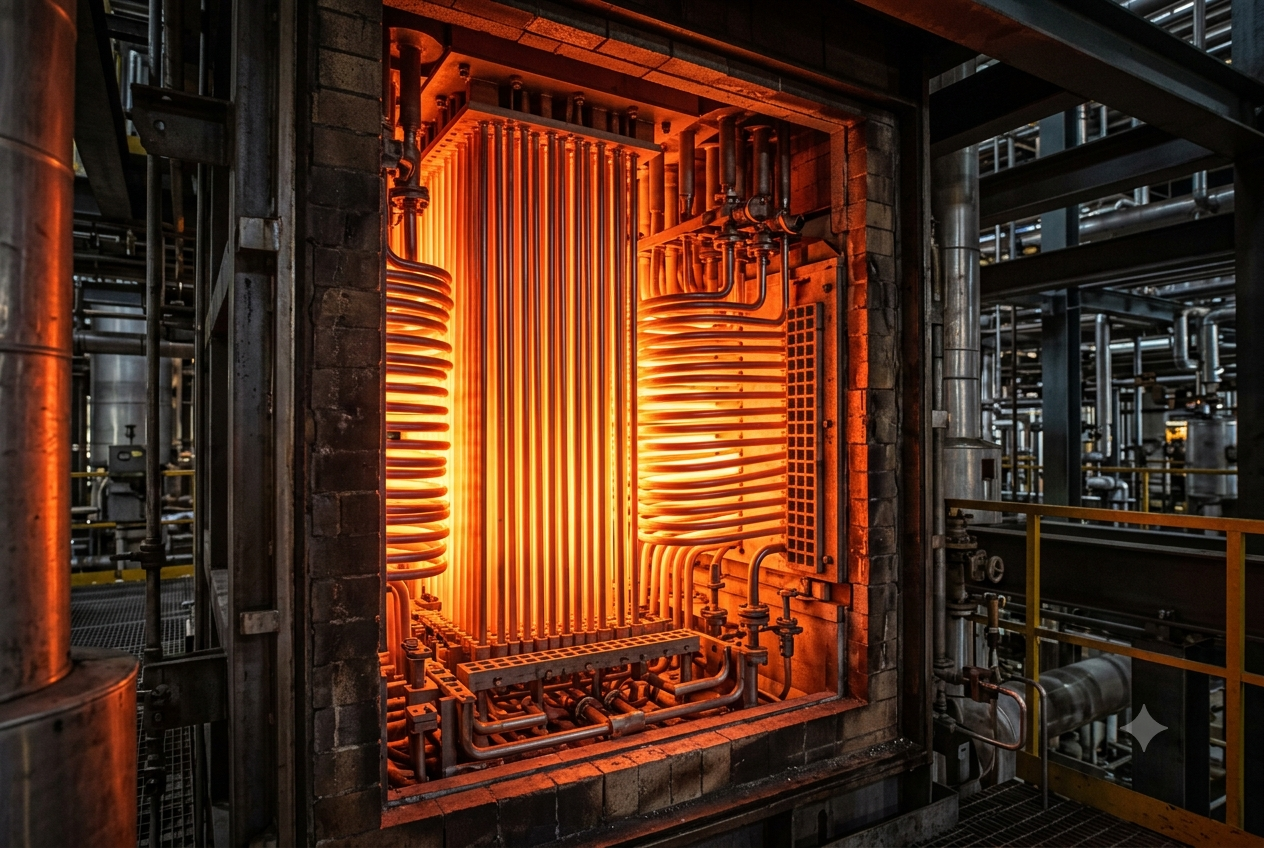
European petrochemical producers operating naphtha-based crackers face increasingly difficult economics as US ethane-based production sets global cost benchmarks.
The competitive challenge manifests through several mechanisms:
Margin compression when ethylene and derivative pricing reflects low US costs rather than European naphtha costs
Volume displacement as Asian buyers shift purchases toward cheaper US or Middle East sources
Investment drought where companies cannot justify European capacity expansions given unfavorable cost structures
Closure risk for older, smaller crackers that cannot compete even at full utilization
Some European producers have responded by investing in US Gulf Coast capacity to access ethane economics while maintaining customer relationships through global supply networks. This strategy acknowledges that competitive European commodity production becomes increasingly difficult absent major feedstock cost improvements.
Others focus on specialty chemicals, advanced materials and downstream integration where technical differentiation matters more than raw feedstock economics. The commodity petrochemical manufacturing base in Europe faces structural decline regardless of cyclical demand fluctuations.
Naphtha crackers maintain one significant advantage over ethane units through substantial propylene coproduction that creates value naphtha operations can capture.
Naphtha cracking typically yields:
30% to 35% ethylene
15% to 20% propylene
10% to 15% C4 olefins and dienes
15% to 20% aromatics
Ethane cracking by contrast produces:
75% to 80% ethylene
2% to 3% propylene
Minimal other coproducts
In markets where propylene commands strong pricing due to tight supply or where aromatics create value through integration with downstream users, naphtha crackers can achieve better total margins despite higher feedstock costs.
This propylene advantage sustains some naphtha cracking particularly in Asia where polypropylene demand growth outpaces polyethylene and where propylene supply options are limited. Companies may accept slightly negative ethylene margins if propylene profitability offsets losses.
However, this dynamic also drives investment in propane dehydrogenation (PDH) units that produce propylene directly from propane, further pressuring naphtha cracker economics.
The ethane versus naphtha cost differential has fundamentally altered how chemical companies make capital allocation decisions for commodity petrochemical investments.
Pre-shale era decision criteria:
Proximity to end-use markets minimizing logistics costs
Integration with existing chemical complexes
Feedstock availability from local refineries
Regulatory and political environment
Post-shale decision framework prioritizes:
Feedstock cost advantage as dominant factor
Access to ethane supply either domestic or importable
Export logistics for serving global markets from low-cost production base
Scale economics to maximize return on capital
This reordering means companies now build capacity in locations offering best feedstock economics even if distant from end markets, then ship products globally. The traditional model of distributed regional production to serve local markets only persists for specialty products or where trade barriers favor local production.
For procurement teams, this shift means supply increasingly originates from US Gulf Coast or Middle East regardless of buyer location, fundamentally changing logistics planning and supplier relationships.
The upstream shift toward ethane-based ethylene production cascades through derivative chains including polyethylene, ethylene oxide, vinyl chloride and others.
Polyethylene producers benefit directly:
Integrated crackers and polyethylene plants capture full feedstock cost advantage
US polyethylene exports have grown dramatically making US suppliers dominant in international markets
Asian and European polyethylene producers not integrated with ethane crackers face persistent cost disadvantages
Ethylene oxide and derivatives follow similar patterns where US producers with ethane-based ethylene achieve cost leadership in glycols, surfactants and specialty derivatives.
Vinyl chloride producers benefit from cheap ethylene but also need competitive chlorine costs, creating advantage for integrated chlor-alkali/ethylene operations on US Gulf Coast.
Procurement teams sourcing these derivatives should recognize that supplier cost structures increasingly correlate with upstream feedstock access. Suppliers without ethane-based ethylene face structural challenges sustaining competitiveness.
Some newer cracker designs prioritize feedstock flexibility allowing operation on ethane, propane, butane or naphtha depending on relative economics.
This flexibility provides several advantages:
Margin optimization by switching to cheapest available feedstock as prices fluctuate
Supply security through multiple feedstock options if one source becomes unavailable
Coproduct management adjusting propylene output based on market demand
Market responsiveness during periods when feedstock price relationships shift
However, flexibility comes with costs including:
Higher capital investment for more complex cracking and separation equipment
Operating complexity managing transitions between feedstock types
Efficiency trade-offs as units optimized for multiple feeds perform suboptimally on each versus dedicated designs
The trend favors limited flexibility in new designs, typically ethane plus light hydrocarbons like propane or butane, rather than full naphtha flexibility. The persistent ethane cost advantage makes pure ethane optimization economically attractive.
Ethane cracking offers environmental advantages versus naphtha that increasingly matter as carbon regulations intensify.
Lower carbon intensity stems from:
Reduced energy consumption per ton of ethylene produced
Natural gas-based feedstock with lower carbon content than petroleum-derived naphtha
Simpler processing requiring less heating and separation energy
Better integration potential with renewable power given lower thermal energy needs
Life cycle assessments show ethane-based ethylene with carbon footprints 20% to 30% lower than naphtha routes depending on methodology and system boundaries. This gap matters in markets implementing carbon pricing or where customers demand low-carbon materials.
However, ethane-based production still generates substantial absolute emissions that face long-term regulatory pressure. The advantage is relative to naphtha, not absolute sustainability. Both routes face challenges in net-zero scenarios requiring carbon capture, renewable hydrogen or alternative production methods.
Chemical buyers managing ethylene derivative sourcing must adapt strategies to reflect the structural shift toward ethane-based production.
Strategic adjustments include:
Supplier evaluation prioritizing those with ethane feedstock access and corresponding cost advantages
Geographic sourcing accepting that lowest-cost supply increasingly originates from US Gulf Coast regardless of buyer location
Contract structures linking prices to ethylene production costs including feedstock components rather than generic indices
Long-term positioning recognizing that supplier competitive positions will diverge based on feedstock access with some becoming permanently disadvantaged
Buyers should avoid assuming historical supplier relationships will persist. European and Asian producers without ethane access face deteriorating competitiveness that may force exits, capacity sales or strategic repositioning away from commodity products.
Building relationships with US Gulf Coast suppliers and Middle East producers with gas-based feedstock advantages positions procurement organizations to access lowest-cost supply regardless of how industry structure evolves.
While ethane provides powerful cost advantages, several factors limit how completely it can displace naphtha-based production.
Constraints include:
Propylene supply where naphtha crackers remain important sources and where ethane provides minimal output
Regional demand in areas where import logistics make local naphtha cracking economically viable despite higher costs
Trade barriers including tariffs, local content requirements and regulatory preferences for domestic production
Infrastructure constraints limiting how quickly ethane-based capacity can scale or reach certain markets
Naphtha cracking will persist in regions including Japan, South Korea and parts of Southeast Asia where refineries provide readily available feedstock, where propylene demand justifies accepting higher ethylene costs and where import infrastructure limitations favor local production.
However, the margin for new investment in naphtha crackers has narrowed dramatically. Replacements for aging capacity may not proceed if economics do not justify capital deployment versus alternative uses of funds.
Several developments could amplify or moderate the ethane versus naphtha competitive dynamics over the next decade.
Factors favoring further ethane dominance:
Continued US shale production maintaining abundant low-cost ethane availability
Ethane export infrastructure expansion enabling wider global access
Carbon pricing making energy-efficient ethane routes more attractive
Technology improvements in ethane cracking further widening cost advantages
Factors potentially supporting naphtha:
Propylene tightness if demand outpaces PDH and refinery propylene availability
Crude-to-chemicals technology enabling direct conversion of crude oil to olefins bypassing traditional naphtha cracking
Bio-naphtha from renewable sources offering lower-carbon alternative to fossil naphtha
Policy interventions supporting domestic European or Asian production despite cost disadvantages
The most likely scenario involves continued ethane dominance in new commodity capacity while naphtha crackers persist in specific applications and regions where circumstances favor their economics.
The ethane shift creates clear competitive winners and losers across global petrochemical regions.
Winners include:
US Gulf Coast with abundant domestic ethane and established infrastructure
Middle East gas-rich countries with extraction capabilities and export access
China coastal regions able to import and process US ethane economically
Challenged regions:
Europe lacking domestic ethane and facing high energy costs for naphtha cracking
Northeast Asia (Japan, Korea, Taiwan) with high feedstock costs and mature demand
Inland locations globally without access to either domestic ethane or import infrastructure
Companies making location decisions for new capacity clearly favor winner regions while challenged areas see investment drought and potential capacity rationalization.
For procurement teams, this geographic redistribution means supply chain reconfiguration toward new production centers requiring different logistics, quality assurance and relationship management approaches.
The structural shift from naphtha to ethane as the preferred feedstock for commodity petrochemical plants represents one of the most significant changes in industry economics over the past two decades.
This transition creates permanent cost advantages for ethane-based producers that affect competitive positioning, pricing dynamics and long-term supplier viability. Procurement strategies must adapt by:
Recognizing that lowest-cost production increasingly concentrates in US Gulf Coast and other ethane-advantaged regions
Building supplier relationships and qualification paths for ethane-based sources
Accepting geographic supply chain shifts as economically rational rather than resisting them
Evaluating supplier long-term competitiveness based on feedstock access not just historical relationships
The plants being designed and built today will operate for 30 to 40 years, making current feedstock decisions enormously consequential for long-term industry structure. Buyers who understand and adapt to the ethane advantage will achieve better costs and supply security than those anchored to legacy naphtha-based supply chains.
Ready to source Monoethylene Glycol from verified global suppliers? Explore competitive offers on our platform today.
Featured Product
Found this useful?
Continue Reading
Korean firms including ST Pharm and Kyongbo are expanding facilities
Oxea's latest investment decision marks an important development for the global oxo chemicals market despite ongoing industry weakness. Procurement teams and chemical traders should understand how this capacity expansion could influence future supply, pricing and sourcing strategies.

Korean API makers are expanding production of next-generation modalities like RNA, antibody-drug conjugates and peptides