European Chemical Makers Weigh Verbund Structure Risk Under Climate-Linked Water Stress
BASF's public warning that deteriorating Rhine conditions could contribute to force majeure declarations is drawing renewed attention to the vulnerability of Europe's integrated chemical manufacturing model.
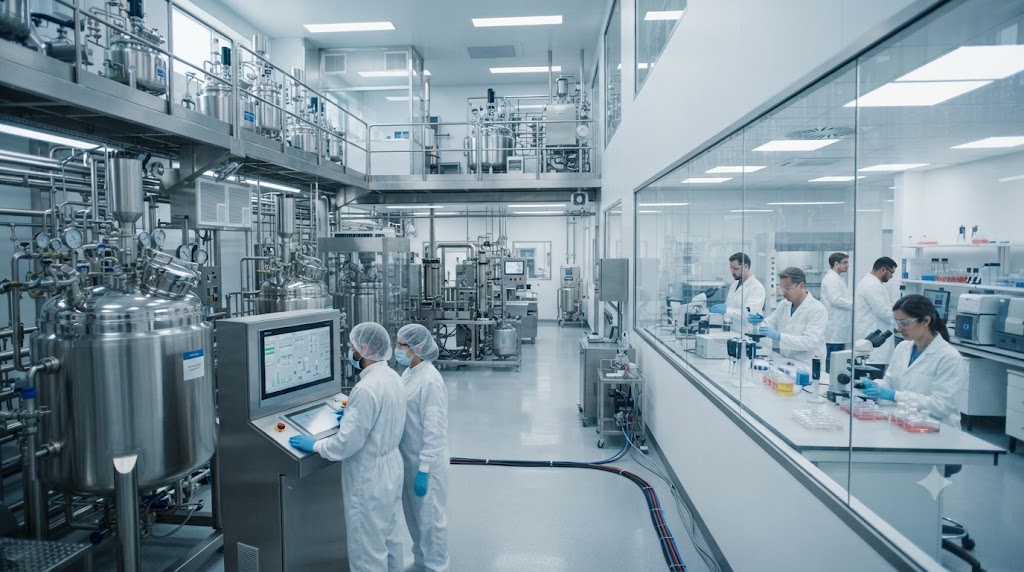
Large Verbund sites are designed around deep physical and operational integration.
Feedstocks, energy, steam, intermediates and byproducts move continuously between production units through shared infrastructure.
This structure can deliver major advantages in cost, energy efficiency and resource utilization.
However, the same interdependence can amplify disruption.
When low river levels restrict feedstock deliveries, cooling-water access or finished-product transport, the consequences may spread across multiple plants and chemical value chains rather than remaining isolated within one facility.
For European chemical makers, the strategic question is no longer whether integrated sites remain economically valuable.
It is whether their infrastructure, logistics and operating models are sufficiently resilient to withstand increasingly frequent climate-linked water stress.
What the Verbund Model Provides
The Verbund concept links numerous chemical processes within one industrial network.
Instead of operating individual plants as separate facilities, companies connect them through:
One unit's output can become another unit's raw material.
Heat generated in one process may support another operation.
Byproducts that would otherwise require disposal may be converted into commercially useful inputs.
This integration reduces waste and can lower manufacturing costs across the site.
Integration Creates Competitive Advantages
Large European chemical complexes have historically relied on integration to compete against producers with lower feedstock or energy costs.
The model supports:
Higher raw-material efficiency
Lower internal transport costs
Reduced energy losses
Shared infrastructure
Greater product diversity
Improved byproduct utilization
These advantages can be substantial when the site operates normally.
A disruption affecting one common input, however, can weaken several advantages simultaneously.
A logistics problem at the river terminal may become a feedstock problem, an operating-rate problem and eventually a customer-supply problem.
The Rhine Is Part of the Production System
For chemical sites located along the Rhine, the river is more than an external transportation route.
It functions as part of the industrial operating system.
The river supports:
When water levels decline, barges must reduce their cargo loads to avoid grounding.
The same quantity of material may require more vessels and more voyages.
Freight costs rise while effective transportation capacity falls.
At severe levels, some cargoes may become commercially or operationally difficult to move.
Low Water Creates Multiple Risks at Once
The most important feature of water stress is that it can affect several parts of a Verbund site simultaneously.
Potential pressures include:
Reduced feedstock availability
Higher inland freight costs
Limited cooling-water access
Delayed product shipments
Lower production rates
Increased inventory requirements
These risks are interconnected.
A shortage of one upstream feedstock can restrict several downstream products.
A cooling limitation can reduce output even when raw materials remain available.
A shipping delay can fill storage tanks and force a plant to lower production because finished material cannot leave the site.
Force Majeure Risk Shows the Severity of Exposure
A possible force majeure declaration indicates more than general concern about logistics costs.
It suggests that operating conditions could become severe enough to interfere with contractual performance.
For an integrated chemical site, force majeure may affect:
Individual products
Specific production units
Multiple downstream chains
Regional customer allocations
The impact depends on which upstream process is constrained.
A disruption involving a major cracker or utility system may have broader consequences than a shutdown affecting a standalone finishing unit.
Customers therefore need product-level information rather than only general statements about site conditions.
Interdependence Can Transmit Operational Stress
The Verbund structure depends on stable flows between units.
When one plant reduces output, connected facilities may lose access to required intermediates.
Companies may attempt to compensate by purchasing material externally.
This is not always practical.
Some intermediates are:
Internal pipeline transfers are often safer and cheaper than transporting equivalent material by road, rail or vessel.
When those internal flows are interrupted, alternative supply may be expensive or technically constrained.
Cooling Water Is a Critical Dependency
Chemical manufacturing generates substantial heat.
Facilities require reliable cooling systems to maintain safe operating temperatures and process stability.
Low river levels can reduce water availability.
High ambient temperatures can create an additional challenge because warmer water is less effective for cooling and may face environmental discharge restrictions.
Companies must ensure that returned water does not exceed permitted temperatures or damage aquatic ecosystems.
This can force production reductions even when logistics remain manageable.
Cooling-water stress therefore represents a direct operating constraint rather than only a transportation concern.
Upstream Disruption Can Multiply Downstream Effects
An integrated site may contain dozens or hundreds of connected production processes.
A constraint affecting one basic chemical can spread through several derivative chains.
For example, reduced olefin production may affect:
Polyethylene
Ethylene oxide
Glycols
Solvents
Surfactant intermediates
Specialty derivatives
The commercial impact can extend into industries such as automotive manufacturing, construction, coatings, packaging and personal care.
A river-related disruption can therefore move quickly from one physical location into multiple industrial supply chains.
Storage Capacity Can Become a Bottleneck
Integrated sites are designed around continuous material movement.
Storage capacity may be optimized for normal operating conditions rather than prolonged transportation disruption.
Low river levels can create two opposing inventory problems.
Inbound materials may become scarce because deliveries are restricted.
Outbound tanks may fill because finished products cannot be shipped efficiently.
The site can therefore face raw-material shortages and finished-product congestion at the same time.
This operational imbalance can require selective production cuts.
Rail and Road Cannot Fully Replace Barges
Chemical companies may redirect some cargo to rail or road transport.
These alternatives can provide valuable flexibility, but their capacity is limited.
A single barge can carry volumes that would require many railcars or trucks.
Substitution may be constrained by:
Equipment availability
Terminal capacity
Driver shortages
Rail network congestion
Hazardous-goods rules
Higher unit costs
Alternative logistics are most effective when arranged before water levels reach critical thresholds.
Once several companies seek replacement capacity simultaneously, availability can tighten rapidly.
Climate Change Alters Infrastructure Assumptions
Many European industrial sites were designed around historical patterns of river flow, temperature and seasonal variability.
Those assumptions may no longer provide an adequate basis for long-term planning.
More frequent drought conditions can change the risk profile of:
River transport
Cooling systems
Water permits
Inventory policies
Production scheduling
Events once treated as exceptional may become recurring operational conditions.
This changes how companies should assess capital investment and business continuity.
Efficiency and Resilience Can Conflict
The Verbund model emphasizes efficient resource use and tightly coordinated production.
Resilience often requires spare capacity, alternative routes and additional inventory.
These measures can appear inefficient during normal operations.
Examples include:
Maintaining backup logistics contracts
Holding larger feedstock inventories
Building additional storage
Preserving redundant utilities
Qualifying external intermediate suppliers
Companies must decide how much additional cost they are willing to accept in exchange for greater protection against disruption.
Climate-linked water stress is making that tradeoff more urgent.
Capital Investment May Be Necessary
Adapting integrated sites may require substantial infrastructure spending.
Potential investments include:
Lower-draft vessels
Expanded rail terminals
Additional storage tanks
Closed-loop cooling systems
Water recycling
Alternative intake infrastructure
Digital river-risk monitoring
These projects compete with other capital priorities, including decarbonization, energy efficiency and specialty-product expansion.
Companies must evaluate which investments protect the greatest number of production chains.
Low-Draft Barges Offer Partial Protection
Some operators have invested in vessels designed to carry larger loads during low-water conditions.
These vessels can improve logistics resilience by operating at lower drafts.
They do not eliminate river dependency.
Severe water stress can still reduce their carrying capacity.
Fleet replacement also requires time and significant capital.
Low-draft vessels should therefore be viewed as one layer of resilience rather than a complete solution.
Water Recycling Can Reduce Exposure
Chemical sites may reduce freshwater dependence through advanced recycling and closed-loop systems.
Potential benefits include:
Lower river withdrawals
Improved drought resilience
Reduced discharge volumes
Better control of cooling conditions
However, water recycling systems require energy, treatment chemicals and capital investment.
Some production processes also require water of specific purity.
The technical feasibility varies across units.
Site-wide water mapping can identify where recycled water can replace higher-quality intake water without affecting product quality or process safety.
Procurement Teams Need Site-Level Visibility
Buyers often evaluate supplier risk at the company level.
Climate-linked disruption requires more detailed analysis.
Procurement teams should understand:
Which site manufactures the product
Whether the site depends on Rhine transport
Which upstream units supply the material
Whether production can shift elsewhere
Whether alternative feedstocks are available
A multinational supplier may operate several plants, but not every product can move easily between locations.
Grades may require specific equipment, approvals or customer qualifications.
Dual Sourcing May Be Difficult
Diversifying suppliers is a common resilience strategy.
For specialized chemicals, it may be difficult to implement.
Alternative products can require:
Buyers should qualify alternatives before disruption occurs.
Waiting until a force majeure declaration is issued may leave insufficient time to complete technical approvals.
Contract Terms May Need Updating
Climate-linked water stress raises questions about how supply agreements address recurring river disruption.
Contracts should clarify:
Force majeure triggers
Customer notification
Allocation procedures
Mitigation obligations
Alternative-site supply
Delivery flexibility
Where low-water conditions are increasingly foreseeable, parties may debate whether they remain fully outside a supplier's reasonable control.
The wording of force majeure clauses and evidence of mitigation will therefore become more important.
Insurers May Reassess Business Interruption Risk
Integrated sites create concentrated operational value.
A disruption affecting shared infrastructure can generate losses across multiple production units.
Insurers may examine:
Coverage terms and premiums may increasingly reflect site-specific climate adaptation.
Companies that demonstrate credible mitigation may be better positioned during insurance renewal discussions.
Regulators Could Increase Water Scrutiny
Industrial water use competes with environmental, agricultural and municipal needs during drought.
Authorities may tighten:
Withdrawal limits
Discharge-temperature rules
Water-efficiency requirements
Emergency operating conditions
Chemical producers need to consider not only physical water availability but also regulatory permission to use and return water.
Future permits may require more detailed drought-management plans.
European Competitiveness Is at Stake
European chemical producers already face high energy costs and intense competition from regions with cheaper feedstocks.
Climate-linked water disruption adds another structural cost.
Repeated logistics and production constraints can weaken:
Plant utilization
Delivery reliability
Export competitiveness
Customer confidence
Investment returns
Companies may become more cautious about allocating capital to sites with persistent water vulnerability.
This could influence the long-term geography of European chemical production.
Fragmenting the Verbund Is Not a Simple Solution
One response might be to reduce integration and distribute production across more locations.
That approach carries major disadvantages.
It can increase:
The economic and environmental advantages of integration remain significant.
The strategic priority is therefore likely to be strengthening the resilience of Verbund sites rather than abandoning the model entirely.
Product Portfolio Decisions May Change
Companies may reassess which products remain attractive at water-stressed sites.
Low-margin commodity units may struggle to justify major resilience investment.
Higher-value specialty products may provide stronger returns and greater ability to absorb logistics costs.
This could accelerate portfolio shifts toward:
Performance materials
Electronic chemicals
Battery materials
Specialty additives
High-value intermediates
Climate resilience may increasingly influence which units receive capital and which face closure.
Digital Forecasting Can Improve Preparedness
River levels and weather conditions can be monitored through increasingly sophisticated forecasting systems.
Companies can integrate this information with:
Inventory data
Barge schedules
Production plans
Customer orders
Storage capacity
Earlier warning allows operators to increase inventories, secure alternative transport and adjust plant rates before conditions become critical.
Forecasting cannot prevent drought.
It can reduce the cost of delayed decisions.
Disclosure Practices Will Face Scrutiny
BASF's public discussion of possible force majeure risk also raises expectations regarding proactive communication.
Customers and investors increasingly expect companies to explain:
Which sites are exposed
Which mitigation measures exist
How production could be affected
What financial risks are material
General references to weather may no longer provide sufficient information.
Stakeholders want clearer connections between climate conditions and operational exposure.
What Procurement Teams Should Monitor
Buyers dependent on European integrated sites should track:
They should also determine which products share upstream dependencies.
Several materials purchased under different contracts may ultimately depend on the same cracker, utility system or river terminal.
What Producers Should Prioritize
European chemical manufacturers should evaluate resilience at the system level rather than one plant at a time.
Priority areas include:
Shared utility vulnerability
Critical feedstock routes
Internal intermediate dependencies
Alternative transportation
Water reuse
Customer communication
The objective is to identify where one disruption could produce the broadest operational consequences.
The Broader Market Intelligence Lesson
The Rhine risk demonstrates how climate pressure can interact with industrial integration.
The traditional Verbund logic is:
Integration → efficiency → lower cost and reduced waste
Under severe water stress, the sequence can become:
Shared dependency → upstream disruption → multiple downstream constraints → broad supply impact
Both sequences are valid.
The strategic challenge is preserving the advantages of integration while preventing common infrastructure from becoming a single point of failure.
Final Takeaway
BASF's comments on Rhine-driven force majeure risk highlight a growing structural challenge for European chemical manufacturing.
Integrated Verbund sites remain highly efficient, but their dependence on shared logistics, cooling systems, utilities and intermediate flows can compound climate-linked water stress.
For producers, resilience will require investment in alternative transport, water recycling, storage capacity, forecasting and site-wide contingency planning.
For procurement teams, supplier risk assessments must move beyond corporate names to examine specific production sites and upstream dependencies.
For policymakers, protecting industrial competitiveness will require infrastructure and water strategies that account for increasingly frequent drought conditions.
The broader market signal is clear: climate-linked water stress is not merely an external logistics problem for Europe's chemical industry. At highly integrated Verbund sites, it can become a system-wide production risk capable of spreading through multiple value chains at once.
Ready to source Ethylene Glycol from verified global suppliers? Explore competitive offers on our platform today.