Genomatica's BDO Technology Has Limited but Real Overlap With Biodegradable Agricultural Films
Introduction
Genomatica's fermentation-based technology for producing 1,4-butanediol (BDO) has a relatively narrow but meaningful connection to the market for biodegradable agricultural films.
The connection is not direct: Genomatica's technology produces BDO, a chemical building block, rather than finished agricultural films. However, BDO can be used to manufacture biodegradable and bio-based polyesters such as polybutylene succinate (PBS) and polybutylene adipate-co-terephthalate (PBAT), materials that can be used in biodegradable film applications.
This creates an upstream link between industrial biotechnology, renewable feedstocks, polymer production, and agricultural applications such as mulch films.
What Genomatica's BDO Technology Does
Genomatica developed a biological route for producing 1,4-BDO through fermentation of renewable sugars.
The process uses engineered microorganisms to convert carbohydrate feedstocks into BDO. Genomatica's technology has been demonstrated commercially, and its process has been licensed for renewable BDO production. BASF, for example, expanded its license agreement to use the technology for renewable BDO production based on feedstocks such as dextrose or sucrose.
The importance of BDO is that it is a versatile chemical intermediate rather than an end product. It can enter several downstream value chains, including polymers, solvents, elastic fibers, and other materials.
Where the Agricultural-Film Connection Begins
The connection to biodegradable agricultural films starts downstream of BDO production.
BDO can be combined with other monomers to produce biodegradable polyesters. Research on bio-based chemical production identifies BDO as a building block for materials such as PBS and PBAT, both of which have applications in biodegradable plastics.
These polymers can potentially be processed into films used in agricultural applications.
The simplified value chain is:
Renewable Sugar → Fermentation → Bio-BDO → Polyester → Biodegradable Film → Agricultural Application
This means that a development in renewable BDO supply can potentially influence the availability and sustainability profile of selected polymer feedstocks used in agricultural films.
Why Agricultural Films Matter
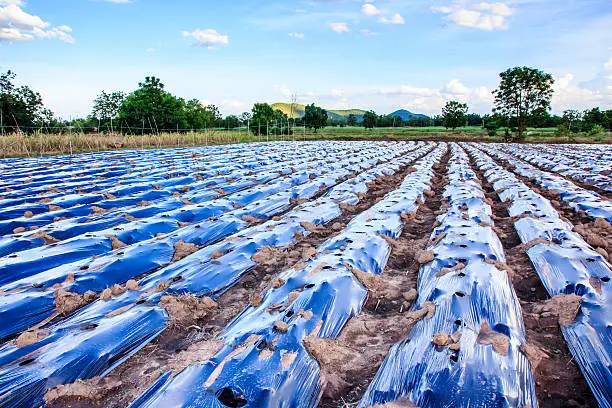
Agricultural films are used in applications such as soil mulching, greenhouse production, crop protection, and moisture management.
Conventional films are commonly produced from fossil-derived polymers. After use, they can create collection and disposal challenges, particularly when films become contaminated with soil and crop residues.
Biodegradable films offer an alternative in applications where recovering and recycling conventional plastic films is difficult or economically unattractive.
For these products, polymer performance remains critical. Films need appropriate mechanical strength, flexibility, moisture behavior, degradation characteristics, and field durability.
Therefore, the availability of a bio-based building block such as BDO does not automatically make the finished agricultural film commercially viable.
Why the Overlap Is Limited
The connection between Genomatica's BDO technology and agricultural films should not be overstated.
BDO has many competing applications. A significant portion of global BDO demand goes into products such as tetrahydrofuran, PTMEG, PBT, polyurethane-related materials, and other chemical applications.
Agricultural films therefore represent only one potential downstream market for polymers that can incorporate BDO.
In addition, the final environmental profile of an agricultural film depends on the complete formulation and production pathway, not simply on whether one component is bio-based.
A film containing renewable BDO may still include fossil-derived monomers or additives.
PBAT Creates a More Direct Link
Among potential downstream materials, PBAT provides one of the clearest connections between BDO and biodegradable films.
PBAT is a biodegradable polyester that incorporates BDO into its polymer structure. Research on bio-based chemical production specifically identifies BDO as a building block for PBAT.
This makes renewable BDO relevant to polymer producers seeking to increase the renewable content of biodegradable materials.
However, agricultural-film manufacturers still need to evaluate polymer cost, mechanical properties, degradation performance, processing behavior, and field performance before switching feedstocks.
Renewable Feedstock Adds Another Supply-Chain Dimension
Genomatica's technology also creates an interesting connection with agricultural and renewable feedstock markets.
The company's BDO process can use sugars as renewable feedstocks, while earlier work supported by the U.S. Department of Energy explored the conversion of cellulosic sugars into BDO. The objective was to expand the feedstock base beyond conventional food-related sugar sources toward non-food biomass-derived inputs.
This could eventually broaden the sourcing options available to bio-based chemical producers.
For polymer manufacturers, greater feedstock diversification could reduce dependence on a single agricultural raw material and potentially improve supply resilience.
Implications for Agricultural Film Producers
For manufacturers of biodegradable agricultural films, the emergence of renewable BDO could create another upstream sourcing option.
Potential benefits could include:
Greater availability of bio-based polymer feedstocks
Reduced dependence on fossil-derived BDO
Potentially lower fossil-carbon intensity
Additional supplier diversification
Integration with renewable-carbon supply chains
Opportunities for higher bio-based content in selected polymers
However, these benefits depend on the availability and cost of commercially produced renewable BDO.
A bio-based feedstock must compete with established petrochemical BDO on price, quality, consistency, and supply reliability.
Cost Remains the Key Constraint
Agricultural films are highly cost-sensitive products.
Farmers generally require films that deliver reliable agronomic performance without creating excessive additional costs. Consequently, biodegradable films must compete not only against conventional plastic films but also against other biodegradable materials and alternative farming practices.
The availability of renewable BDO could help improve the sustainability credentials of selected polymers, but it does not eliminate the economic challenge.
Polymer manufacturers must still consider:
The commercial opportunity will therefore depend on the economics of the entire polymer and film value chain, rather than BDO alone.
Implications for Chemical Procurement
The development is relevant to procurement teams because it demonstrates how an upstream biochemical technology can eventually influence a downstream agricultural material.
Film manufacturers and polymer producers may increasingly monitor:
Bio-BDO production capacity
Sugar and renewable-carbon prices
PBAT and PBS production capacity
Availability of biodegradable polymer grades
Certification and traceability requirements
Conventional BDO pricing
Agricultural-film demand
Regulatory policies concerning agricultural plastics
Such monitoring can help buyers identify when renewable feedstocks move from sustainability initiatives toward commercially meaningful alternatives.
Outlook
Genomatica's BDO technology is unlikely to directly transform the agricultural-film market. Its influence is more likely to emerge through the polymer supply chain.
If renewable BDO remains commercially available and downstream polymer producers continue expanding biodegradable polyester capacity, agricultural films could become one of the applications benefiting from this broader bio-based materials ecosystem.
The strongest opportunity will exist where biodegradable polymers can deliver competitive cost and reliable field performance while meeting increasingly demanding sustainability requirements.
Conclusion
Genomatica's BDO technology has a limited but real connection to biodegradable agricultural films.
The pathway is indirect:
Renewable Feedstock → Bio-BDO → Biodegradable Polyester → Agricultural Film
BDO's ability to serve as a building block for polymers such as PBAT and PBS creates a potential bridge between industrial biotechnology and agricultural plastics.
For agricultural-film producers, the development is worth monitoring not because Genomatica directly produces agricultural films, but because renewable BDO could gradually diversify the feedstock base available to biodegradable-polymer manufacturers.
The key question for the market will ultimately be whether bio-based BDO can be supplied at sufficient scale, cost, and consistency to support competitive biodegradable polymer production. If that happens, its relevance to agricultural films could grow from a niche upstream connection into a more meaningful part of the sustainable-agriculture materials supply chain.