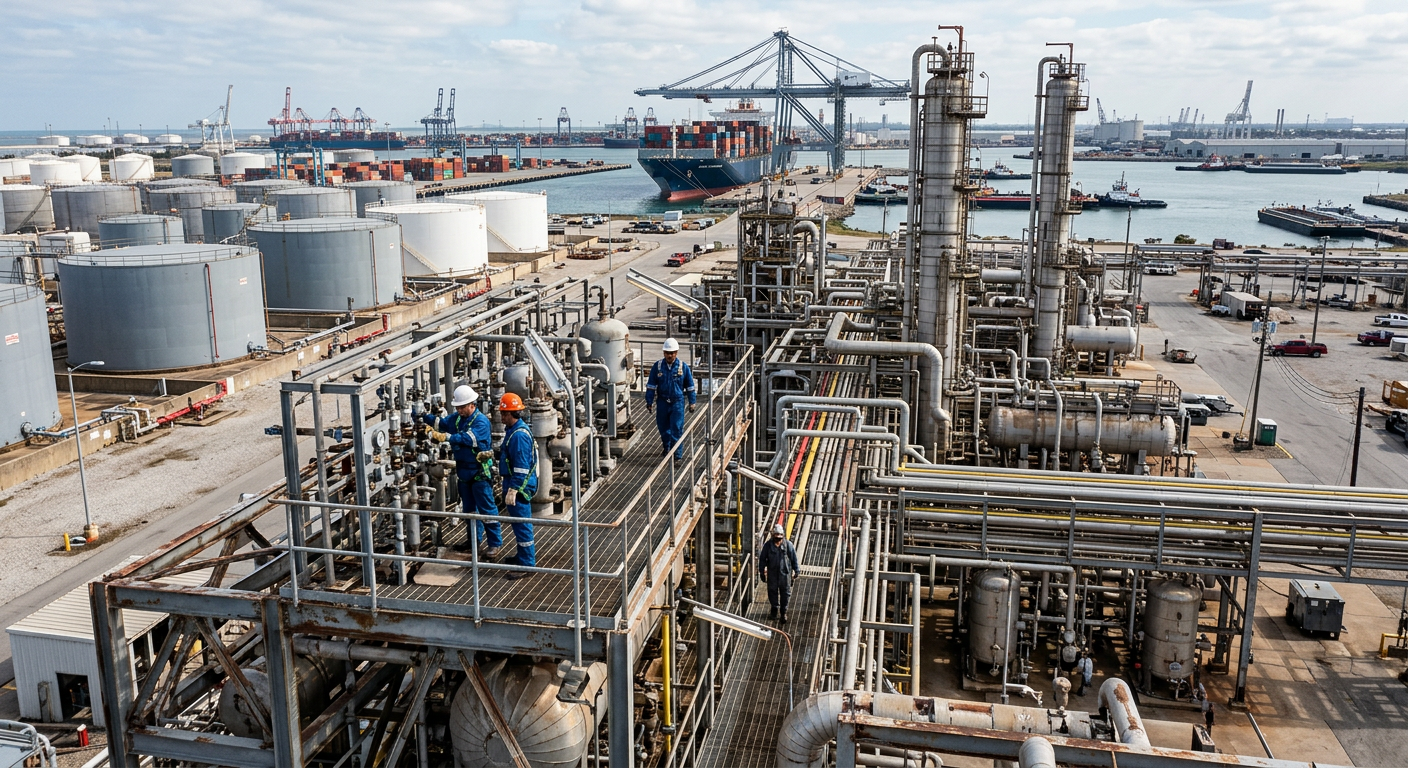
H1 2026 closes as one of the most structurally significant periods in recent global chemical logistics history. Across shipping lanes, insurance markets and port infrastructure, the system has not only absorbed disruption but also reorganised itself around new operational realities.
At the peak of the Hormuz disruption, global seaborne chemical trade is estimated to have contracted by approximately 15 to 20 percent. Even as headline export volumes now recover toward 75 percent of pre-crisis levels, the underlying logistics network has not returned to its previous configuration.
Instead, H1 has established a new baseline defined by rerouted shipping, elevated risk pricing and redistributed port infrastructure.
Global Trade Contraction During Peak Disruption
The most immediate impact of the crisis was a measurable reduction in seaborne chemical trade activity during the March to May period.
This contraction reflected a combination of:
Reduced vessel availability due to extended voyage durations.
Temporary hesitation in cargo booking during peak uncertainty.
Insurance-driven delays in voyage approvals.
Re-routing decisions that reduced overall system efficiency.
While trade volumes have since recovered, the contraction phase has left lasting effects on scheduling, freight pricing and inventory positioning.
Cape of Good Hope Becomes the Default Routing Standard
One of the most significant structural shifts in H1 2026 is the establishment of Cape of Good Hope routing as the default operational standard for major carriers.
This change has added approximately 250 extra vessel-days per ship annually compared with pre-crisis routing patterns.
The consequences are system-wide:
Longer vessel turnaround times reduce effective fleet capacity.
Higher fuel consumption increases operational costs despite stabilising crude prices.
Equipment cycles slow, tightening container and tanker availability.
Schedule reliability improves in predictability but worsens in duration.
Even as fuel prices stabilise, routing commitments remain unchanged, locking in higher baseline logistics costs.
War Risk Insurance Remains a Structural Cost Layer
Following the Ever Lovely and Kiku incidents, war risk insurance reached approximately 8x pre-crisis levels, marking one of the most severe pricing dislocations in recent maritime insurance history.
This increase reflects insurer focus on tail risk rather than average voyage conditions.
Key implications include:
Elevated premiums embedded into freight quotations.
More selective carrier acceptance of high-risk routes.
Increased contract complexity around insurance allocation.
Persistent cost pressure even during periods of improved physical shipping flow.
Insurance has therefore shifted from a marginal cost to a central driver of chemical logistics pricing.
Gulf Shipping Backlog Signals Incomplete Normalisation
Despite recovery in export flows, 485 vessels remain anchored or delayed across the Gulf region as H1 closes.
This backlog highlights a critical disconnect between export volumes and operational efficiency.
While production and loading activity have improved, system constraints remain:
Partial clearance of navigational risks in key channels.
Ongoing insurance hesitation in full capacity restoration.
Residual operational caution following earlier incidents.
For chemical logistics planners, this means recovery remains uneven rather than complete.
Port Network Reconfiguration: Sohar and Khor Fakkan
A major structural outcome of H1 has been the emergence of Sohar and Khor Fakkan as permanent nodes in Gulf chemical logistics.
These ports have absorbed diverted trade flows and invested in:
Expanded liquid chemical tank farms.
Increased bonded warehouse capacity.
Upgraded break-bulk handling systems.
Enhanced berthing infrastructure for chemical carriers.
This has created a more distributed regional logistics model, reducing reliance on any single hub and increasing system resilience.
What This Means for Key Chemical Flows
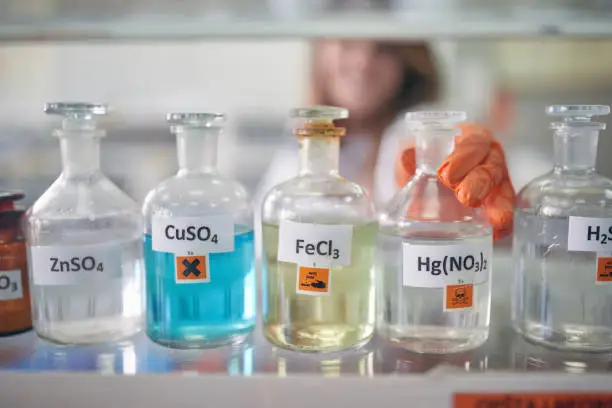
Several major chemical products have been directly affected by these structural shifts:
Methanol, where longer routes and storage redistribution affect export competitiveness.
Ammonia, critical for fertilizer supply chains requiring stable scheduling.
Caustic soda, widely used in industrial and water treatment markets.
Sulphur, supporting downstream acid and fertilizer production.
Monoethylene glycol, essential for polyester manufacturing and packaging.
Across these products, logistics cost rather than production capacity has become the dominant pricing variable.
Freight Rates Correcting, but Not Reverting
Container and bulk freight markets have begun to ease from peak levels, supported by lower bunker fuel costs following the stabilisation of Brent crude near $74 per barrel.
However, full reversion to pre-crisis freight levels remains unlikely.
Structural drivers persist:
Cape routing commitments remain in place.
Insurance premiums remain elevated.
Vessel cycle times remain extended.
Port diversification has altered network efficiency.
As a result, freight markets are expected to stabilise at a higher baseline rather than return to historical norms.
H2 2026 Outlook: Gradual Normalisation With Structural Persistence
The outlook for H2 2026 is defined by gradual improvement rather than sharp recovery.
Several trends are expected to continue:
Slow reduction in Gulf vessel backlog, subject to operational conditions.
Partial easing of freight rates, but within a structurally elevated range.
Continued reliance on Sohar, Khor Fakkan and diversified routing networks.
Persistent insurance cost premium embedded into trade flows.
Developments in Doha talks and regional negotiations may influence sentiment, but structural logistics changes are already embedded in carrier networks and infrastructure investment decisions.
The New Baseline for Global Chemical Logistics
The most important outcome of H1 2026 is not any single metric, but the establishment of a new baseline for global chemical logistics.
This baseline is defined by:
Longer routing structures as standard practice.
Higher embedded insurance costs.
Distributed port networks across the Gulf.
Reduced system elasticity during disruption events.
Greater reliance on multi-origin sourcing strategies.
These changes are not temporary adjustments. They represent a recalibration of how global chemical trade operates under sustained geopolitical and insurance pressure.
The Bottom Line for Procurement Teams
H1 2026 closes with global chemical logistics in a structurally different state than it entered the year. While trade volumes are recovering and some freight indicators are improving, the underlying system has permanently adjusted to new routing patterns, insurance pricing and port infrastructure distribution.
For procurement and logistics teams, the key takeaway is clear. H2 2026 will not be a return to pre-crisis conditions but a continuation of a restructured logistics environment where resilience, diversification and cost visibility matter more than historical benchmarks.
Companies that align sourcing strategies with this new baseline will be better positioned to manage volatility, control landed costs and maintain supply continuity in a permanently changed global chemical trade system. Ready to source Methanol from verified global suppliers? Explore competitive offers on our platform today.