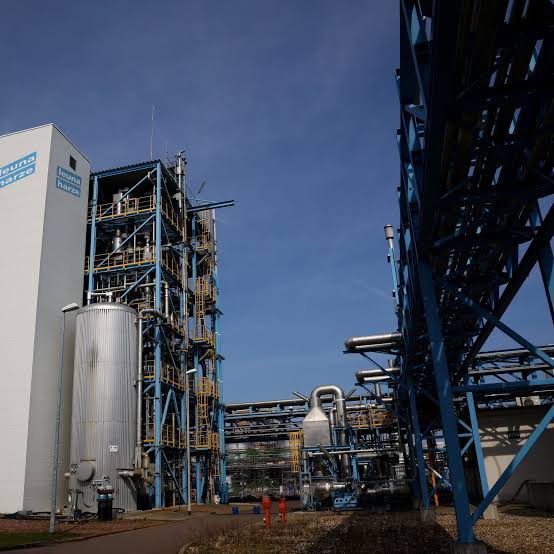
The expansion of U.S. semiconductor manufacturing is driving a parallel wave of investment in industrial-gas infrastructure, with suppliers committing capital to production, storage, distribution, and supply systems located close to semiconductor fabs.
Air Liquide's $160 million Arizona commitment is one example of this broader investment trend. Aggregating announced projects across the sector provides a more useful picture of the total capital being directed toward semiconductor-adjacent gas infrastructure in 2026.
This cumulative view helps put individual investments into context while providing useful competitive intelligence on how industrial-gas companies are positioning themselves around the U.S. semiconductor buildout.
Why Semiconductor Gas Infrastructure Matters
Semiconductor fabrication requires highly reliable supplies of industrial and specialty gases. Any interruption can affect production schedules and create significant operational costs for chip manufacturers.
Important gases used across semiconductor manufacturing include:
As new fabs are constructed, gas suppliers increasingly need to develop infrastructure alongside semiconductor manufacturing clusters.
Intelligence Check: Tracking the Capital Wave
Rather than evaluating individual projects separately, industry analysts can aggregate announced investments throughout 2026.
A cumulative assessment can track:
1. Total Announced Capital
Adding individual investment announcements provides an estimate of the capital being committed to semiconductor-related gas infrastructure.
2. Number of Projects
The number of projects indicates whether the investment wave is concentrated in a few major facilities or spread across multiple locations.
3. Geographic Distribution
Tracking project locations helps identify emerging U.S. semiconductor manufacturing hubs.
4. Supplier Participation
Comparing commitments from Air Liquide, Linde, Air Products, and other suppliers provides insight into competitive positioning.
Market Implications
Growing investment in semiconductor-adjacent gas infrastructure could reshape the U.S. industrial-gas supply chain.
Potential effects include:
Greater regional production capacity
Increased availability of high-purity gases
More localized supply chains
Higher demand for gas transportation and storage
Greater competition between industrial-gas suppliers
Increased investment around semiconductor clusters
The trend also demonstrates that semiconductor localization requires investment well beyond the fabs themselves.
Competitive Intelligence
The cumulative investment figure is particularly useful for benchmarking industrial-gas companies.
Analysts can compare:
This can help determine which suppliers are taking the most aggressive position in the U.S. semiconductor manufacturing expansion.
Procurement Considerations
Semiconductor manufacturers should monitor new gas infrastructure because supplier investment can affect regional availability, logistics costs, and long-term sourcing options.
Recommended strategies include:
Track new regional gas capacity
Qualify multiple industrial-gas suppliers
Monitor semiconductor cluster development
Review long-term supply agreements
Assess storage and distribution capabilities
Evaluate supplier proximity to fabs
Maintain contingency plans for critical gases
For high-purity materials, reliable local infrastructure can be strategically more important than short-term price differences.
Looking Ahead
The 2026 investment cycle provides an opportunity to measure the industrial-gas industry's response to the U.S. semiconductor buildout.
Air Liquide's $160 million Arizona project should therefore be viewed as one component of a much broader infrastructure investment trend. Aggregating announced projects across suppliers and locations can provide a clearer picture of the capital required to support the next generation of U.S. semiconductor manufacturing.
For market-intelligence teams, continuing to track project value, location, supplier, capacity, and customer will be essential for understanding the industry's competitive landscape.
Key Takeaways
U.S. semiconductor expansion is generating significant investment in supporting industrial-gas infrastructure.
Air Liquide's Arizona commitment is valued at $160 million.
Aggregating individual projects provides a better measure of the overall investment wave.
Air Liquide, Linde, and Air Products are important competitors to track.
Geographic concentration, project value, and supplier participation provide useful competitive-intelligence indicators.
Procurement teams should monitor new regional gas capacity and maintain qualified alternative suppliers.