Nissan Chemical's India Facility Signals a Shift Toward Regional Herbicide Manufacturing and Distribution
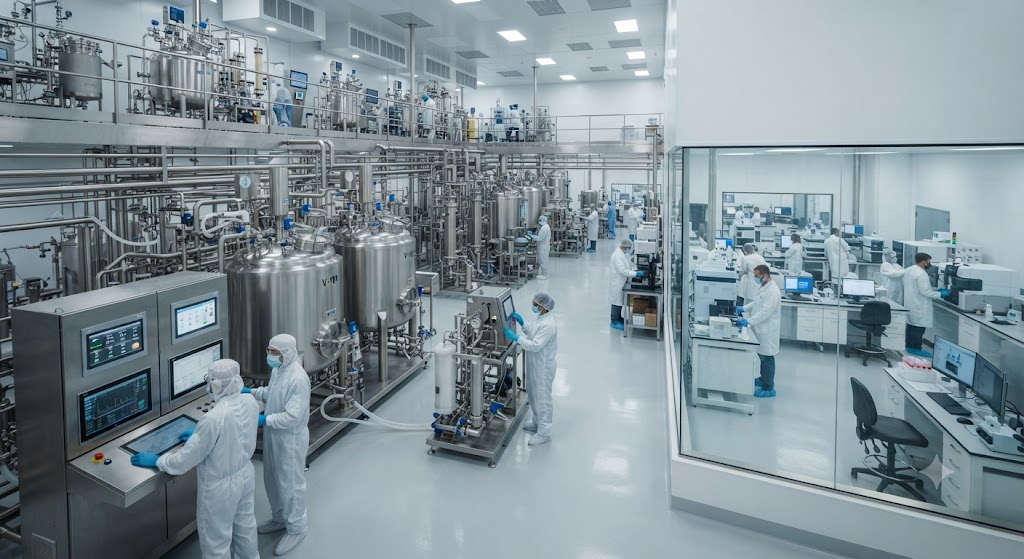
Nissan Chemical's planned manufacturing facility in India represents more than another addition to global crop-protection capacity.
It points toward a broader structural trend in agricultural chemicals: manufacturers increasingly want production, formulation and distribution positioned closer to the markets where their products are actually consumed.
For herbicide producers, India offers an unusually significant combination of agricultural scale, crop diversity, growing commercial farming requirements and an established agrochemical manufacturing ecosystem.
Producing closer to this demand base can reduce dependence on long-distance imports while allowing companies to respond more rapidly to seasonal changes in customer requirements.
For procurement managers, distributors and agricultural chemical suppliers, the investment reinforces an important intelligence theme. Crop-protection supply chains are gradually becoming more regional, with manufacturers balancing global production economics against the resilience and responsiveness created by local capacity.
Why India Matters to Crop Protection
India represents one of the world's largest agricultural economies.
Its farming sector covers numerous crops and climates, creating significant demand for crop-protection products including:
Herbicide demand is particularly influenced by weed pressure, crop selection, labor economics and changing farming practices.
A manufacturer with local production capability can respond more directly to these market conditions than one relying exclusively on imported finished products.
That makes regional manufacturing strategically valuable.
Localization Shortens the Supply Chain
Imported agricultural chemicals can pass through several stages before reaching farmers.
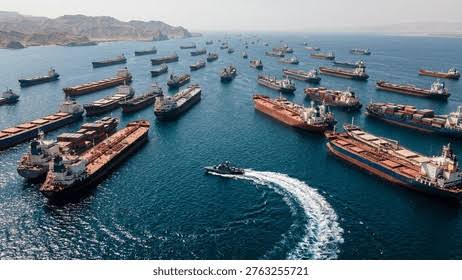
These may include overseas manufacturing, maritime freight, customs clearance, regional warehousing and domestic distribution.
Each stage adds:
Lead time
Inventory requirements
Freight costs
Working capital
Disruption exposure
Local manufacturing can compress part of this chain.
Raw materials may still be imported, but producing or formulating the finished product in India can substantially shorten the route between manufacturing and final demand.
For seasonal agricultural products, that time advantage can be critical.
Herbicide Demand Is Highly Seasonal
Crop-protection purchasing does not occur evenly throughout the year.
Demand can accelerate rapidly around planting and growing seasons.
Weather conditions may also change application requirements with relatively little notice.
A long international supply chain makes it harder to respond to these shifts.
Regional manufacturing can provide:
Faster replenishment
Greater production flexibility
Lower emergency freight requirements
Better inventory positioning
Improved distributor response
This is one reason localization can deliver commercial advantages beyond lower transportation expense.
Distribution Is as Important as Production
Building a factory does not automatically guarantee stronger market access.
Crop-protection products need effective distribution because agricultural demand is geographically dispersed.
A successful regional strategy therefore connects manufacturing capacity with:
Warehouses
Distributors
Dealers
Agricultural retailers
Regional transportation
Nissan Chemical's Indian expansion is most strategically valuable when production and distribution work together.
The objective is not only to make products domestically. It is to place those products closer to farmers when they are needed.
Regional Production Can Reduce Import Dependence
Imported finished products expose buyers to several external variables.
These include:
Ocean freight
Port congestion
Customs delays
Currency movements
Shipping disruptions
Export restrictions
Regional manufacturing can reduce some of these risks.
It does not necessarily eliminate international dependency because active ingredients, intermediates or packaging materials may still originate abroad.
However, moving more of the production process into India increases the number of supply-chain steps controlled closer to the customer.
That can improve resilience.
India Also Offers Manufacturing Capability
Localization is more attractive when the target market already possesses an established chemical manufacturing base.
India has substantial experience across:
This ecosystem can provide access to technical expertise, suppliers and manufacturing partners.
For multinational agricultural chemical producers, established local capabilities may lower the difficulty of expanding regional operations.
Supplier networks can also develop around new facilities over time.
Not all local manufacturing provides the same level of supply-chain independence.
A company might manufacture active ingredients domestically, or it may import active ingredients and perform formulation, blending and packaging locally.
Both models provide advantages, but their risk profiles differ.
Local formulation can improve:
Delivery speed
Packaging flexibility
Inventory management
Local active-ingredient production goes further by reducing dependence on imported chemical intermediates.
Procurement teams should therefore examine exactly which stages of the manufacturing chain are being localized.
Regional Manufacturing Can Improve Inventory Economics
Import-dependent businesses often need substantial inventory buffers because replacement material can take weeks or months to arrive.
Regional production may shorten replenishment cycles.
This can allow manufacturers and distributors to operate with:
However, agricultural seasonality means some inventory buildup remains necessary ahead of major application periods.
The benefit comes from having greater control over when additional material can be produced.
Currency Risk Is Another Consideration
Imported crop-protection products expose local businesses to exchange-rate movements.
Even when global product pricing remains stable, currency depreciation can increase domestic acquisition costs.
Greater local manufacturing can reduce some foreign-currency exposure, particularly where local raw materials and services are used.
The protection is not complete when imported feedstocks remain necessary.
Still, increasing the share of domestic value added can reduce the sensitivity of finished-product economics to currency movements.
Local Production Can Improve Product Adaptation
Agricultural requirements differ considerably between regions.
Local manufacturing and technical teams can support products designed around:
Regional crops
Weed species
Application practices
Packaging preferences
Farm sizes
Climate conditions
This can improve commercial responsiveness.
A multinational company operating only through imported standardized products may have less flexibility to tailor production around local requirements.
Regional operations provide a closer link between customer feedback and manufacturing decisions.
Regulatory Capability Becomes More Important
Crop-protection products operate within strict regulatory frameworks.
Manufacturers must manage:
Product registration
Formulation requirements
Quality specifications
Environmental rules
Labeling
Manufacturing compliance
A larger local presence requires strong regulatory and quality-control infrastructure.
For customers, this can become an advantage because regional technical teams may respond more quickly to documentation or compliance requirements.
However, regulatory execution also becomes an important part of startup risk.
Local Manufacturing Does Not Remove Raw Material Risk
Regional production improves resilience but does not make the supply chain entirely local.
Herbicide production can depend on chemical intermediates sourced from concentrated global markets.
A facility may therefore remain exposed to:
Imported intermediates
Solvents
Specialty reagents
Packaging inputs
Procurement teams should avoid assuming that a domestically manufactured finished product has no international supply exposure.
The stronger question is how much of the bill of materials can be sourced regionally.
China's Role Remains Important
China remains deeply embedded in global agrochemical raw material and intermediate supply chains.
Even as multinational companies localize downstream production in markets such as India, upstream sourcing can remain connected to Chinese chemical production.
This creates a more diversified manufacturing structure rather than a complete separation from existing Asian supply networks.
A localized Indian plant might therefore provide substantial resilience while still relying on imported upstream chemistry.
Contract Manufacturing May Expand Around the Facility
Regional manufacturing investments can create opportunities beyond the company's own plant.
Local contract manufacturers may support:
Intermediates
Formulation
Packaging
Specialty processing
Waste treatment
This can strengthen the surrounding agrochemical ecosystem.
For chemical suppliers, new facilities often generate indirect demand that extends beyond the primary manufacturer's own purchasing requirements.
What Distributors Gain From Localization
Agricultural chemical distributors often carry significant inventory risk.
They must order ahead of demand while uncertain about weather and seasonal application volumes.
Shorter replenishment cycles can reduce that risk.
If products can be sourced domestically with shorter lead times, distributors may be able to maintain leaner stocks and reorder during the season.
This improves working-capital efficiency.
It can also reduce the need for emergency imports when demand exceeds expectations.
Pricing Could Become More Responsive
Local manufacturing may influence pricing dynamics.
Lower freight costs and reduced import dependency can improve delivered economics.
However, the final price still depends on:
Localization therefore does not guarantee lower prices.
Its strongest advantage may instead be more predictable supply and faster market response.
The Broader Trend Is Regionalization, Not Full Deglobalization
Nissan Chemical's investment should not necessarily be interpreted as evidence that agricultural chemical supply chains are becoming entirely domestic.
A more accurate description is regionalization.
Companies can maintain international sourcing relationships while moving critical manufacturing and distribution activities closer to major end markets.
This produces a hybrid model.
Global networks continue supplying technologies and intermediates, while regional plants provide market responsiveness and resilience.
Why Other Crop-Protection Companies May Follow
Once one major producer establishes local capacity, competitors may reassess their own cost and service positions.
Regional production can create advantages in:
Lead times
Customer relationships
Distribution
Inventory efficiency
Market intelligence
Competitors relying heavily on imports may face pressure to strengthen local manufacturing partnerships or invest in their own capacity.
Localization can therefore become self-reinforcing within a market.
What Procurement Teams Should Monitor
Buyers evaluating Nissan Chemical's Indian expansion should track more than the plant's announced capacity.
Important indicators include:
These details will show how much the new facility actually changes regional supply economics.
A facility operating primarily as a packaging site has a different strategic effect from one producing key chemical intermediates domestically.
Supply Chain Mapping Should Go Beyond Country of Manufacture
The investment also illustrates why procurement teams should map products deeper than the final manufacturing location.
For each critical agricultural chemical, buyers should understand:
Active ingredient origin
Intermediate origin
Formulation location
Packaging location
Warehousing
Distribution routes
This approach reveals concentration risks that can remain hidden behind a "Made in India" designation.
True resilience depends on the entire chain.
What Nissan Chemical's India Facility Signals
The planned facility represents three important shifts.
First, crop-protection manufacturing is moving closer to major demand centers.
Second, distribution is becoming more tightly integrated with regional production.
Third, resilience and responsiveness are gaining greater weight alongside pure manufacturing cost.
These changes can gradually reshape how multinational agricultural chemical companies allocate capacity.
Final Takeaway
Nissan Chemical's planned Indian facility reflects a broader movement toward localized herbicide manufacturing and regional crop-protection distribution.
India's large agricultural market makes it strategically attractive to move production closer to farmers, distributors and seasonal demand.
The benefits extend beyond freight savings.
Regional production can shorten replenishment cycles, reduce finished-product import exposure, improve inventory efficiency and allow manufacturers to respond more quickly to local crop conditions.
The key intelligence question will be how deeply Nissan Chemical localizes the manufacturing chain. Local formulation alone provides meaningful advantages, while domestic production of active ingredients or critical intermediates would represent a more substantial shift in supply-chain structure.
For agricultural chemical buyers, distributors and suppliers, the investment reinforces a broader 2026 trend: crop-protection companies are increasingly treating regional manufacturing capacity as a competitive advantage rather than merely a cost decision.
Ready to source Glyphosate from verified global suppliers? Explore competitive offers on our platform today.