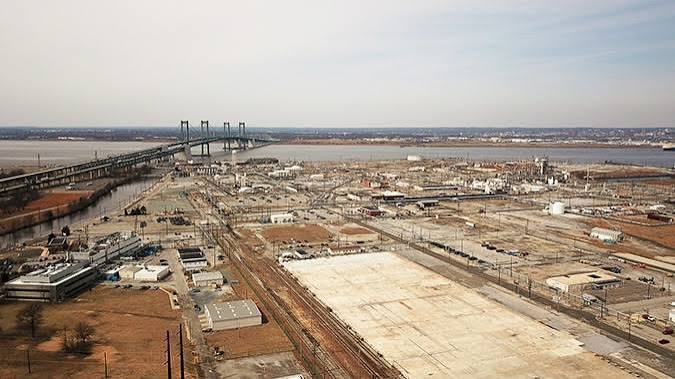
New Jersey's approved settlement with DuPont-related entities creates an important benchmark for how large PFAS liabilities can be structured over an extended period. Under the agreement, the DuPont-related defendants will provide $875 million to New Jersey, with payments spread over 25 years and the initial payment becoming due following the entry of a Judicial Consent Order.
For chemical companies facing long-term environmental liabilities, the structure offers an alternative to a large one-time settlement payment. For states, investors and procurement professionals, it also provides a useful example of how PFAS settlements can balance immediate funding needs with the financial capacity of defendants.
Why a 25-Year Structure Matters
PFAS liabilities can involve decades of contamination, investigation and remediation.
Requiring the full settlement amount immediately could place substantial pressure on a company's liquidity.
A long-term payment structure instead creates:
Predictable cash obligations
Lower immediate liquidity pressure
Long-term funding for remediation
Greater financial planning flexibility
A defined settlement framework
The result is a structure designed to address a major liability without requiring the entire amount to be paid upfront.
The $875 Million Commitment
The DuPont-related portion of the New Jersey settlement totals $875 million.
Rather than treating the figure as a single immediate payment, the agreement spreads the financial obligation across a 25-year period.
This makes the settlement important not only because of its headline value but also because of its payment mechanics.
For investors, the distinction between total liability and near-term cash outflow is critical.
Although the settlement extends for 25 years, the financial obligation does not begin decades in the future.
The agreement provides for an initial payment following the Judicial Consent Order, establishing an immediate funding component while preserving the longer-term payment schedule.
This creates a hybrid structure:
Immediate funding + Long-term payments
That approach could prove attractive in future environmental negotiations.
Why States May Consider Similar Structures
States seeking compensation for environmental contamination face competing priorities.
They need:
Funding for remediation
while also considering:
The defendant's ability to remain financially viable.
A long-term settlement can potentially provide both.
Instead of risking a prolonged legal dispute over the full amount, parties may negotiate a payment schedule that provides predictable funding over many years.
PFAS Settlements Are Becoming More Complex
PFAS litigation differs from many conventional environmental disputes because contamination can involve:
These factors can make settlement negotiations particularly complicated.
Payment schedules may therefore become an increasingly important part of settlement design.
For a chemical company, spreading payments over 25 years can reduce the immediate impact on cash reserves.
Instead of:
Large liability → Immediate cash payment
the structure becomes:
Large liability → Scheduled long-term payments
This can make it easier for a company to continue funding:
Operations
Capital expenditure
Research and development
Debt management
Strategic investments
However, the liability remains an important long-term financial commitment.
What It Means for Investors
Investors should distinguish between a company's reported settlement amount and its annual cash obligations.
A $875 million settlement does not necessarily mean $875 million leaves the company immediately.
The timing of payments can affect:
Free cash flow
Liquidity
Debt levels
Capital allocation
Investment capacity
Long-term payment schedules therefore need to be incorporated into financial analysis.
Predictability Can Benefit Financial Planning
One advantage of a structured settlement is greater predictability.
A defined payment schedule allows companies to incorporate future obligations into long-term financial planning.
This can help management evaluate:
Predictability can be particularly valuable when environmental liabilities span decades.
Procurement Teams Should Also Take Notice
At first glance, settlement payments may appear unrelated to procurement.
However, large environmental obligations can influence a chemical supplier's long-term financial strategy.
A company facing substantial scheduled payments may adjust:
Capacity expansion
Plant investments
Maintenance spending
Portfolio priorities
Cost-control programs
Procurement teams should therefore include major litigation and settlement obligations in supplier-risk assessments.
A Potential Model for Other States
The New Jersey agreement could provide a reference point for other jurisdictions negotiating PFAS settlements.
Future agreements may consider similar structures involving:
Long-term payments
Initial funding
Judicial oversight
Defined obligations
Multi-year remediation support
The exact structure would naturally depend on the facts and negotiations in each case.
Long-Term Settlements Also Create Risks
A 25-year payment structure is not without uncertainty.
Over such a long period, companies may experience:
This makes the legal design of long-term settlements particularly important.
Corporate Restructuring Becomes More Relevant
Long-term environmental payment obligations can outlast corporate structures.
Chemical companies frequently reorganize, spin off businesses or sell assets.
A 25-year settlement therefore raises an important question:
Which corporate entity remains responsible for the payments after future restructuring?
Clear legal obligations become essential to prevent uncertainty.
The Settlement Creates a New Benchmark
The significance of the New Jersey agreement extends beyond its dollar value.
It provides a real-world example of how a major chemical liability can be converted into a structured, multi-decade financial obligation.
For states, it offers a potential negotiating framework.
For chemical companies, it demonstrates how long-term settlement structures can manage large environmental exposures.
For investors, it provides another benchmark for evaluating corporate liability.
What Chemical Companies Can Learn
Companies facing potential PFAS exposure may increasingly need to prepare for different settlement structures.
That means assessing:
Available liquidity
Insurance coverage
Environmental reserves
Long-term cash flow
Corporate guarantees
Asset structures
Early preparation can give companies greater flexibility during negotiations.
What Traders Should Watch
Chemical traders should monitor major PFAS settlements for potential effects on supplier strategy.
Important signals include:
Large settlement announcements
Payment schedules
Asset sales
Restructuring
Plant closures
Capital expenditure changes
Changes in supplier ownership
These factors can eventually affect production capacity and supply-chain reliability.