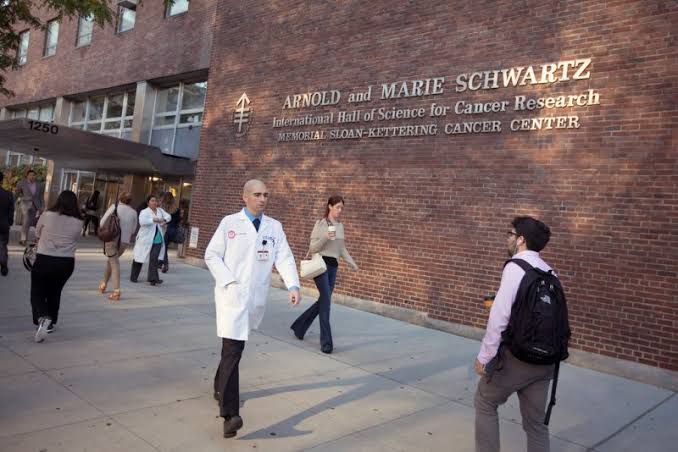
Ajax Therapeutics' scientific story is closely connected to Memorial Sloan Kettering Cancer Center (MSK) through co-founder Dr. Ross Levine, whose research focuses on the genetic and molecular drivers of blood cancers. Levine is now MSK's Chief Scientific Officer and has spent years studying myeloid malignancies and signaling pathways involved in diseases such as myelofibrosis.
From Academic Research to Ajax
Ajax was founded in 2019 after a group of scientists studying JAK2 biology sought to translate their research into new treatments for myeloproliferative neoplasms. Levine's work was particularly important to the company's scientific direction, with his research supporting the idea that targeting a different, Type II conformation of JAK2 could provide an alternative for patients who develop resistance to existing Type I JAK2 inhibitors.
The scientific foundation eventually produced AJ1-11095, Ajax's investigational first-in-class Type II JAK2 inhibitor. The company describes the program as a product of its founding scientists' cancer and structural-biology insights combined with computational drug-discovery capabilities. Levine has said his laboratory had studied Type II JAK2 inhibition for more than a decade before the program entered clinical development.
The MSK Connection Runs Deeper
Memorial Sloan Kettering's contribution was not limited to Levine's individual involvement. Ajax's early development was connected to an academic consortium involving researchers working on hematologic malignancies, while MSK itself later participated in Ajax's financing. The company's research model combined academic discoveries in blood-cancer biology with computational chemistry and industry development capabilities.
In April 2026, Eli Lilly agreed to acquire Ajax for up to $2.3 billion, bringing AJ1-11095 into Lilly's blood-cancer pipeline. Lilly was already a founding strategic investor in Ajax, so the acquisition represents the next stage of a relationship that began when the biotech was established. Lilly has said it plans to advance the JAK2 program toward registrational trials.
The Intelligence Takeaway
Ajax's story illustrates how academic cancer research can evolve into a commercial drug-development platform. Levine's work at MSK helped establish the scientific rationale for targeting JAK2 differently, Ajax converted that research into a clinical program, and Lilly is now providing the resources to pursue late-stage development. The potential $2.3 billion acquisition therefore represents not only a biotech M&A transaction, but also the commercial progression of a research concept that originated in academic hematology.