Osmo's New Manufacturing Facility: Scaling Computational Fragrance Chemistry | ChemicalsBlog.com
Specialty Chemicals
schedule3 Min Read
Osmo's New Jersey Facility: Scaling Computational Scent Chemistry to Commercial Volume
terminal
prodchem
Jul 16, 2026
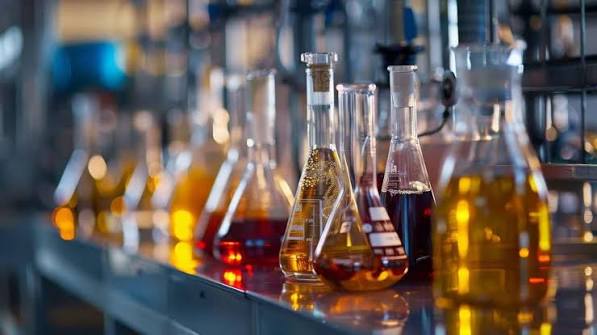
The specialty chemicals industry is increasingly combining artificial intelligence with advanced manufacturing to accelerate innovation. One recent example is Osmo's new 60,000-square-foot manufacturing facility in Elizabeth, New Jersey, designed to scale computationally designed fragrance molecules from research into commercial production.
Computational chemistry enables companies to use AI and machine learning to predict molecular properties, identify new fragrance compounds, and shorten product development timelines. By expanding its manufacturing capacity, Osmo aims to bridge the gap between laboratory discovery and large-scale commercial supply.
For fragrance manufacturers, specialty chemical buyers, and procurement professionals, this investment highlights how digital technologies are reshaping specialty chemical production and innovation.
The Rise of Computational Chemistry
Computational chemistry combines scientific modeling with artificial intelligence to support faster chemical discovery and formulation development.
Applications include:
Fragrance ingredient discovery
Flavor development
Molecular design
Product optimization
Predictive formulation
Research and development
These technologies can help manufacturers improve efficiency while reducing development time.
Why Commercial-Scale Manufacturing Matters
Developing a new specialty chemical is only the first step. Commercial success depends on the ability to manufacture products consistently at industrial scale.
Key manufacturing priorities include:
Consistent product quality
Scalable production
Manufacturing efficiency
Reliable raw material supply
Regulatory compliance
Quality assurance
Scaling production successfully allows innovative materials to move from research laboratories into commercial markets.
Commercial fragrance manufacturing depends on high-quality specialty chemicals and processing materials. Products such as Benzyl Alcohol, Propylene Glycol, Glycerin, Citric Acid, and Isopropyl Alcohol (IPA) are widely used across fragrance, cosmetic, and specialty chemical manufacturing, supporting formulation quality, production efficiency, and consistent product performance.
Procurement teams supporting specialty chemical manufacturing should evaluate suppliers based on both innovation capabilities and manufacturing reliability.
Important considerations include:
Manufacturing capacity
Product consistency
Quality management systems
Supply chain resilience
Regulatory compliance
Long-term supply partnerships
Working with reliable suppliers helps support uninterrupted production and consistent product performance.
Looking Ahead
Artificial intelligence and computational chemistry are expected to play an increasingly important role in fragrance, flavor, and specialty chemical development. As manufacturing technologies continue to evolve, companies that combine digital innovation with scalable production capabilities will be well positioned to meet growing market demand.
For procurement professionals, monitoring investments in advanced manufacturing facilities provides valuable insight into future supply availability, innovation capacity, and long-term sourcing opportunities.
Key Takeaways
Osmo has expanded its manufacturing capabilities with a new facility in New Jersey.
Computational chemistry is accelerating fragrance ingredient discovery.
Commercial-scale manufacturing is essential for bringing innovative specialty chemicals to market.
Procurement teams should evaluate both innovation capabilities and production reliability.
AI-driven specialty chemistry is expected to continue shaping the future of the fragrance industry.
Industrial Additivesspecialty chemicalsIndustrial Chemical Additivesindustrial chemical logisticsIndustrial Chemical Buyersindustrial chemical marketfine-chemicalsIndustrial ChemicalComputational ChemistryFragrance ChemicalsFlavor & FragranceArtificial IntelligenceAI in ChemistryInnovationResearch and Development