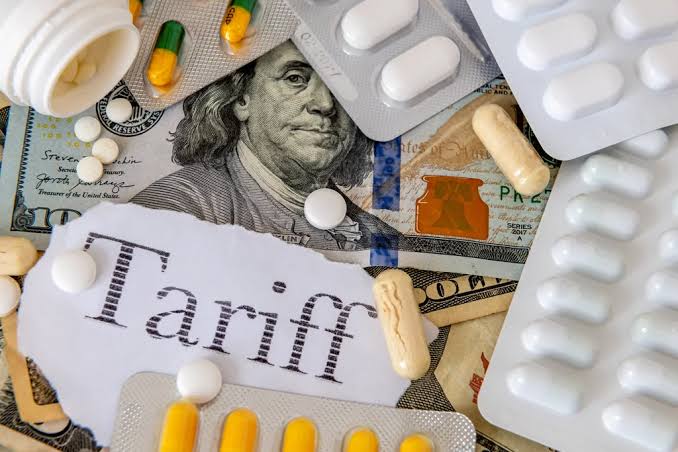
Pharmaceutical manufacturers announced hundreds of billions of dollars in U.S. manufacturing investment by late 2025 as companies responded to tariff threats and pressure to strengthen domestic supply chains. At the same time, global pharmaceutical manufacturing output surged 9.1% in 2025 as companies brought production forward ahead of potential trade restrictions.
The headline investment figure is impressive, but it does not tell procurement teams how much new capacity actually exists. An announced factory is not the same as a construction project, and a construction project is not the same as commercial production.
For chemical traders, API suppliers and pharmaceutical procurement managers, that distinction matters. New facilities can eventually create demand for solvents, intermediates, excipients, process chemicals and packaging inputs, but the timing depends on whether projects move from announcements to construction and then into validated production.
Announced Investment Does Not Equal New Capacity
Large pharmaceutical investment announcements can cover multiple years, facilities and stages of development. Some projects represent entirely new manufacturing sites, while others involve expansions, upgrades or additional production lines at existing facilities.
The first challenge for market observers is therefore to separate headline capital commitments from physical progress.
A useful project maturity framework has several stages:
Announcement: The company publicly identifies an intended investment but has not necessarily committed all capital.
Site selection and planning: The company has identified a location and begun regulatory, engineering or permitting work.
Groundbreaking: Physical construction has started, providing stronger evidence that the project is moving forward.
Equipment installation: Manufacturing infrastructure is being installed, indicating progress toward operational capability.
Validation and qualification: The facility is preparing to demonstrate that processes consistently meet pharmaceutical requirements.
Commercial production: The site begins producing approved products at meaningful scale.
Only the later stages create immediate manufacturing capacity.
This distinction should become central to how sourcing teams evaluate the reshoring trend.
Why Companies Are Accelerating US Manufacturing
Tariff exposure is one driver behind the recent wave of reshoring announcements. Pharmaceutical companies also face broader pressure to improve supply resilience, reduce geographic concentration and secure production of strategically important medicines.
The result is a shift from treating manufacturing location purely as a cost decision toward considering supply security as part of corporate strategy.
Several factors are supporting investment:
Tariff uncertainty: Companies want greater control over exposure to future import costs.
Supply-chain resilience: Domestic production can reduce dependence on long international supply routes.
Policy incentives: Government initiatives can improve the economics of selected manufacturing investments.
Market access: U.S. production can support closer relationships with the world's largest pharmaceutical market.
Strategic medicines: Companies may prioritize domestic capacity for APIs and finished drugs considered important to national supply security.
These motivations make reshoring more durable than a simple reaction to one tariff announcement.
The 9.1% Production Surge Shows Why Timing Matters
Global pharmaceutical manufacturing output increased 9.1% in 2025 as companies front loaded production. That increase provides an important context for interpreting the investment wave.
Companies can respond to tariff threats in two different ways. They can increase inventories or production before new trade measures take effect, or they can invest in new manufacturing capacity that reduces future exposure.
Front loading provides an immediate buffer. Reshoring provides a longer-term structural response.
The two strategies can occur simultaneously.
For chemical suppliers, this creates a potentially unusual demand pattern. Production increases can generate near-term demand for manufacturing inputs, while new facilities can create a second wave of demand once construction and validation are complete.
Groundbreaking Is the First Useful Reality Check
For procurement professionals, a project that has broken ground provides a more meaningful signal than a press release alone.
Construction indicates that a company has moved beyond strategic intent and into physical execution. It also creates a potential timeline for future demand across equipment, construction materials, process chemicals and eventually pharmaceutical inputs.
However, groundbreaking still does not guarantee commercial production.
Projects can experience:
Construction delays.
Permitting changes.
Cost inflation.
Design modifications.
Equipment delays.
Regulatory complications.
Changes in product strategy.
Demand-driven capacity adjustments.
This means procurement teams should track projects continuously rather than treating the groundbreaking date as the final milestone.
What a New Pharmaceutical Facility Means for Chemical Suppliers
A new pharmaceutical plant can affect the supply chain well before the first commercial batch leaves the site.
Construction and commissioning require specialized materials and process systems. Once production begins, the facility can create recurring demand for chemical inputs.
Depending on the manufacturing process, suppliers may see opportunities involving:
Solvents: Pharmaceutical manufacturing can require substantial quantities of processing solvents.
Acids and bases: pH adjustment, cleaning and process chemistry can create recurring demand.
Intermediates: API production can require multiple chemical building blocks and reaction intermediates.
Excipients: Finished-drug manufacturing creates demand for materials used to formulate and stabilize medicines.
Water-treatment chemicals: Pharmaceutical facilities require tightly controlled water systems and treatment processes.
The commercial opportunity therefore extends across multiple stages of the facility lifecycle.
API Reshoring Could Have the Biggest Supply-Chain Impact
The location of API production deserves particular attention because APIs sit upstream of finished medicines.
A finished drug may be manufactured domestically while still relying on imported API or intermediates. A true reshoring strategy therefore requires more than moving final formulation and packaging into the United States.
Companies seeking greater supply-chain control may evaluate domestic production of:
Key starting materials.
Chemical intermediates.
Active pharmaceutical ingredients.
Formulated drug products.
Sterile manufacturing components.
Specialized pharmaceutical inputs.
For chemical traders, upstream movement can be especially significant. A new API facility can create recurring demand for industrial and pharmaceutical-grade chemical inputs rather than only finished-drug manufacturing materials.
How Procurement Teams Should Track Reshoring Projects
A procurement team does not need to follow every pharmaceutical investment announcement in the market. It should focus on projects that could affect its products, customers or supplier base.
A practical tracking system can record:
Company: Identify the pharmaceutical manufacturer making the investment.
Location: Record the U.S. state and manufacturing site.
Investment size: Track the announced capital commitment.
Project type: Separate greenfield sites from expansions and upgrades.
Production scope: Determine whether the project covers APIs, intermediates, finished drugs or other manufacturing.
Project stage: Mark announcement, planning, groundbreaking, construction, validation or commercial operation.
Expected completion: Track the stated timeline while allowing for potential delays.
Input requirements: Identify chemicals and materials likely to enter the site's procurement chain.
This turns a broad reshoring narrative into a practical supply intelligence tool.
Announcements and Groundbreakings Tell Different Stories
A company can announce a multibillion-dollar manufacturing plan without immediately creating additional chemical demand.
The announcement may represent a strategic commitment, but procurement opportunities generally become more tangible as the project advances through engineering, construction and commissioning.
For traders, the most useful signals are therefore sequential.
Announcement: Indicates potential future demand.
Site selection: Confirms a location and strengthens project credibility.
Groundbreaking: Indicates physical investment has begun.
Equipment installation: Suggests the site is moving toward production.
Validation: Signals that commercial manufacturing may be approaching.
Production: Converts planned capacity into actual demand.
This framework helps traders avoid overestimating the immediate market impact of headline investment figures.
The Four-Year Planning Horizon Is Especially Important
Pharmaceutical manufacturing projects can take years to design, construct, qualify and validate. That means the current reshoring wave may influence chemical demand well beyond the original tariff policy cycle.
Procurement teams should think in stages rather than expecting a single surge.
Near-term demand may come from existing plants increasing production or building inventory. Medium-term demand can emerge from facilities under construction. Longer-term demand can develop once new sites reach stable commercial utilization.
This creates a multi-stage demand curve for chemical suppliers.
Companies that identify projects early can potentially qualify as suppliers before the facility reaches commercial production. Those that wait until the plant is fully operational may face established vendor relationships and qualification barriers.
What Could Slow the Reshoring Trend
Despite the scale of announced investment, reshoring faces practical constraints.
Pharmaceutical manufacturing requires specialized talent, validated processes, complex equipment and extensive regulatory oversight. Building capacity domestically can also cost substantially more than maintaining an established overseas supply chain.
Companies may therefore reassess individual projects based on market demand and expected returns.
Procurement teams should watch for changes in:
A delayed project is not necessarily cancelled, but a long delay can shift the expected timing of chemical demand considerably.
Where Chemical Traders Can Find the Next Opportunities
The strongest opportunities may come from projects that combine three characteristics: confirmed construction, defined manufacturing scope and a clear pathway to commercial production.
Suppliers can use these indicators to prioritize business development.
A pharmaceutical plant entering commissioning may soon need validated chemical suppliers. An API facility under construction may offer opportunities for process chemicals and intermediates. An expansion at an existing facility may create shorter sales cycles because the customer already has established procurement infrastructure.
Traders should therefore distinguish between market size and addressable near-term demand.
Hundreds of billions of dollars in announcements create an enormous headline. The commercially relevant opportunity is the portion of that investment that reaches procurement, construction and eventually production.
What Buyers Should Do Now
Pharmaceutical procurement teams can use the reshoring cycle to strengthen their own supplier strategies.
First, identify which current overseas inputs could eventually be replaced by U.S.-based production. Then monitor whether domestic capacity is actually being built and whether the resulting products will be commercially available at competitive costs.
For chemical suppliers, the priority is different. Track projects by stage and align sales activity with realistic commissioning timelines.
The most useful questions are simple:
Has construction actually started?
What will the facility produce?
When will equipment arrive?
When will validation begin?
Which chemical inputs will the facility require?
Who controls supplier qualification?
When could commercial purchasing begin?
Answering those questions provides far more useful intelligence than relying on the total value of announced investment.
The Bottom Line for Pharma Reshoring
Hundreds of billions of dollars in announced U.S. pharmaceutical manufacturing investment signal a major strategic shift, but announcements alone do not create manufacturing capacity.
For chemical traders and procurement teams, the more valuable exercise is to measure progress. Projects that have broken ground, installed equipment or entered validation provide stronger evidence of future supply-chain change than projects that remain at the announcement stage.
The 9.1% increase in global pharmaceutical manufacturing output during 2025 shows how quickly companies can respond to tariff threats through production and inventory decisions. The next question is whether the much larger reshoring investment wave converts that short-term response into permanent U.S. manufacturing capacity.
Companies that track project milestones can identify genuine changes in API and pharmaceutical production before they appear in broader market statistics. That visibility can help suppliers plan inventory, qualify customers and position themselves for the next generation of U.S. pharmaceutical manufacturing.