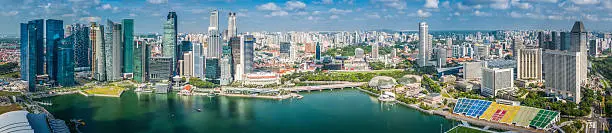
Pharmaceutical Manufacturing Engineers Gather in Singapore Amid Regional Capacity Growth
Introduction
Pharmaceutical manufacturing engineers, technical specialists, regulators, and industry suppliers are gathering in Singapore this week as the city-state reinforces its position as a major pharmaceutical and biopharmaceutical manufacturing hub in Asia. The ISPE Singapore Conference & Exhibition 2026, taking place from August 19–21 at Suntec Singapore, is bringing together professionals involved in facility engineering, manufacturing, quality, validation, digitalization, and advanced biopharmaceutical production.
The timing is significant. Singapore continues to expand its pharmaceutical manufacturing capabilities while the wider Asia-Pacific region attracts investment in biologics, advanced therapies, sterile manufacturing, and technology-enabled production. The meeting therefore provides an opportunity for engineers and manufacturers to discuss how new capacity can be designed and operated efficiently while maintaining increasingly demanding quality and regulatory standards.
Singapore's Expanding Pharmaceutical Manufacturing Base
Singapore has spent decades developing an integrated biomedical manufacturing ecosystem supported by advanced infrastructure, skilled technical talent, research institutions, and a business-friendly regulatory environment.
According to Singapore's Economic Development Board, the country's biopharmaceutical manufacturing talent pool has grown by 55% over the past decade to approximately 9,500 professionals. This workforce supports increasingly complex manufacturing activities and is reinforced through programmes designed to develop engineering and STEM capabilities.
The country's pharmaceutical market is also expected to expand. One recent market estimate places Singapore's pharmaceutical market at approximately $3.19 billion in 2026, with growth projected through 2034. Expansion of manufacturing capabilities and investment in advanced infrastructure are among the factors supporting this trajectory.
For manufacturers, Singapore's importance extends beyond domestic demand. Its manufacturing infrastructure and strategic position make it a regional base for producing medicines and biologics for international markets.
ISPE Singapore Puts Engineering at the Center
The 2026 ISPE Singapore Conference & Exhibition is being held under the theme “Smart & Future-Ready Pharma – Global Vision, Local Agility.” Its agenda covers many of the engineering and operational challenges emerging as pharmaceutical production becomes more automated, connected, and flexible.
Topics include:
Future-ready manufacturing facilities
Digital transformation and artificial intelligence
Pharma 4.0 implementation
Advanced therapy and biologics manufacturing
Aseptic manufacturing
Manufacturing quality and operational excellence
Good Engineering Practices
Flexible manufacturing capacity
Outsourced manufacturing
Validation and compliance
Sustainability and facility modernization
These themes demonstrate that pharmaceutical engineering is moving beyond traditional plant construction. Engineers increasingly have to design facilities around data availability, automation, flexibility, energy efficiency, validation requirements, and long-term manufacturing resilience.
Capacity Growth Is Changing Facility Design
As pharmaceutical companies add manufacturing capacity across Asia, facility design is becoming more complex.
Traditional facilities were often designed around specific products and relatively stable production processes. New facilities increasingly need to accommodate multiple products, changing production volumes, new biological platforms, and shorter development timelines.
Flexible manufacturing therefore becomes an important consideration. Facilities may require modular equipment, adaptable cleanrooms, single-use technologies, automated process control, and digital systems capable of supporting different production campaigns.
This creates new engineering requirements. A plant that can change production configurations quickly can potentially reduce downtime and improve asset utilization, but flexibility must still operate within strict GMP and validation requirements.
Digitalization and AI Are Becoming Manufacturing Priorities
Another major theme emerging from the Singapore conference is the growing role of digital technologies.
Pharmaceutical manufacturers are increasingly using manufacturing data to monitor equipment performance, identify deviations, improve maintenance, and optimize processes. Digital manufacturing approaches can connect production equipment, laboratory systems, quality platforms, and enterprise-level data.
AI can add another layer by identifying patterns that may not be obvious through conventional monitoring. Potential applications include predictive maintenance, process optimization, anomaly detection, quality investigations, and production planning.
The conference agenda specifically includes digital transformation and AI integration, reflecting the industry's shift toward data-driven manufacturing.
For engineers, this means that future facilities will need to be designed not only for physical production but also for reliable data generation, connectivity, cybersecurity, and interoperability.
Biologics and Advanced Therapies Increase Engineering Complexity
Regional capacity expansion is also being driven by increasingly sophisticated products.
Biologics, cell and gene therapies, and other advanced therapeutic modalities can require specialized manufacturing environments, highly controlled processes, sophisticated analytical systems, and rigorous validation.
This creates demand for engineers who understand both conventional pharmaceutical manufacturing and newer technologies.
For example, advanced therapy manufacturing can require specialized facility layouts, controlled material flows, contamination-control strategies, flexible equipment, and robust validation frameworks. ISPE's Singapore programming reflects this transition through dedicated attention to ATMPs, biologics manufacturing, aseptic processing, and validation.
The Workforce Challenge
Capacity expansion cannot be achieved through buildings and equipment alone. Skilled engineers and technical specialists are equally important.
Singapore's growth in biopharmaceutical manufacturing has therefore been accompanied by investment in workforce development. The country's EDB highlights programmes such as the Talent Advancement Programme and Industrial Postgraduate Programme as mechanisms for developing the next generation of STEM and manufacturing talent.
The challenge is becoming more multidimensional. Modern pharmaceutical engineers may need expertise across:
Process engineering
Automation and controls
Data analytics
Digital manufacturing
Validation
Quality systems
Sustainability
Equipment reliability
Cybersecurity
Regulatory compliance
This creates opportunities for companies that can provide specialized engineering services, training, validation, automation, and digital manufacturing solutions.
Implications for Pharmaceutical Supply Chains
Growing manufacturing capacity in Singapore and across Asia could also influence pharmaceutical supply chains.
Additional regional capacity can provide manufacturers with greater options for sourcing and production, potentially reducing dependence on individual manufacturing locations. At the same time, increased production creates demand for reliable supplies of active pharmaceutical ingredients, excipients, specialty chemicals, single-use components, laboratory materials, packaging, and engineering services.
Procurement teams will therefore need to evaluate suppliers based not only on price but also on:
This creates a stronger connection between pharmaceutical engineering and procurement. Facility decisions increasingly influence the materials, equipment, services, and suppliers that manufacturers will require over the entire operating life of a plant.
Singapore as a Regional Knowledge and Collaboration Hub
The significance of the ISPE Singapore event extends beyond the conference itself. It provides a meeting point for manufacturers, engineers, regulators, technology providers, consultants, and academic specialists across the Asia-Pacific pharmaceutical ecosystem.
The 2025 edition attracted more than 2,600 attendees from 32 countries, illustrating the international character of Singapore's pharmaceutical engineering community.
The 2026 program similarly emphasizes collaboration between global and regional professionals and the exchange of practical manufacturing experience.
This type of knowledge exchange becomes increasingly important as pharmaceutical companies build facilities faster and adopt technologies that may require new engineering and validation approaches.
Outlook
Singapore's pharmaceutical manufacturing growth is likely to remain closely linked to three areas: capacity expansion, advanced manufacturing technology, and skilled technical talent.
The immediate focus is not simply on building more factories. Manufacturers are looking for facilities that can operate efficiently, adapt to changing product requirements, integrate digital technologies, meet global GMP expectations, and remain economically competitive over the long term.
For pharmaceutical engineering companies, this creates opportunities across facility design, commissioning and qualification, automation, validation, reliability engineering, digital manufacturing, and sustainability.
For suppliers and procurement platforms, the expansion creates another opportunity: helping manufacturers identify qualified vendors and manage increasingly complex technical supply chains.
Conclusion
The gathering of pharmaceutical manufacturing engineers in Singapore comes at a strategically important moment for the Asia-Pacific life sciences industry. As regional manufacturing capacity expands, the industry is moving toward facilities that are more flexible, digital, automated, sustainable, and capable of producing increasingly complex therapies.
Singapore's growing technical workforce and established biomedical manufacturing ecosystem give it a strong position in this transition.
The key question for the next phase will not simply be how much pharmaceutical capacity Asia can add, but how efficiently, digitally, and resiliently that capacity can operate. Engineering expertise will be central to answering that question.