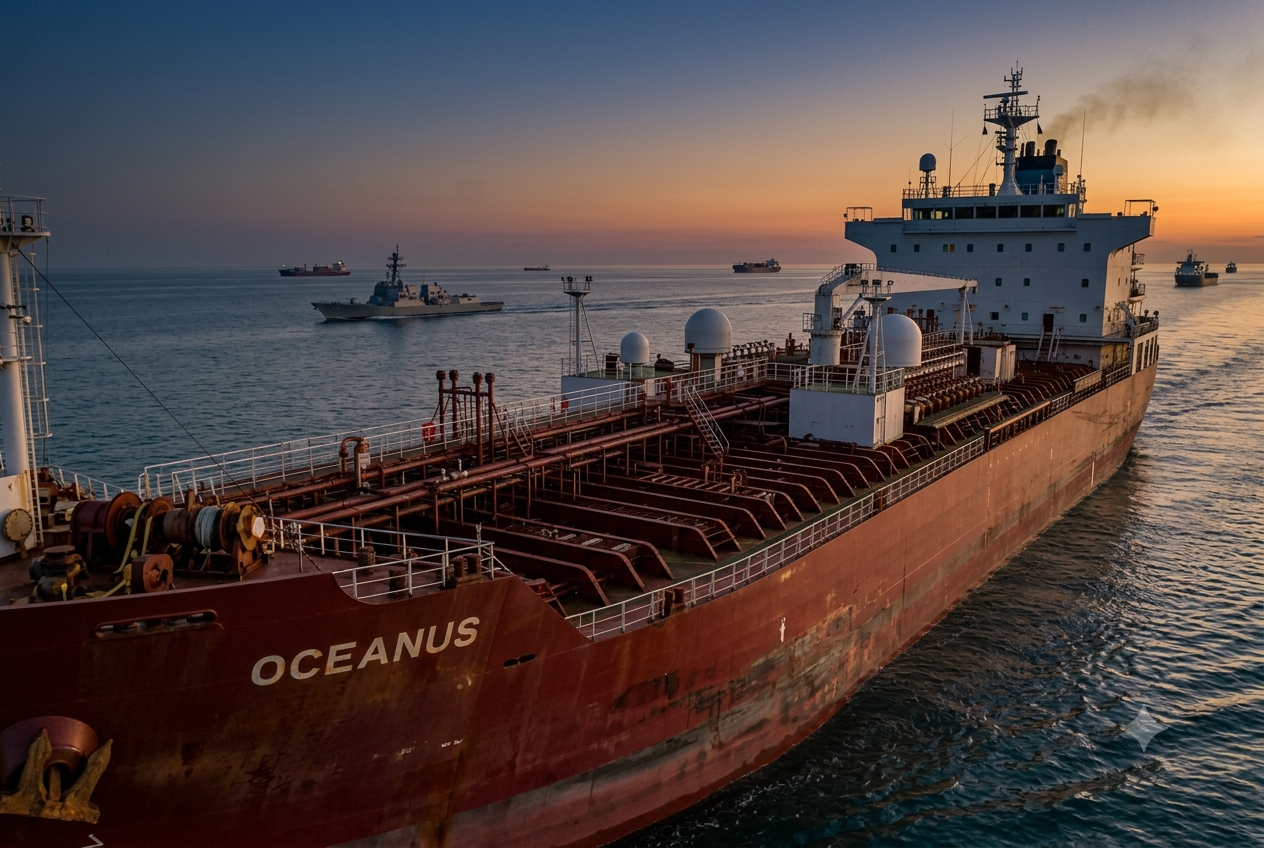
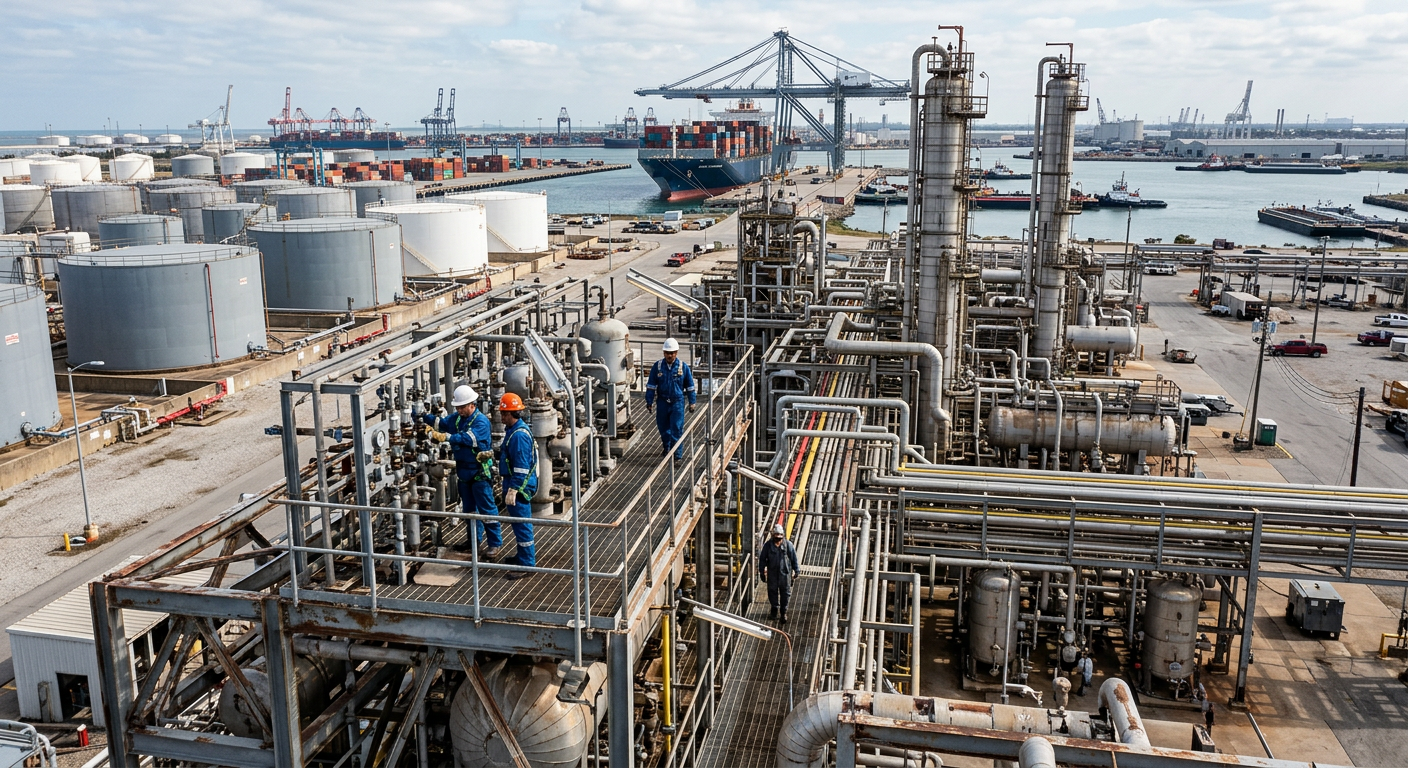
H1 2026 closes with a structural shift in Gulf chemical logistics that is becoming increasingly difficult to reverse. Sohar in Oman and Khor Fakkan on the UAE’s east coast have moved beyond their traditional supporting roles and now function as primary distribution hubs for regional chemical trade.
This change accelerated during the Hormuz disruption period, when cargo flows were diverted away from more exposed transit routes. However, the developments seen in H1 are no longer purely reactive. Both ports have expanded infrastructure, secured long-term commercial commitments and integrated deeper into global chemical supply chains.
For logistics planners and procurement teams, this represents a durable reset in Gulf distribution architecture rather than a temporary workaround.
Why Sohar and Khor Fakkan Gained Strategic Importance
The rise of Sohar and Khor Fakkan is directly linked to geographic and operational risk differentiation within the Gulf shipping network.
Both ports sit outside the most contested navigation zones, reducing exposure to transit uncertainty associated with chokepoint conditions.
During the crisis period, this advantage translated into:
More predictable vessel scheduling compared to heavily exposed routes.
Lower perceived operational risk for cargo handling and storage.
Faster decision-making by carriers prioritising routing stability.
Increased attractiveness for long-term chemical storage and distribution contracts.
As a result, cargo flows that previously concentrated in Jebel Ali began redistributing across multiple Gulf nodes.
Infrastructure Expansion Has Cemented the Shift
The most important factor driving long-term change is not just rerouting, but physical infrastructure investment.
Both Sohar and Khor Fakkan expanded capacity during H1 2026 in several key areas:
Increased liquid chemical tank farm storage to support higher throughput of bulk and semi-bulk products.
Expanded break-bulk handling systems to improve flexibility for packaged chemical cargoes.
Additional bonded warehouse capacity enabling longer dwell times and regional redistribution.
Upgraded berthing and loading infrastructure to accommodate larger chemical carriers.
These investments reduce dependency on a single dominant hub and increase system resilience.
The Changing Role of Jebel Ali in Regional Trade
Jebel Ali remains a major global logistics hub, but its role within chemical distribution patterns has become more distributed.
During periods of heightened regional risk, some cargo volumes were redirected to alternative ports, reducing reliance on a single chokepoint-adjacent node.
This has created a more balanced Gulf logistics network, where multiple ports now share chemical handling responsibilities rather than concentrating flows in one location.
For many supply chains, this shift has introduced greater routing flexibility but also more complex planning requirements.
Sohar’s Position as a Chemical Distribution Gateway
Sohar has strengthened its position as a major chemical import and export gateway for the northern Oman corridor.
Its appeal lies in a combination of industrial zoning, storage availability and direct access to regional manufacturing markets.
Key advantages include:
Proximity to industrial users requiring steady chemical supply.
Dedicated infrastructure for bulk liquid handling.
Growing integration with downstream petrochemical processing clusters.
Ability to serve as both import buffer and export consolidation point.
These factors make Sohar increasingly central to midstream chemical logistics strategies.
Khor Fakkan’s Role in East Coast Routing Stability
Khor Fakkan has emerged as a critical east coast logistics node supporting stable routing alternatives during periods of regional uncertainty.
Its location outside the most congested maritime zones has made it particularly valuable for maintaining continuity of shipments.
Operational strengths include:
Deepwater port access suitable for large chemical carriers.
Efficient turnaround times for bulk and containerized cargo.
Strategic positioning for transshipment flows between regional and international routes.
Increased use as a redistribution point for Gulf-origin chemicals.
This has strengthened its role beyond a supplementary port into a core logistics hub.
[IMAGE PLACEHOLDER 1]
Dimensions: 1200 x 800 px
AI Image Prompt: "Photorealistic aerial view of a modern Gulf chemical port with large storage tanks, tankers docked at terminals, and cranes operating along the shoreline at Sohar or Khor Fakkan. Clear sky, calm sea, no text, no logos, no labels."
What This Means for Chemical Supply Chains
The expansion of Sohar and Khor Fakkan has direct implications for chemical procurement and distribution strategies.
Products frequently routed through these hubs include:
Methanol, a high-volume export chemical requiring efficient storage and redistribution infrastructure.
Caustic soda, widely used across industrial and water treatment applications.
Ammonia, a key fertilizer feedstock dependent on reliable export handling.
Sulphur, used in downstream sulfuric acid and agricultural production.
Monoethylene glycol, essential for polyester and packaging supply chains.
As routing diversifies, supply chains gain resilience but require more sophisticated logistics coordination.
From Backup Ports to Primary Nodes
One of the most important structural changes in H1 2026 is the shift in perception of these ports.
Previously, Sohar and Khor Fakkan were often treated as contingency options when primary routes faced disruption.
That assumption is no longer accurate.
Both ports now function as:
Primary chemical handling nodes.
Long-term storage and redistribution centers.
Core components of Gulf export logistics architecture.
This shift is reinforced by sustained commercial flows rather than temporary crisis-driven diversion.
Implications for Freight and Contracting Strategies
The emergence of a multi-node Gulf logistics system affects how contracts and freight arrangements are structured.
Procurement teams should expect:
Greater variability in origin and routing points within the Gulf.
More diversified freight quotations depending on port selection.
Increased importance of port-specific capacity planning.
Longer-term contracts incorporating multiple discharge or load options.
This flexibility improves resilience but requires closer coordination between buyers, sellers and logistics providers.
Why This Shift Is Likely Permanent
Several indicators suggest that this is not a temporary adjustment.
Infrastructure investment has been capital-intensive and long-term in nature.
Commercial contracts have been restructured around multiple port options.
Shipping companies have integrated alternative routing strategies into operational planning.
Cargo flows have stabilised across multiple hubs rather than reverting to a single concentration point.
These factors indicate structural change rather than short-term disruption response.
The Bottom Line for Procurement Teams
H1 2026 closes with a clear structural transformation in Gulf chemical logistics. Sohar and Khor Fakkan have evolved from secondary or contingency ports into permanent primary nodes within the regional distribution network. This shift reflects both infrastructure investment and sustained changes in shipping behaviour during the Hormuz disruption period.
For chemical procurement and logistics teams, the key implication is that Gulf supply chains are no longer anchored around a single dominant hub. Instead, they operate through a distributed system that offers greater resilience but requires more detailed planning and coordination. Companies that integrate Sohar and Khor Fakkan into core sourcing strategies will be better positioned to manage risk, optimise freight costs and maintain supply continuity in H2 2026 and beyond.