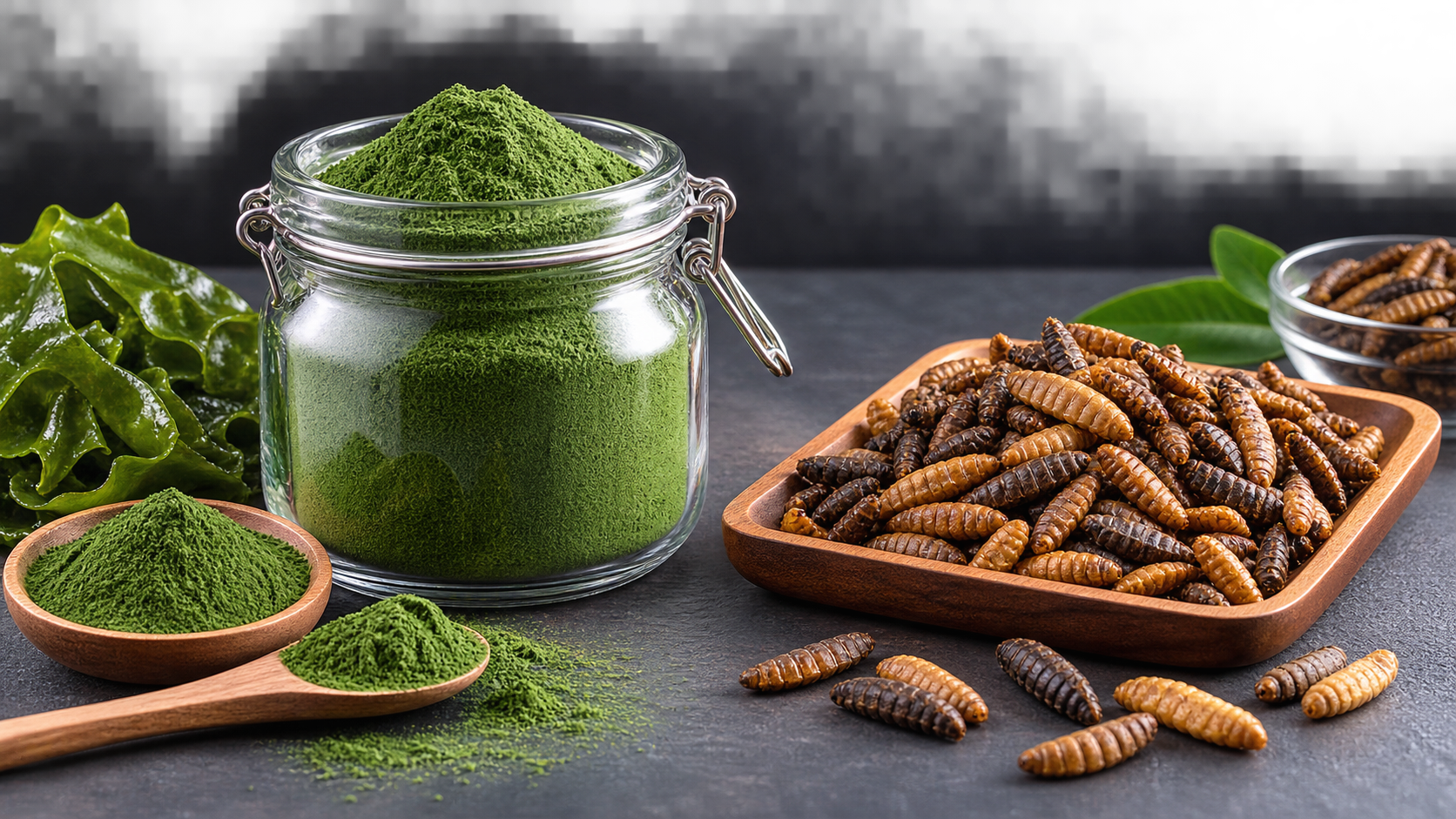
Precision fermentation proteins are moving from specialist product development into commercial food supply chains, giving procurement teams a new category to evaluate alongside established protein ingredients. The shift is particularly relevant for buyers seeking functional proteins with consistent performance and scalable production.
For chemical traders, food ingredient distributors, importers and exporters, this emerging category creates a different sourcing opportunity. Buyers are not simply looking for another protein source. They need reliable specifications, commercial-scale availability, technical documentation and suppliers capable of supporting repeat industrial orders.
The result is a procurement market where technical qualification and supply-chain reliability can matter as much as price. As more manufacturers incorporate fermentation-derived proteins into commercial formulations, early supplier relationships could become increasingly valuable.
What Precision Fermentation Adds to the Protein Market
Precision fermentation uses microorganisms as production platforms to manufacture targeted proteins and other biological ingredients. Instead of extracting the desired component directly from a conventional agricultural source, producers use controlled fermentation systems designed to generate a specific functional ingredient.
This approach gives manufacturers a different route to obtaining proteins with defined characteristics. Depending on the product, the resulting ingredient can target functions such as texture, emulsification, nutrition or other performance requirements in food formulations.
For procurement teams, this changes the way they should assess the category. Conventional protein sourcing often centers on agricultural supply, commodity pricing and physical processing, while precision fermentation introduces additional considerations around production technology, manufacturing scale and technical specifications.
The commercial question is increasingly straightforward: can a fermentation-derived protein move consistently from development batches into dependable industrial supply?
Why Functional Protein Buyers Are Paying Attention
Functional proteins can influence much more than the nutritional profile of a finished food product. Their interaction with water, fats and other formulation components can affect texture, stability and processing performance.
That makes functionality a major procurement consideration. A cheaper protein that requires significant formulation adjustments may prove less economical than a higher-value ingredient that performs consistently at the required concentration.
Precision fermentation can attract interest because producers can design fermentation processes around specific target molecules or proteins. This creates potential for ingredients tailored to particular food applications rather than relying solely on broad commodity protein categories.
Buyers are therefore beginning to evaluate several attributes together:
Functional performance: The ingredient must deliver the characteristics required by the formulation.
Consistency: Batch-to-batch uniformity can simplify production and reduce formulation variability.
Scalability: Commercial buyers need confidence that suppliers can move beyond laboratory or pilot volumes.
Documentation: Technical specifications and relevant quality documentation support supplier qualification.
Supply continuity: Food manufacturers need dependable replenishment once a product reaches commercial production.
Commercial Food Supply Chains Are Creating New Procurement Requirements
Moving a fermentation-derived protein into a commercial food supply chain requires more than proving that the ingredient works in a laboratory formulation. Procurement teams need to understand whether the supplier can support the entire purchasing cycle.
That includes production capacity, packaging, shipping arrangements, technical support and communication. Buyers may also need to coordinate closely with research and development, quality assurance and regulatory teams before approving a new supplier.
The purchasing process can therefore involve more stakeholders than a conventional commodity transaction. A trader who understands both the commercial and technical sides of the transaction can help reduce friction between ingredient manufacturers and food producers.
Supply visibility will become particularly important as demand increases. If several manufacturers adopt similar fermentation-derived proteins at the same time, production capacity and lead times could become central commercial considerations.
How Buyers Should Qualify Precision Fermentation Suppliers
Supplier qualification requires a broader framework when buyers enter an emerging protein category. Procurement teams should evaluate the ingredient itself while also examining the supplier's ability to support commercial production.
The first step involves defining the required specification. Buyers should identify the intended application, functional characteristics, purity requirements, packaging format and expected annual volume before comparing suppliers.
Next, procurement teams can examine the supplier's production capabilities. A company that can provide development samples may not have the infrastructure required for sustained commercial deliveries.
Important qualification questions include:
What commercial volumes can the supplier currently produce?
Can production scale as customer demand increases?
Does the supplier maintain consistent product specifications across batches?
What technical documents accompany each shipment?
What packaging and storage conditions apply?
What lead times should buyers expect for repeat orders?
Can the supplier support international export requirements?
These questions help separate experimental availability from commercially useful supply. That distinction matters because food manufacturers need confidence that a successful product trial will not lead to a sourcing bottleneck during market launch.
Pricing Will Depend on More Than Protein Content
Traditional commodity proteins often have established pricing structures linked to agricultural markets, processing costs and regional supply conditions. Precision fermentation proteins can operate under a different commercial model.
Production costs can reflect fermentation infrastructure, feedstocks, downstream processing, purification and manufacturing scale. As production volumes rise, suppliers may achieve greater efficiency, but the economics will vary significantly between individual products and production systems.
For procurement teams, the most useful comparison is therefore cost in use, not simply price per kilogram.
A functional protein that performs at a lower inclusion rate may offer a different economic proposition from a conventional protein that requires a larger quantity. Buyers should evaluate the ingredient against formulation performance, processing requirements and finished-product economics.
Traders can support this process by presenting commercial offers alongside clear specifications and shipment terms. Transparent information makes it easier for buyers to compare technically suitable suppliers rather than selecting purely on the lowest initial quotation.
Supply Chain Advantages and Risks
Precision fermentation introduces opportunities for supply diversification, but it also creates new supply-chain considerations. The technology can provide an alternative production route that does not depend entirely on conventional agricultural harvesting cycles.
That can support a more controlled supply model for certain ingredients. However, buyers still need to assess production concentration, manufacturing capacity and the availability of critical inputs required by the fermentation process.
Procurement teams should pay particular attention to supplier concentration during the early commercial phase. A product may have strong technical potential but remain dependent on a limited number of production facilities.
A resilient sourcing strategy can include:
Primary supplier qualification: Establish a commercial relationship with a supplier capable of meeting current requirements.
Secondary supplier development: Identify another qualified source where practical.
Volume forecasting: Share realistic demand expectations so suppliers can plan production.
Inventory planning: Align stock levels with lead times and the consequences of supply disruption.
Regular supplier reviews: Reassess capacity and commercial conditions as the category develops.
Regulatory and Quality Requirements Will Shape Adoption
Food manufacturers cannot treat precision fermentation proteins as ordinary commodity ingredients when establishing procurement procedures. Quality and regulatory requirements form an important part of supplier selection and market access.
Buyers should work with their internal regulatory and quality teams to establish the documentation required for each destination market and application. Supplier information should support the relevant approval and quality processes before commercial purchasing begins.
This creates another opportunity for experienced traders. A supplier with strong technical documentation and export experience can offer significant value to manufacturers entering a new ingredient category.
Documentation should be organized and accessible, particularly when procurement teams need to compare multiple international sources. Efficient information exchange can shorten supplier evaluation and help commercial teams move qualified products toward purchase agreements.
Sustainability Is Part of the Commercial Discussion
Precision fermentation has attracted attention partly because it offers an alternative production approach for certain food ingredients. Procurement teams may therefore consider resource use, production efficiency and supply-chain characteristics when evaluating potential suppliers.
However, sustainability alone will not determine commercial adoption. Food manufacturers still need ingredients that perform consistently, meet required quality standards and arrive at competitive total cost.
For buyers, sustainability assessment works best as one element of a broader supplier scorecard. Technical performance, production scale, quality systems, commercial terms and logistics should remain part of the same procurement decision.
Suppliers that can provide clear information about their production systems may gain an advantage as manufacturers increasingly seek greater visibility across their ingredient supply chains.
What This New Category Means for Chemical Traders
Precision fermentation proteins create an opportunity for traders that traditionally operate across chemicals, food ingredients and specialty materials. The category requires a more consultative approach because buyers may need assistance understanding specifications and matching products to applications.
Successful trading relationships could depend on the ability to connect food manufacturers with producers at different stages of commercial development. Some buyers may seek small quantities for formulation work, while others will require predictable industrial volumes.
Traders should be prepared to support both needs without treating them as identical transactions. Development-stage purchasing requires technical coordination, while commercial purchasing requires dependable capacity, logistics and pricing.
The strongest market participants will likely combine supplier access with practical procurement support. That can include specification matching, sample coordination, commercial negotiations and international shipping assistance.
The Procurement Playbook for 2027 and Beyond
As precision fermentation proteins gain a stronger position in commercial food supply chains, procurement teams should establish internal processes before demand accelerates. Waiting until a new ingredient becomes essential can leave buyers with fewer qualified suppliers and less negotiating leverage.
A forward-looking strategy starts with supplier mapping. Procurement teams can identify producers, traders and regional distributors while monitoring commercial-scale production capabilities.
They should then build technical qualification into purchasing workflows. This ensures that a promising ingredient can move efficiently from product development into commercial sourcing when the formulation receives approval.
The category also rewards close coordination between departments. Procurement, research and development, quality assurance, regulatory teams and logistics should share requirements early rather than evaluating the ingredient independently.
What Functional Protein Buyers Should Do Now
Precision fermentation proteins are creating a new sourcing category for food manufacturers that need targeted functionality, consistent quality and scalable supply. The commercial opportunity will depend on how effectively suppliers translate production technology into dependable international deliveries.
For buyers, the priority should be supplier qualification rather than simply tracking new product announcements. Establishing technical requirements, evaluating production scale and developing alternative sources can give procurement teams greater flexibility as the market develops.
For traders and exporters, this emerging category offers a chance to build relationships before supply networks become more established. Companies that can combine reliable sourcing with strong technical and commercial support can help food manufacturers navigate the transition from pilot formulations to regular procurement.
As precision fermentation proteins enter mainstream food supply chains, procurement teams will increasingly evaluate them on the same fundamentals that govern other specialty ingredients: performance, consistency, availability, documentation and total delivered cost. Ready to source precision fermentation proteins from verified global suppliers? Explore competitive offers on our platform today.