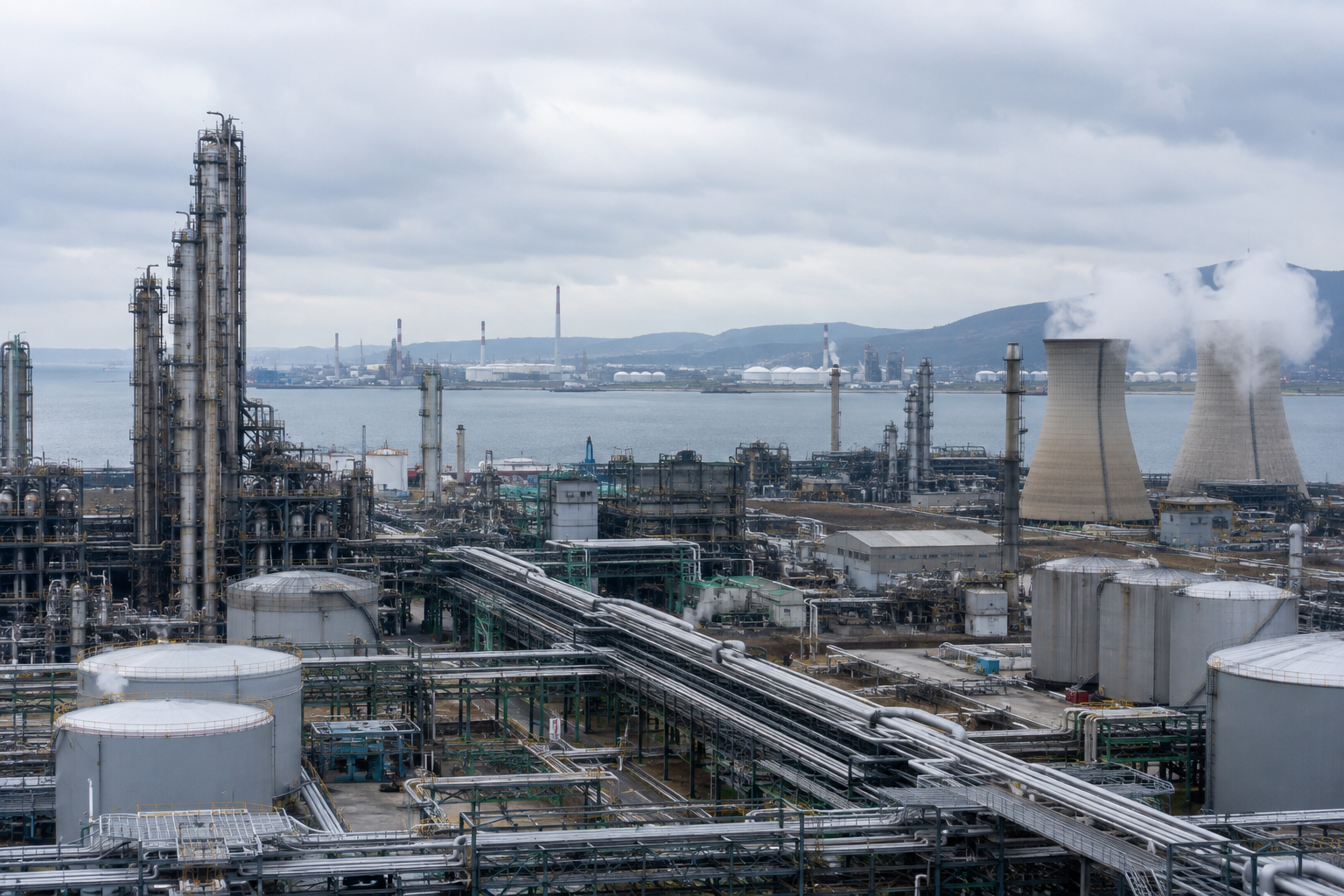
Dow's planned closure of three European upstream petrochemical assets by 2027 provides another important benchmark for tracking the restructuring of Europe's commodity chemicals industry.
The closures form part of Dow's broader response to persistent European cost disadvantages, including high energy prices, weaker regional demand, excess capacity, and the growing capital requirements associated with maintaining older production infrastructure.
When viewed alongside restructuring actions from BASF, Solvay, and Celanese, Dow's plans illustrate a wider industry shift: major chemical producers are increasingly reducing exposure to structurally challenged European commodity operations while concentrating investment on businesses with stronger competitive positions.
Dow's European Closure Plan
Dow has been reviewing its European asset footprint as part of a broader effort to improve the competitiveness of its manufacturing network.
The company's plan to close three upstream petrochemical assets by 2027 represents a significant step in reducing European commodity exposure.
These operations are more exposed to:
The planned closures therefore reflect structural economics rather than a short-term production adjustment.
Why European Upstream Chemicals Are Under Pressure
Europe's upstream chemical producers face a difficult combination of disadvantages.
Natural gas and electricity costs remain structurally higher than in several competing production regions, while imported feedstocks and finished materials can place additional pressure on domestic producers.
At the same time, European manufacturers face increasing costs associated with:
For older commodity assets, the economics can become increasingly difficult to justify.
Dow's Closures Fit a Larger Pattern
Dow's planned shutdowns should not be viewed in isolation.
Several major European chemical producers have announced restructuring programs involving plant closures, production reductions, workforce cuts, or portfolio exits.
This includes restructuring activity from:
The common theme is increasingly clear.
European commodity capacity is being reassessed against global cost competitiveness.
BASF Provides One of the Strongest Comparisons
BASF has been implementing a major European restructuring program as it responds to high operating costs and weak demand in several commodity-oriented businesses.
The company has continued reducing costs while selectively investing in businesses where it sees stronger long-term opportunities.
This creates an important comparison with Dow.
Neither company is simply abandoning Europe.
Instead, both are attempting to reduce exposure to less competitive commodity operations while preserving businesses with stronger strategic value.
Solvay's Restructuring Highlights the Demand Problem
Solvay's recent performance demonstrates another side of the European restructuring equation.
The company has faced pressure from weaker demand in areas such as soda ash, alongside broader European energy and competitiveness challenges.
Its restructuring efforts therefore reflect both:
cost pressure
and
demand weakness.
Dow's planned closures fit into the same broader environment, although the specific asset economics differ.
Celanese Adds Another Restructuring Benchmark
Celanese has also been adjusting its European manufacturing footprint as part of its broader portfolio and cost-reduction strategy.
The company's exposure to European commodity and intermediate chemicals makes it another useful peer for benchmarking Dow's actions.
Taken together, Dow, BASF, Solvay, and Celanese demonstrate that European restructuring is occurring across multiple chemical subsectors.
This is not simply an issue affecting one product category.
Commodity Chemicals Are the Main Pressure Point
The strongest commonality between these restructuring programs is their exposure to commodity economics.
Commodity chemical facilities depend heavily on:
When these variables deteriorate simultaneously, even large integrated producers can struggle to maintain attractive returns.
This is why upstream petrochemical facilities are increasingly becoming candidates for closure, sale, or alternative ownership.
The Difference Between Closure and Divestment
An important distinction for industry intelligence is whether an asset is:
Closed
Sold
Converted
or
Restructured.
Dow's planned closures are particularly significant because shutdowns permanently remove production capacity from the European market.
A sale to another operator would transfer ownership but potentially preserve production.
A closure does something different.
It reduces available regional capacity.
Capacity Rationalization Can Support Remaining Producers
Although closures are negative for employees and local manufacturing ecosystems, they can eventually improve supply-demand conditions for producers that remain operational.
Removing structurally uncompetitive capacity can:
This is one reason investors closely monitor European closure announcements.
The immediate headline may be negative, but the long-term effect on remaining assets can be more complicated.
Energy Costs Remain a Central Issue
Energy is particularly important for upstream petrochemicals.
Large crackers and integrated chemical complexes consume substantial quantities of energy.
When European energy prices remain significantly above competing regions, the disadvantage can accumulate over years.
This can make older facilities increasingly difficult to operate competitively even when product demand remains relatively stable.
Dow's restructuring therefore provides another indication that energy competitiveness remains one of the defining issues for European chemicals.
Decarbonization Adds Another Capital Requirement
European chemical companies also face pressure to reduce emissions.
For newer facilities, this can create opportunities to build more efficient and lower-carbon production systems.
For older assets, however, decarbonization can require significant capital investment.
Companies must therefore compare:
Continue operating + invest in decarbonization
against
Close or restructure the facility.
In some cases, the second option becomes financially more attractive.
Europe's Chemical Competitiveness Problem
Dow's planned closures reinforce a broader debate about European industrial competitiveness.
Chemical producers are increasingly questioning whether certain commodity facilities can remain viable under Europe's combination of:
High energy prices
Carbon costs
Environmental regulation
Weak demand
Global competition
Aging infrastructure
The issue has become important enough to influence corporate capital-allocation decisions across the sector.
Ranking the Peer Restructuring Activity
From an industry-intelligence perspective, the major restructuring programs can be viewed across several dimensions.
Dow
High impact
Three planned European upstream closures by 2027 represent direct removal of commodity capacity.
BASF
Very High impact
BASF's broad European cost and portfolio restructuring affects multiple businesses and manufacturing locations.
Solvay
High impact
Weak commodity demand combined with European cost pressure is driving significant portfolio and operating adjustments.
Celanese
High impact
European restructuring and portfolio optimization demonstrate continuing pressure on chemical intermediates and commodity-oriented assets.
Why the Timing Matters
The timing of these announcements is particularly important.
The European chemical industry is not waiting for a complete economic recovery before making capacity decisions.
Companies are acting now because they increasingly view some cost disadvantages as structural.
That means even a future improvement in chemical demand may not automatically bring every closed facility back online.
Once a plant is permanently shut, restarting production can be economically and technically difficult.
Potential Long-Term Supply Effects
The cumulative effect of multiple closures could materially change European supply chains.
If several producers remove upstream capacity at the same time, customers may eventually face:
Fewer regional suppliers
Greater import dependence
Longer logistics routes
Higher transportation costs
Increased supplier concentration
Greater sensitivity to global disruptions
This is particularly important for downstream manufacturers that have historically relied on European production for supply security.
Import Dependence Could Increase
As European production capacity declines, the region may increasingly depend on imports from:
This can create new vulnerabilities.
European customers may become more exposed to:
The result could be a shift from local production risk toward international supply-chain risk.
Procurement Teams Should Watch Supplier Concentration
For procurement organizations, the most important consequence may be increasing supplier concentration.
When multiple European assets close, buyers may have fewer qualified regional sources for certain chemical inputs.
Procurement teams should therefore review:
Current supplier locations
Alternative manufacturers
Qualification requirements
Import options
Inventory policies
Contract duration
Emergency sourcing plans
The closure of one plant may have limited consequences.
The closure of multiple plants across the same value chain can be much more significant.
Specialty Chemicals May Become More Attractive
The restructuring trend also reinforces the strategic distinction between commodity and specialty chemicals.
Companies continue to invest in businesses where products benefit from:
This helps explain why European chemical companies can simultaneously announce commodity closures while continuing to invest in specialty manufacturing.
The European Portfolio Is Becoming More Selective
Dow's strategy reflects a broader portfolio-management principle.
The question is no longer simply:
Should a chemical company maintain a European manufacturing footprint?
Instead, management teams are asking:
Which European assets can realistically generate competitive returns?
That is a much more selective framework.
It favors modern, integrated, specialized, and strategically important facilities over older commodity production.
What Investors Should Track Next
Several indicators will help determine whether Dow's planned closures become part of an even broader European capacity reduction.
Additional Dow Announcements
Further asset reviews or closure plans would increase the scale of the restructuring.
Peer Closures
Announcements from BASF, Solvay, Celanese, LyondellBasell, and other producers will reveal whether the trend is accelerating.
European Energy Prices
Lower energy costs could improve the economics of some facilities, while sustained high prices would reinforce closure pressure.
Capacity Utilization
Weak utilization can make continued operation increasingly difficult to justify.
Import Volumes
Rising imports would indicate that domestic European capacity is no longer meeting regional demand.
Intelligence Check: What Does Three Closures Really Mean?
The three planned Dow closures should be interpreted as more than a simple site count.
They represent:
Permanent reduction of upstream capacity
Lower exposure to difficult European commodity economics
Reduced future maintenance and capital requirements
Potential improvement in the competitiveness of remaining assets
Greater dependence on alternative regional and global suppliers
The significance therefore comes from both the number of assets and the strategic direction they represent.
Broader Industry Implications
Dow's restructuring reinforces a broader shift across European chemicals.
The industry appears to be moving toward a more concentrated manufacturing model in which:
Commodity production → increasingly rationalized
Specialty production → increasingly protected
Circular production → increasingly prioritized
Low-carbon production → increasingly strategic
This transformation is likely to continue as companies balance profitability, regulation, energy costs, and decarbonization requirements.
Supply-Chain Intelligence
For chemical buyers, the most important lesson is that European plant closures should be treated as supply-chain events rather than purely corporate news.
A facility shutdown can affect:
Regional availability
Product lead times
Contract pricing
Import requirements
Supplier qualification
Transportation routes
Inventory requirements
Companies purchasing upstream chemical materials should therefore maintain visibility into planned closures well before the actual shutdown date.
Looking Ahead
Dow's plan to close three European upstream petrochemical assets by 2027 provides another clear indicator of the structural pressure facing Europe's commodity chemical industry.
When compared with restructuring programs at BASF, Solvay, and Celanese, the move becomes part of a much larger pattern.
The European chemicals sector is gradually becoming smaller in commodity capacity but more selective in where capital is deployed.
That does not necessarily mean Europe is becoming irrelevant to chemicals.
Instead, it suggests that the region's future manufacturing footprint will increasingly depend on cost competitiveness, specialization, integration, technology, and strategic differentiation.
For investors and procurement teams, the key issue is therefore not simply how many plants are closing.
It is which products, supply chains, and regional capabilities are disappearing with them—and which assets are strong enough to survive the restructuring cycle.
Key Takeaways
Dow's planned closure of three European upstream petrochemical assets by 2027 adds to the region's broader commodity-capacity rationalization.
BASF, Solvay, and Celanese provide important peer benchmarks for understanding the scale of European chemical restructuring.
High energy costs remain one of the most important structural pressures on European upstream production.
Decarbonization requirements can make modernization of older facilities increasingly expensive.
Permanent closures remove production capacity rather than simply transferring ownership.
Reduced European capacity could increase import dependence and supplier concentration.
Remaining producers may eventually benefit from lower regional oversupply and improved utilization.
Specialty and differentiated chemical businesses continue to receive greater strategic attention.
Procurement teams should monitor planned closures for potential effects on availability, pricing, qualification, and logistics.
The broader trend suggests Europe's chemical manufacturing footprint is becoming smaller but more selective and strategically focused.