




Rankings & Industry Intelligence
Aug 21, 2026schedule6 Min Read
Ranking 2026's Biggest Regulatory and Scientific Stories Shaping Chemical Industry Direction
Full Reportarrow_forward
prodchem
Aug 21, 2026
Europe's chemical industry is entering 2026 with an unusual gap between headline production expectations and company-level operating conditions.
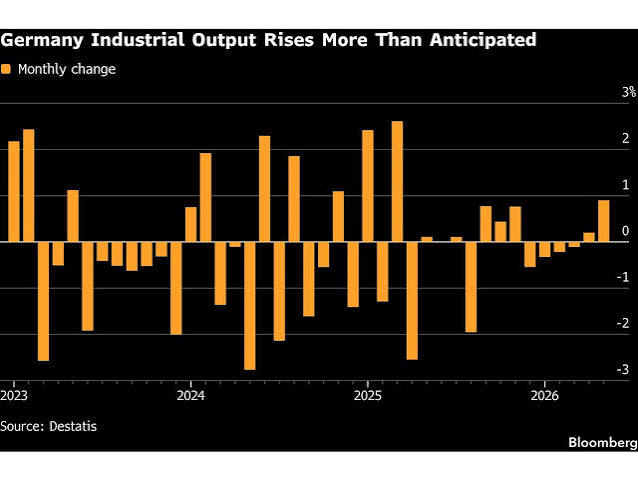
Cefic's projection of roughly 3% European chemical production growth through 2026 suggests a potential recovery after several difficult years. Yet Germany, Europe's largest chemical manufacturing base, continues to report weak business conditions, including a 2.9% decline in chemical-industry turnover.
This divergence creates an important intelligence question for chemical producers, traders and procurement teams:
Is Europe's projected recovery broad-based, or is growth concentrated outside Germany?
European chemical production has faced significant pressure from:
High energy costs
Weak industrial demand
Global overcapacity
Competition from China
High regulatory costs
Reduced European competitiveness
Against this backdrop, a production-growth forecast of approximately 3% would represent a meaningful improvement.
However, production growth does not necessarily translate into stronger revenue.
A company can produce more while facing:
Lower selling prices
Margin compression
Higher energy costs
Weak customer demand
This makes the difference between production growth and financial performance particularly important.
Germany remains one of Europe's most important chemical manufacturing centers.
Its chemical sector is closely connected to:
Automotive
Machinery
Construction
Pharmaceuticals
Packaging
Industrial manufacturing
Weakness in these downstream industries can therefore have a significant effect on chemical demand.
The reported 2.9% turnover decline provides a ground-level signal that contrasts with the broader European production-growth outlook.
The apparent contradiction is not necessarily a statistical error.
Production measures physical output.
Turnover measures sales value.
If production rises while chemical prices decline, companies can experience higher volumes but lower revenue.
For example:
Higher production + lower prices = weaker turnover
This distinction is essential when evaluating Europe's 2026 recovery.
German chemical producers continue to face structural energy-cost challenges.
Energy-intensive operations such as:
Basic chemicals
Petrochemicals
Fertilizers
Polymers
Industrial gases
are particularly exposed.
Higher energy costs can make European production less competitive against regions with cheaper feedstocks and electricity.
Chinese chemical exports to Europe have also become an increasingly important competitive factor.
European producers are therefore facing a difficult combination:
Weak domestic demand + high production costs + increasing imports
This can limit the benefit of any recovery in physical production.
The 3% production forecast should not be interpreted as every European country growing at the same rate.
Different markets face different conditions.
Potential differences include:
Energy costs
Industrial demand
Government support
Export exposure
Chemical product mix
Plant utilization
Investment levels
Germany's performance may therefore be weaker than the European average.
Commodity producers are generally more exposed to global price competition.
Specialty chemical producers can benefit from:
Product differentiation
Technical expertise
Customer qualification
Higher switching costs
Application-specific products
This means European production growth could increasingly be concentrated in higher-value chemical segments.
European chemical companies have announced numerous restructuring measures in recent years.
Plant closures can reduce total regional capacity while improving utilization at the remaining facilities.
This creates an important dynamic:
Lower capacity + stronger utilization = higher production from surviving assets
Therefore, production growth does not necessarily mean European chemical companies are expanding their physical footprint.
Capital expenditure provides another way to test the European recovery story.
Companies investing in:
Specialty chemicals
Advanced materials
Electronics
Low-carbon production
Recycling
High-performance polymers
may be positioning themselves for longer-term growth.
Meanwhile, limited investment in commodity capacity could indicate that companies remain cautious about Europe's structural competitiveness.
Traders should avoid treating European production growth as a simple bullish signal.
Instead, they should monitor:
Product-level production
Import volumes
Export volumes
Regional price spreads
Plant utilization
Energy costs
Capacity closures
A production recovery combined with weak prices could create very different trading conditions from a recovery accompanied by stronger demand.
For buyers, the divergence creates both risks and opportunities.
Procurement teams should evaluate:
European supplier capacity
Plant operating status
Import alternatives
Energy exposure
Delivery reliability
Contract pricing
Supplier financial strength
Companies that depend heavily on German producers may need to monitor restructuring and capacity decisions particularly closely.
The most important question is not whether Europe will grow by approximately 3%.
It is:
Where will that growth actually occur?
Analysts should compare:
European production
versus
German production
versus
European turnover
versus
German turnover
versus
Import volumes
This comparison can reveal whether the recovery is genuinely broad-based or being driven by selected countries and product categories.
The contrast between Europe's projected ~3% production growth and Germany's 2.9% turnover decline highlights how difficult it is to evaluate the chemical industry's recovery using a single indicator.
Europe may indeed be entering a production recovery, but the benefits may not be evenly distributed.
Germany's experience suggests that higher output does not automatically translate into stronger industry economics.
For chemical manufacturers, the key issue will be whether production growth eventually improves margins and investment.
For traders, the focus should be on regional price and supply differences.
For procurement teams, supplier diversification remains important while European producers navigate cost and competitive pressures.
The most useful 2026 intelligence will therefore come from connecting production data with turnover, prices, imports, capacity and utilization.
That is what will determine whether Europe's chemical recovery is a genuine structural improvement—or simply a higher-volume environment with continued margin pressure.
Cefic's roughly 3% European chemical production-growth outlook points toward a potential 2026 recovery.
Germany's reported 2.9% turnover decline highlights the uneven nature of that recovery.
Production and turnover can move in opposite directions when chemical prices weaken.
German producers remain particularly exposed to energy costs and global competition.
Chinese chemical imports add further pressure to European commodity producers.
Specialty chemicals may experience stronger conditions than commodity segments.
Plant closures can raise utilization at remaining facilities without increasing total regional capacity.
Traders should monitor production alongside prices, imports, exports and plant utilization.
Procurement teams should track supplier capacity, restructuring and alternative sourcing options.
The key intelligence question is where European chemical production growth is actually occurring.
Featured Product
Found this useful?
Continue Reading
Battery energy storage is gaining relevance across the chemical process industry, offering manufacturers new options for managing electricity costs, improving reliability and integrating renewable power as grid-scale storage deployment accelerates.
German petrochemical contraction is creating a sharp contrast with broader European production growth expectations through 2026. For chemical buyers, the divergence could reshape sourcing decisions, regional supply strategies and procurement priorities.