The U.S. petrochemical industry still retains one of the world's strongest feedstock advantages, but its new-project pipeline looks dramatically different from the investment boom of the late 2010s.
Wood Mackenzie's assessment is unusually direct: development of new, large U.S. petrochemical projects has slowed sharply since the late 2010s. In 2026, the $8.5 billion Golden Triangle Polymers project in Texas stands out as one of the few major projects moving toward completion, while ExxonMobil has slowed a Texas project and Dow has delayed a major Canadian development. Wood Mackenzie's conclusion is that the U.S. remains relatively protected from chemical-plant rationalization, but its investment pipeline has become “really, really thin or almost nothing.”
That creates an important historical benchmark.
The question is no longer whether the U.S. chemical industry remains competitive.
It does.
The intelligence question is why that competitiveness is no longer translating into a late-2010s-style wave of greenfield petrochemical investment.
The Late-2010s Were an Exceptional Investment Period
The late 2010s represented a fundamentally different investment environment for U.S. petrochemicals.
The shale-gas revolution had created abundant supplies of relatively inexpensive natural gas liquids, particularly ethane. That transformed the economics of U.S. ethylene production and triggered a major wave of Gulf Coast investment.
The logic was straightforward:
Cheap feedstock → competitive ethylene → new crackers → downstream polyethylene and derivatives → export growth.
This created a powerful investment cycle.
Large projects were announced across Texas and Louisiana, while existing producers expanded crackers and downstream polymer capacity.
The result was not simply incremental investment.
It was a capacity-building cycle designed to reposition the U.S. as a major global petrochemical export hub.
Today's Pipeline Looks Almost Like the Inverse
Fast-forward to 2026 and the picture is much thinner.
Wood Mackenzie principal analyst Shruthi Vangipuram says that, aside from Golden Triangle, there are effectively no comparable major U.S. projects currently moving forward. ExxonMobil has slowed a Texas development, while Dow has delayed a major Canadian project.
The contrast is striking:
Investment characteristic | Late 2010s | 2026 |
|---|
New mega-project announcements | High | Low |
Ethylene expansion | Strong | Limited |
Downstream polymer projects | Broad | Selective |
Investor appetite | Expansion-oriented | Capital-disciplined |
Primary concern | Capturing feedstock advantage | Avoiding oversupply |
Export strategy | Build capacity | Optimize existing capacity |
Greenfield pipeline | Deep | Thin |
This is not simply a temporary pause in construction.
It represents a change in capital-allocation philosophy.
Why the U.S. Feedstock Advantage Is No Longer Enough
The biggest misconception would be to assume that weaker project development means the U.S. has lost its petrochemical advantage.
It has not.
The U.S. continues to benefit from abundant natural gas and ethane.
C&EN notes that U.S. chemical manufacturers remain comparatively competitive because of lower energy costs, while U.S. plastic-resin exports increased 2.7% during the first nine months of 2025.
The problem is that being competitive is not the same as being sufficiently attractive for another $5–10 billion greenfield investment.
Existing assets can generate attractive returns without requiring enormous amounts of new capital.
A new project, however, must justify:
That hurdle is much higher than simply demonstrating that U.S. ethane is cheap.
Global Oversupply Changed the Investment Equation
The most important difference from the late 2010s is the global supply balance.
The industry has spent years adding large amounts of petrochemical capacity, particularly in Asia and the Middle East.
That has produced an uncomfortable situation:
U.S. producers may have excellent feedstock economics while still facing weak global margins.
C&EN describes the global chemical industry as experiencing a severe downturn driven by excess new capacity, with plant closures occurring across Europe and Japan.
For investors, this changes the calculation.
A new U.S. cracker may be technologically attractive and feedstock-competitive, but if global polyethylene or derivative markets are already oversupplied, the project's incremental capacity can depress the very margins that justified the investment.
That creates a paradox:
The U.S. can be the world's low-cost producer and still decide not to build more capacity.
Golden Triangle Is the Exception That Proves the Rule
The Golden Triangle Polymers project illustrates how selective today's investment environment has become.
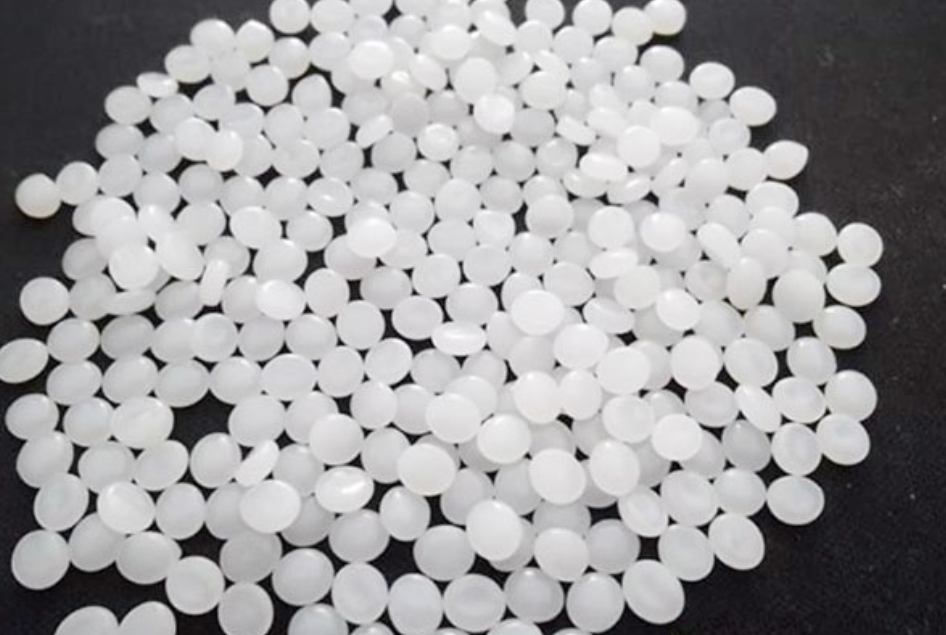
The $8.5 billion Chevron Phillips Chemical–QatarEnergy project combines a 2,080 KTA ethane cracker with two 1,000 KTA HDPE units in Orange, Texas.
The project is now moving through commissioning/startup, with full operations expected in 2027.
Its scale makes it exceptional precisely because comparable projects are so scarce.
That scarcity gives Golden Triangle strategic significance beyond its own production volumes.
It is effectively a benchmark for the question:
What kind of project can still justify a multibillion-dollar U.S. petrochemical investment in the mid-2020s?
The answer appears to involve several advantages at once:
world-scale capacity,
low-cost U.S. ethane,
integrated downstream production,
strong strategic partners,
export access,
and long-term confidence in U.S. feedstock availability.
The Late-2010s Model Was About Capacity Growth
The previous investment cycle was largely based on building scale ahead of expected demand.
Companies anticipated:
continued shale growth,
sustained U.S. feedstock advantage,
rising global plastics demand,
expanding exports,
and attractive long-term margins.
That encouraged companies to build entire production chains.
Today, the industry is much more cautious about the fifth assumption.
Margins are increasingly vulnerable to global capacity additions.
The lesson investors learned is simple:
Low-cost feedstock does not protect a producer from a global capacity glut.
The New Model Is About Asset Quality
The industry's capital strategy is therefore shifting from:
“How much capacity can we build?”
to:
“Which assets deserve additional capital?”
That favors:
It also explains why the U.S. can remain one of the most competitive chemical regions while simultaneously experiencing a weak greenfield pipeline.
Capital is being directed toward existing advantaged assets rather than indiscriminate capacity expansion.
ExxonMobil and Dow Demonstrate the New Discipline
The slowdown is not limited to one company.
Wood Mackenzie's observation that ExxonMobil slowed the pace of a Texas project and Dow delayed a major Canadian project is important because these are not marginal developers. They are major global chemical companies with significant experience executing large-scale projects.
When companies of this scale become more selective, the signal is stronger than a simple decline in project announcements.
It suggests that the industry-wide investment hurdle has increased.
Companies are effectively asking:
Does this project remain economically compelling across a full commodity cycle?
That question was less restrictive during the late-2010s expansion.
Project Economics Are Being Tested Against a Longer Time Horizon
A petrochemical complex is not a short-term trade.
A multibillion-dollar cracker and polymer complex needs decades of operating life to generate returns.
That means today's investment decisions must incorporate uncertainties that were less prominent during the original U.S. shale-driven expansion:
global polymer overcapacity,
changing plastics demand,
recycling,
circular-economy regulation,
carbon costs,
trade policy,
tariffs,
and competition from new production regions.
The more uncertain the long-term demand environment becomes, the higher the required return on a new project.
This naturally reduces the number of projects that reach final investment decisions.
The Export Advantage Is Also Becoming More Complicated
U.S. petrochemical competitiveness has increasingly become an export story.
C&EN notes that U.S. plastic-resin exports increased 2.7% in the first nine months of 2025, demonstrating how lower U.S. energy costs translate into international trade advantages.
But exports cannot absorb unlimited additional capacity.
If every low-cost producer expands simultaneously, global markets can become oversupplied.
That creates a ceiling on how aggressively the U.S. should expand.
The industry therefore has an unusual strategic position:
America has the ability to produce more — but not necessarily the economic reason to do so.
Ranking the Two Investment Eras
#1 Late-2010s: Capacity Expansion Era
The late-2010s receive the highest ranking for investment momentum.
The combination of shale feedstock, strong margins and global demand expectations created an environment conducive to major greenfield projects.
#2 Early-2020s: Project Reassessment Era
The pandemic, inflation, energy volatility and global capacity additions forced companies to reassess previously announced projects.
#3 2026: Capital Discipline Era
The current environment prioritizes existing assets and selective mega-projects.
Golden Triangle remains a major exception, but Wood Mackenzie's assessment suggests that the broader pipeline has become exceptionally thin.
What Would Reverse the Pipeline Weakness?
Three developments could restart major U.S. petrochemical investment.
1. Stronger global demand
If global polymer demand begins consistently absorbing existing excess capacity, margins could recover enough to support new projects.
2. Further feedstock advantage
A sustained U.S. ethane advantage relative to competing regions would improve project economics.
3. Higher-value downstream integration
Projects producing differentiated polymers or integrated derivatives may achieve better economics than standalone commodity capacity.
The industry therefore does not necessarily need another late-2010s-style boom.
A smaller number of exceptionally competitive projects could represent the new normal.
The Bigger Intelligence Signal: A Maturing Industry
The thin project pipeline should also be interpreted as a sign of industry maturity.
The late-2010s were characterized by strategic expansion.
The current period is characterized by portfolio optimization.
That is a major distinction.
Companies are no longer rewarded simply for adding capacity.
They need to demonstrate that the capacity will remain profitable through multiple commodity cycles.
This naturally favors projects with:
low feedstock cost + integrated production + logistics advantages + strong balance sheets + differentiated products.
Golden Triangle fits that profile unusually well.
The Intelligence Takeaway
The U.S. petrochemical industry's weak project pipeline should not be mistaken for a loss of competitiveness.
The country still has major advantages in natural gas, ethane availability, infrastructure and export logistics. U.S. resin exports continued to demonstrate the value of those advantages in 2025.
The bigger change is that the economics of adding capacity have deteriorated relative to the late-2010s boom.
Global oversupply, weaker commodity margins and greater uncertainty around long-term plastics demand have raised the investment threshold. Wood Mackenzie's assessment that Golden Triangle is effectively standing alone among major U.S. projects makes the contrast especially clear.
The intelligence ranking is therefore:
Late-2010s = expansion advantage.
2026 = asset-quality advantage.
The U.S. petrochemical industry is still structurally competitive, but it no longer needs — or appears willing — to prove that competitiveness through another wave of massive greenfield capacity.
The next investment cycle, if it arrives, is likely to be smaller, more selective and more integrated than the shale-driven boom that preceded it.