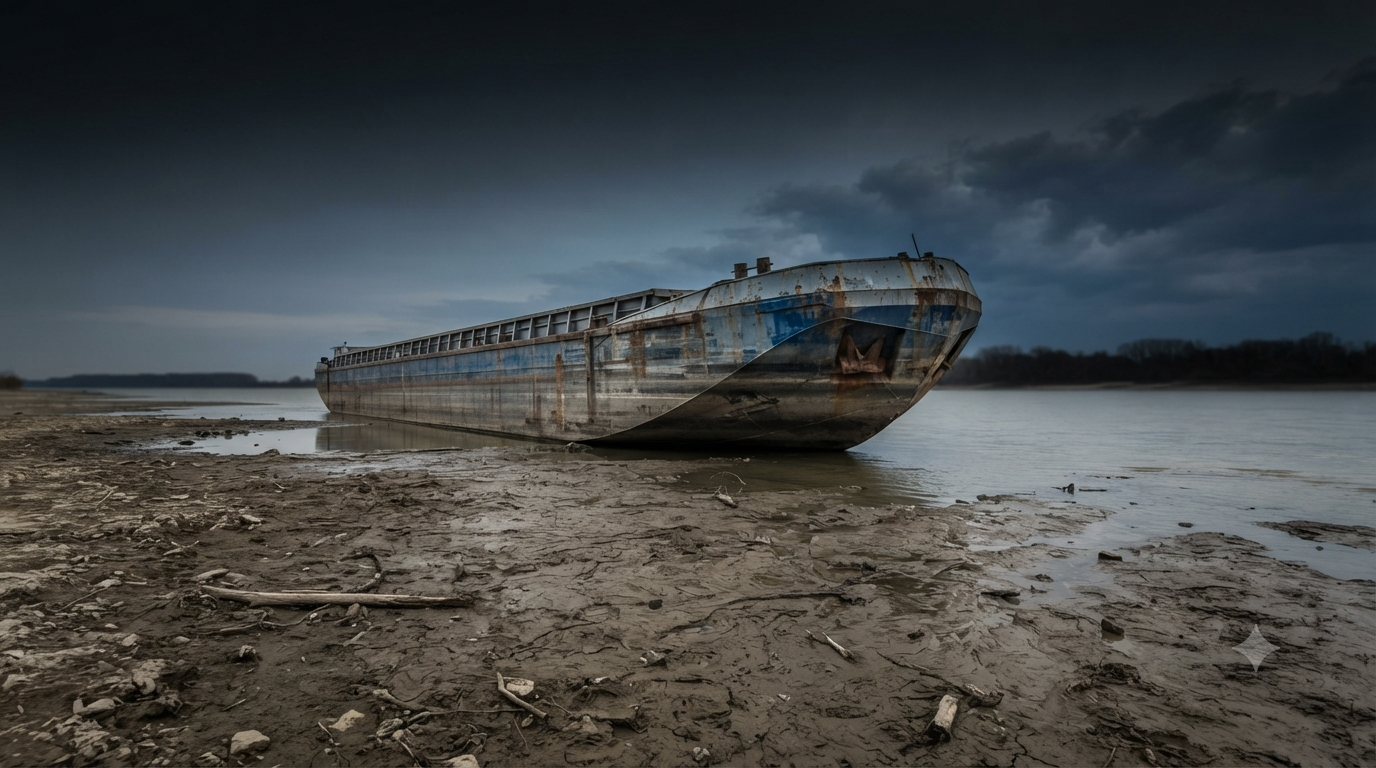
Record-low water levels on the Rhine are pushing force majeure risk beyond the bulk commodity chemicals that usually make headlines during a drought. BASF CEO Markus Kamieth has warned that specialty products made at Rhine-adjacent Verbund sites could also face shortages or formal force majeure declarations if the low water period continues. For buyers accustomed to thinking of Rhine disruptions as a commodity logistics problem, that warning marks a meaningful shift in scope.
How Severe Is the Current Rhine Situation
Water levels at the Kaub measurement point, a critical gauge for Rhine shipping capacity, fell to 28 centimetres in late July 2026 and were forecast to drop further to around 21 centimetres within days. Cargo loadings in some areas have already fallen below 20 percent of normal capacity, forcing vessels to sail only partially loaded or switch to rail and truck transport at significantly higher cost.
This is not the first time the Rhine has reached crisis-level lows. Similar drought conditions in 2018 and again in 2022 forced production cuts and inflated logistics costs across the German chemical sector. What makes the current warning notable is how directly it links water levels to specialty product risk, not just the standard commodity intermediates typically associated with Rhine disruptions.
Why Verbund Structures Amplify the Risk
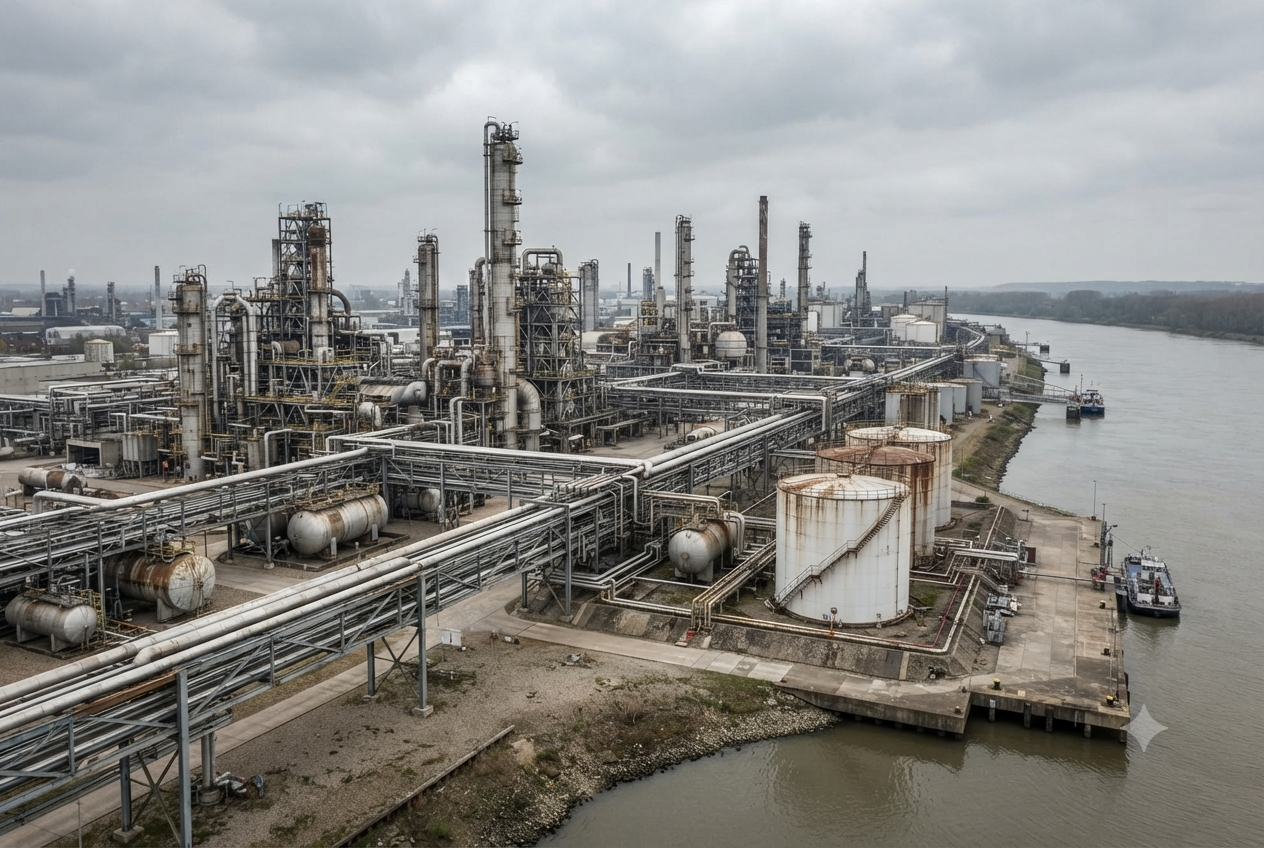
BASF's Ludwigshafen site, along with several other chemical facilities along the Rhine, operates through highly integrated Verbund structures. In these networks, production units are linked so closely that a shortfall in a single feedstock or intermediate can ripple across an entire chain of downstream products.
Kamieth described this dynamic during the company's half-year results conference, noting that a missing raw material in a complex Verbund system can create effects well beyond the immediate production unit involved. That interdependence is precisely why the current risk extends past bulk commodities into more specialised output.
A few factors are shaping how the risk is spreading:
Complex value chains mean fewer clean substitutions. When one input is constrained, producers cannot always simply reroute to an unaffected process, since Verbund sites are engineered around shared infrastructure.
Specialty products often depend on the same feedstock streams as commodities. A shortage triggered upstream can surface downstream in products that buyers do not typically associate with Rhine logistics risk.
Duration matters more than severity. Kamieth pointed out that how long the drought persists will likely determine the overall impact more than how low water levels fall on any single day.
Early Signals Already Visible in the Market
Some disruption has already materialised elsewhere on the river. Low water levels reportedly disrupted logistics at a competitor's Wesseling site in Germany, with market sources indicating a force majeure was declared on butadiene, though this was not formally confirmed. Allocations tied to that situation were expected to begin in August.
BASF itself has acknowledged rising logistics costs as products are shifted from barge transport to rail or truck. The company has stated these added costs are not currently significant enough to affect its quarterly or full-year financial outlook, though it has been careful not to rule out customer-facing curtailments in the weeks ahead.
What This Means for Specialty Chemical Buyers
For buyers who source specialty products from Rhine-adjacent facilities, the practical takeaway is straightforward. A commodity-only view of Rhine disruption risk is no longer sufficient.
Procurement teams should consider a few adjustments given this broader warning:
Map specialty product dependencies on Rhine logistics, even for products that do not appear to rely directly on river transport, since Verbund interdependencies can create indirect exposure.
Build in contingency time for alternative transport modes, given that rail and truck substitution is already adding cost and complexity across the region.
Watch for formal force majeure announcements from multiple producers, not just BASF, since several major chemical companies operate Rhine-dependent sites with similar Verbund structures.
The Bottom Line for Procurement Teams
BASF has been through low-water Rhine events before and has invested in specialised vessels and improved logistics planning as a result. That preparation appears to be helping the company avoid the kind of severe disruption seen in 2018 and 2022, at least so far.
Even so, the CEO's own comments make clear that a longer drought period could push the impact beyond logistics costs and into actual product shortages, specialty products included. Buyers with exposure to Rhine-adjacent Verbund sites should treat this warning as a prompt to review contingency plans now, rather than waiting for a formal force majeure notice to arrive.
Ready to source specialty chemicals from verified global suppliers? Explore competitive offers on our platform today.