For many chemical companies, Scope 3 emissions account for 70 to 90% of their total carbon footprint, making them the largest challenge in corporate sustainability reporting. Unlike direct operational emissions, these emissions extend across suppliers, transportation, product use and end-of-life treatment, requiring collaboration throughout the value chain. As environmental reporting expectations continue to grow, Scope 3 emissions have become a key consideration for procurement teams, traders and manufacturers seeking greater transparency and long-term competitiveness.
Chemical supply chains often involve multiple countries, numerous intermediaries and thousands of purchased materials. This complexity makes accurate value chain accounting difficult, yet it also creates significant opportunities to reduce emissions through smarter sourcing, improved supplier relationships and better operational decisions.
Understanding Scope 3 Emissions in Chemical Supply Chains
Scope 3 emissions include all indirect greenhouse gas emissions generated throughout a company's value chain, excluding emissions from purchased electricity and direct operations.
For chemical businesses, these emissions commonly arise from:
Raw material production before materials arrive at manufacturing facilities.
Transportation by road, rail and sea across international trade routes.
Contract manufacturing and third-party processing services.
Distribution, storage and warehousing activities.
Product use by industrial customers.
Recycling, disposal or treatment at the end of a product's life.
Unlike Scope 1 and Scope 2 emissions, companies do not directly control these activities. They must instead work closely with suppliers, logistics providers and customers to improve performance across the entire value chain.
Why Value Chain Accounting Matters
Value chain accounting provides a structured method for measuring emissions throughout every stage of a product's lifecycle. Instead of focusing only on factory operations, companies evaluate environmental impacts from raw material extraction through final disposal.
For procurement managers, this broader perspective supports better supplier selection and purchasing decisions. Buyers increasingly compare suppliers not only on price and quality but also on environmental performance.
Accurate accounting also helps companies:
Identify the largest emission sources.
Prioritize improvement projects with measurable impact.
Support customer sustainability reporting requirements.
Prepare for evolving environmental regulations.
Build stronger relationships with environmentally responsible suppliers.
Collecting Reliable Emissions Data
One of the biggest obstacles in Scope 3 reporting is obtaining reliable supplier information. Many chemical supply chains involve hundreds or even thousands of suppliers operating under different reporting standards.
Companies generally combine several approaches to improve data quality.
Primary supplier data. Suppliers provide actual emissions associated with specific products or manufacturing processes. This offers the highest accuracy but requires significant collaboration.
Emission factor databases. Standardized emission values estimate carbon impacts when supplier-specific information is unavailable. These databases provide consistency across large supplier networks.
Spend-based estimates. Organizations estimate emissions based on purchasing expenditure. While less precise, this method helps establish an initial emissions baseline.
Many organizations begin with estimates before gradually replacing them with verified supplier data as reporting systems mature.
Building Effective Supplier Engagement Programs
Reducing Scope 3 emissions requires active participation from suppliers throughout the value chain. Procurement teams play a central role in encouraging better environmental performance.
Successful supplier engagement programs often include:
Clear sustainability expectations during supplier qualification and contract negotiations.
Regular emissions reporting supported by standardized templates.
Training sessions that explain carbon accounting methods and reporting requirements.
Joint improvement projects focused on energy efficiency, renewable energy and process optimization.
Recognition programs that reward suppliers demonstrating measurable environmental improvements.
These partnerships create long-term value beyond regulatory compliance. Suppliers that invest in emissions reduction often improve operational efficiency, reduce waste and strengthen supply reliability.
Using Emission Factor Databases More Effectively
Emission factor databases provide standardized carbon intensity values for materials, transportation methods and industrial activities. They help organizations estimate emissions when direct supplier information remains unavailable.
However, procurement professionals should recognize that emission factors represent averages rather than actual supplier performance.
Good practice includes:
Updating emission factors regularly as databases improve.
Replacing estimates with verified supplier information whenever possible.
Applying consistent calculation methods across purchasing categories.
Documenting assumptions for future audits and reporting.
This gradual transition from estimated to primary data significantly improves reporting quality over time.
Reducing Upstream and Downstream Emissions
Companies often discover that the largest reduction opportunities exist outside their own facilities.
Upstream improvements may include:
Purchasing lower carbon raw materials.
Consolidating shipments to improve transport efficiency.
Selecting suppliers using renewable energy.
Reducing packaging materials across international shipments.
Downstream improvements may involve:
Designing products that require less energy during customer use.
Increasing product durability and service life.
Supporting recycling programs.
Developing products with improved end-of-life recovery options.
Each improvement may appear modest individually, but together they can substantially reduce total value chain emissions.
Technology Is Improving Scope 3 Reporting
Digital technologies continue to simplify emissions management across global chemical supply chains.
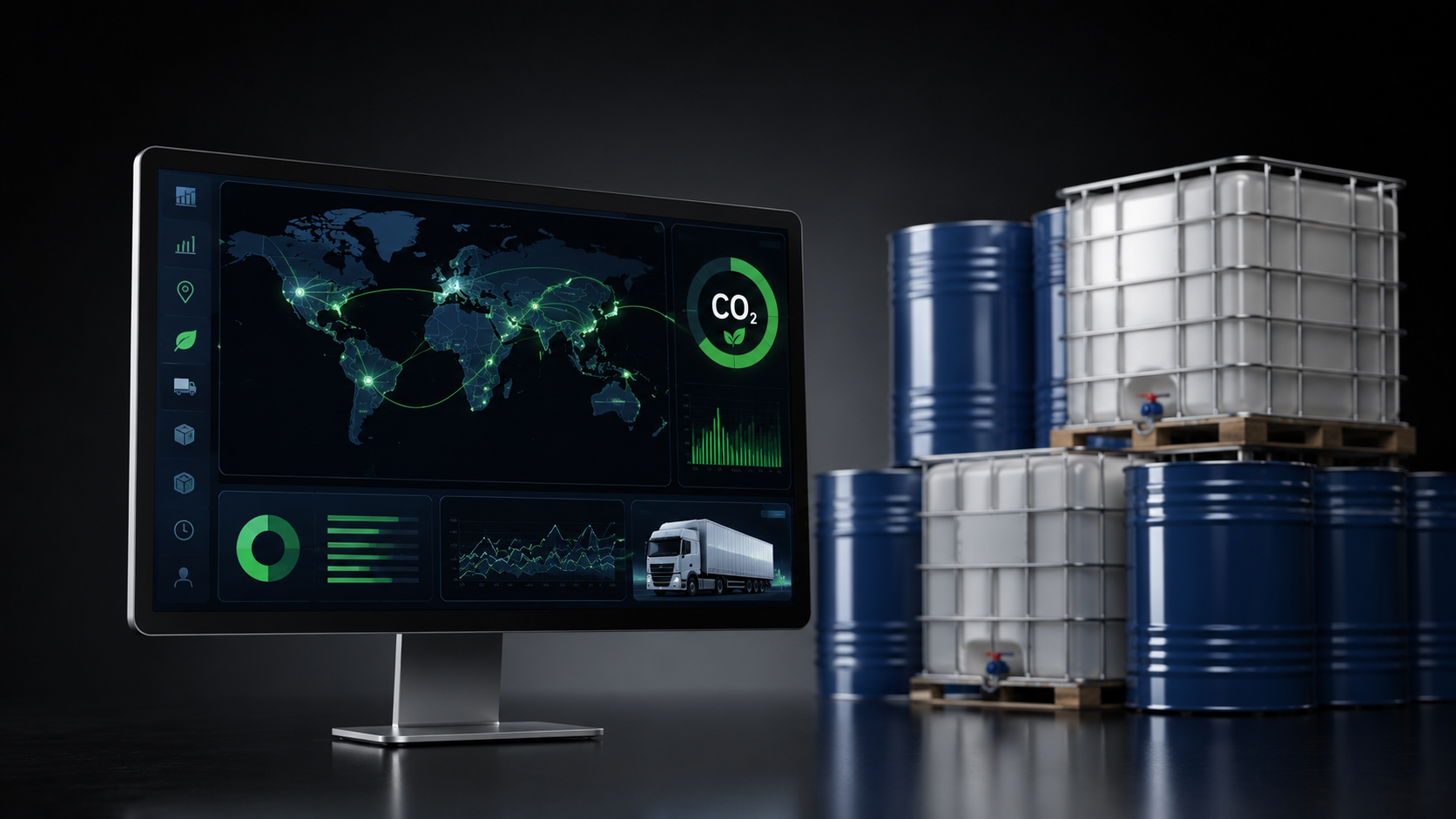
Modern platforms now integrate procurement data, logistics information and supplier reporting into centralized sustainability dashboards. Automated data collection reduces manual effort while improving reporting consistency.
Artificial intelligence also supports supplier analysis by identifying emission hotspots, comparing alternative sourcing options and highlighting opportunities for improvement before purchasing decisions are finalized.
Although technology cannot replace supplier collaboration, it allows procurement teams to manage increasingly complex reporting requirements with greater efficiency.
What Procurement Teams Should Focus on Next
Scope 3 emissions are no longer only an environmental reporting issue. They increasingly influence supplier selection, customer expectations, investment decisions and long-term competitiveness within the chemical industry.
Procurement professionals can create meaningful progress by focusing on practical improvements rather than attempting perfect data collection from the beginning. Establishing reliable reporting processes, strengthening supplier engagement and continuously improving data quality provide a realistic path toward lower value chain emissions.
Organizations that embed carbon considerations into purchasing decisions today will likely build more resilient supply chains while responding more effectively to future market expectations. Ready to source Scope 3 emissions solutions from verified global suppliers? Explore competitive offers on our platform today.