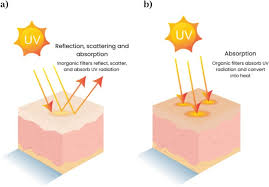
Shinsung Materials' newly granted Korean patent for water-soluble UV filter stabilization technology provides an interesting example of how formulation science is evolving across specialty chemical markets.
Although the technology is associated with personal-care and sun-care applications, the underlying formulation challenge—maintaining the stability and performance of an active ingredient—has broader relevance. Similar stabilization principles can be important in crop protection formulations, where active ingredients must remain effective during storage, transportation and application.
For chemical manufacturers, formulators and procurement professionals, developments such as this offer useful insight into how specialty formulation technologies can potentially cross traditional end-market boundaries.
Why the Patent Matters
Specialty formulations often require more than simply combining active ingredients with solvents or additives.
Formulators must manage factors such as:
Chemical stability
Solubility
Compatibility
Moisture sensitivity
Temperature exposure
Shelf life
Product performance
Storage conditions
A stabilization technology that improves the behavior of a difficult-to-handle active ingredient can therefore have commercial value well beyond its original application.
Shinsung's patent is relevant from this perspective because it highlights the growing importance of formulation engineering in specialty chemical development.
Many active ingredients have inherent stability or solubility limitations.
An ingredient may perform effectively under controlled laboratory conditions but become less reliable when exposed to:
Formulation technology helps address these challenges by creating an environment in which the active material can remain stable and usable.
This is particularly important in products that may spend months moving through manufacturing, distribution and storage networks before reaching the end user.
Relevance to Crop Protection
The potential cross-application relevance is particularly interesting for agriculture.
Crop protection products must maintain their intended performance from manufacturing through final application. Formulation stability can influence:
Product shelf life
Active-ingredient availability
Application consistency
Storage requirements
Transportation conditions
Product handling
Overall field performance
Technologies developed in one specialty formulation market can therefore provide ideas for addressing similar challenges in agricultural chemistry.
That does not mean Shinsung's UV filter technology is directly applicable to crop protection products. Rather, the patent illustrates a broader formulation principle: improving the stability and usability of active compounds can create value across multiple specialty chemical applications.
Why Stabilization Technology Is Becoming More Important
Specialty chemical manufacturers increasingly compete on formulation performance rather than simply on the identity of the underlying active ingredient.
A differentiated formulation can potentially offer:
This can create competitive advantages even when multiple suppliers offer similar underlying chemical materials.
Formulation science is relevant across a wide range of markets.
Personal Care
UV filters, preservatives, fragrances and other functional ingredients often require stabilization and compatibility solutions.
Agriculture
Crop-protection actives may require formulation systems that maintain stability and performance during storage and application.
Pharmaceuticals
Drug substances frequently require carefully engineered formulations to control solubility, stability and delivery.
Industrial Chemicals
Specialty additives and performance materials can also depend on formulation systems that maintain consistent properties under demanding operating conditions.
The common thread is the need to control how an active material behaves inside a finished product.
Potential Crop Protection Applications
Stabilization approaches can be particularly relevant where agricultural actives face environmental or formulation challenges.
Potential areas of interest include:
Light-sensitive active ingredients
Poorly soluble compounds
Temperature-sensitive formulations
Long-duration storage products
Water-based formulations
Concentrated formulations
Products requiring consistent dispersion
In each case, formulation engineering can help maintain the intended characteristics of the finished product.
Water-Soluble Systems Are Particularly Interesting
The water-soluble aspect of Shinsung's technology is another reason the development is worth monitoring.
Water-based formulation systems can offer advantages in certain applications, but they can also introduce challenges involving:
Developing systems that maintain active-ingredient stability while operating in aqueous environments can therefore be technically valuable.
For agricultural chemistry, where water is frequently involved in formulation, dilution and application, this type of formulation knowledge can be particularly relevant.
Implications for Specialty Chemical Manufacturers
The patent highlights a broader strategic opportunity for specialty chemical companies.
Rather than focusing exclusively on individual end markets, manufacturers can develop formulation technologies around underlying technical problems.
For example:
Problem: Active ingredient loses stability.
Formulation solution: Create a protective chemical environment.
Potential markets: Personal care, agriculture, pharmaceuticals and industrial applications.
This approach can expand the commercial potential of formulation technology.
Intellectual Property as a Competitive Advantage
Patents can also create differentiation in markets where chemical ingredients themselves may be widely available.
A formulation patent can potentially protect:
This can make intellectual property an important component of specialty chemical strategy.
For buyers and competitors, tracking formulation patents can therefore provide early insight into where companies are investing in next-generation product technologies.
Procurement Considerations
Procurement teams should monitor formulation innovation alongside conventional chemical supply developments.
Recommended actions include:
Track emerging formulation technologies
Evaluate supplier intellectual-property capabilities
Monitor new stabilization systems
Assess alternative formulation technologies
Review product shelf-life requirements
Diversify specialty-ingredient suppliers
Follow regulatory developments affecting new formulations
For crop protection companies, understanding formulation innovation can also help identify potential opportunities to improve product stability without necessarily changing the underlying active ingredient.
What This Means for Crop Protection Supply Chains
Formulation improvements can influence supply chains as well as product performance.
A more stable formulation may potentially reduce:
It can also make products easier to distribute across regions with different climatic conditions.
This makes formulation technology relevant to both R&D teams and supply-chain managers.
The Broader Innovation Trend
Shinsung's patent fits into a wider trend in specialty chemicals: companies are increasingly seeking ways to improve the performance of existing functional ingredients rather than relying exclusively on completely new molecules.
This can involve:
Such technologies can create additional value from established chemical platforms.
Why Cross-Industry Technology Transfer Matters
Innovation frequently moves between industries.
A formulation technique developed for cosmetics may inspire an agricultural application. A pharmaceutical delivery approach may influence specialty chemicals. An industrial stabilization technique may eventually find use in consumer products.
The transfer is rarely one-to-one.
Instead, companies adapt the underlying technical principle to meet the requirements of a different market.
That is the more useful way to interpret Shinsung's development.
What Investors Should Watch
For investors and industry analysts, the important questions include:
Does Shinsung commercialize the patented technology?
Are additional patents filed around the platform?
Does the company expand beyond sun-care applications?
Are licensing partnerships announced?
Does the technology appear in new product formulations?
Does the company target agricultural or other specialty markets?
Evidence of commercialization would make the patent more significant than the patent grant alone.
What Crop Protection Companies Should Watch
Agricultural chemical companies can use developments like this as technology signals.
Areas worth monitoring include:
Stabilization of sensitive actives
Water-compatible delivery systems
Improved shelf life
Controlled-release technologies
New formulation excipients
Encapsulation technologies
Reduced-loss formulations
These developments could eventually influence how crop protection products are designed and distributed.
Looking Ahead
Shinsung Materials' UV filter stabilization patent is primarily a specialty formulation development, but its broader significance lies in the underlying technical challenge it addresses.
The ability to stabilize functional ingredients, improve their compatibility and maintain performance under real-world conditions is valuable across multiple industries.
For crop protection, similar formulation principles could potentially support longer shelf life, improved handling and more consistent product performance, particularly for active ingredients affected by light, temperature, water or storage conditions.
The key opportunity for specialty chemical companies is therefore not simply to replicate a technology from another industry, but to identify which formulation principles can be adapted to solve problems in adjacent markets.
As specialty chemical markets become increasingly innovation-driven, formulation engineering and intellectual property will remain important sources of differentiation.