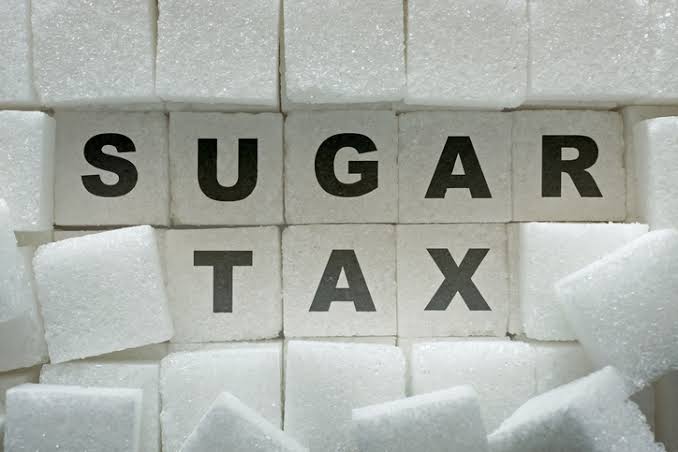
Sugar-sweetened beverage taxation is no longer a policy experiment limited to a handful of markets. By 2024, 64 countries had implemented national sugar-sweetened beverage taxes, covering approximately 3.5 billion people, with adoption accelerating across regions. The WHO has continued to encourage governments to use health taxes on sugary drinks, while new markets are moving toward more targeted, sugar-content-based systems.
For beverage manufacturers, the significance is bigger than the tax itself.
A sugar tax can effectively create a reformulation deadline.
Once tax liability is linked to grams of sugar or sweetener per 100 ml, manufacturers have a commercial incentive to move products below specific thresholds. This can trigger changes in recipes, sweetener systems, ingredient contracts, packaging artwork, nutrition declarations, manufacturing specifications and regulatory registrations.
The result is a new procurement challenge:
Regulatory change can create a sudden increase in demand for low-sugar formulation ingredients before manufacturers are technically ready to reformulate.
The Regulatory Calendar Is Becoming a Procurement Calendar
The most important distinction for beverage companies is between announcement date, implementation date and practical reformulation deadline.
A government may announce a tax months or years before it becomes effective. But the actual formulation process can require:
Regulatory interpretation
Product portfolio screening
Sugar-content mapping
Reformulation trials
Sensory testing
Stability testing
Consumer validation
Ingredient qualification
Packaging artwork changes
Production-line validation
Inventory depletion
Commercial launch
Therefore, waiting until the legal effective date can leave manufacturers with very little practical time.
The UK provides a clear example. Its planned Soft Drinks Industry Levy changes will lower the threshold from 5g to 4.5g total sugar per 100 ml, remove exemptions for certain milk-based and milk-substitute drinks, and take effect from 1 January 2028. The technical consultation runs until 6 September 2026, with legislation expected through the Finance Bill 2026 and Finance Act 2027.
The UK government has explicitly said companies have until January 2028 to remove sugar or face the new charge.
For procurement teams, 2028 is therefore not the beginning of the project—it is the end of the preparation window.
2026 Is Already a Major Implementation Year
Several markets demonstrate how quickly sugar-tax rules can move from policy design into commercial execution.
Lithuania – 1 January 2026
Lithuania introduced an excise tax on sugar-sweetened beverages effective 1 January 2026, expanding the number of European markets using fiscal measures to influence beverage consumption.
For manufacturers, the important lesson is that a new tax can create an immediate requirement to classify products correctly and determine their sugar/sweetener status.
United Arab Emirates – 1 January 2026
The UAE moved from a flat excise approach toward a tiered volumetric model based on sugar and sweetener content from 1 January 2026.
The current structure places beverages containing 8g or more of total sugar and other sweeteners per 100 ml in the high-sugar category, with a tax of AED 1.09 per litre. Drinks containing 5g to below 8g face AED 0.79/L, while products below 5g are subject to zero tax under the relevant sweetened-drink categories.
This creates a very different incentive from a flat beverage tax.
Every gram near the threshold can influence the tax position of the product.
Qatar – 6 July 2026
Qatar implemented its new tiered volumetric excise mechanism for sweetened drinks on 6 July 2026. The system calculates tax according to the amount of sugar or added sweeteners contained in taxable beverages and products.
The Qatari authorities conducted implementation workshops ahead of the deadline, illustrating another important point: compliance preparation begins before the tax becomes operational.
A Practical 2026–2028 Regulatory Calendar
Market | Regulatory milestone | Reformulation pressure | Procurement implication |
|---|
Lithuania | Tax effective 1 Jan 2026 | High – already active | Monitor tax classification and reformulated portfolio |
UAE | Tiered model effective 1 Jan 2026 | Very high – active | Optimize products around sugar/sweetener thresholds |
Qatar | Tiered model effective 6 Jul 2026 | Very high – active | Validate formulations, registrations and tax classification |
UK | Threshold moves from 5g to 4.5g/100ml on 1 Jan 2028 | High – preparation phase | Reformulate before 2027 qualification and production planning |
Other emerging markets | Policies under development/expansion | Increasing | Maintain regulatory monitoring and flexible formulations |
The critical insight is that the regulatory calendar is becoming fragmented.
A multinational beverage manufacturer cannot necessarily use one global sugar-reduction deadline.
Different markets may have different:
Sugar thresholds
Tax rates
Definitions of taxable sweeteners
Exemptions
Measurement methodologies
Product categories
Implementation dates
Registration requirements
That makes regulatory intelligence a procurement input.
A flat tax increases the price of sugary beverages.
A tiered tax does something more powerful from a formulation perspective: it creates a target.
The UK experience demonstrates this effect. Government analysis found that products clustered immediately below the 5g/100ml SDIL threshold, with 866 products between 4g and 4.9g per 100ml and 221 between 4g and 4.5g.
This creates what can be called a threshold optimization effect.
Manufacturers do not necessarily need to eliminate sugar completely. They may instead target a level that moves the product into a lower-tax category or below the tax threshold.
That can make small formulation changes commercially valuable.
For procurement teams, this means demand may increase for ingredients capable of delivering precise sugar reduction, rather than simply “zero sugar.”
Sugar replacement is rarely a one-for-one ingredient substitution.
Sugar provides:
High-intensity sweeteners can replace sweetness but cannot automatically replace all these functions.
This is why beverage manufacturers increasingly use combinations such as:
Stevia + monk fruit
Stevia + allulose
Allulose + monk fruit
Sucralose + acesulfame potassium
Reb M + other steviol glycosides
Sweetener + soluble fiber
Sweetener + bulking systems
The result is a procurement shift from buying a single “sugar substitute” toward sourcing a complete sugar-reduction system.
This is particularly relevant as the natural sweetener supply chain itself becomes more competitive. Stevia and monk fruit are already facing growing demand for specific high-purity grades, while allulose is expanding as a bulk sugar-replacement ingredient.
One of the biggest risks for beverage manufacturers is underestimating how long reformulation actually takes.
A simple formulation change might be completed relatively quickly.
A major reformulation across a national beverage portfolio is different.
The process can involve:
Month 1–2: Regulatory assessment and portfolio screening
Month 2–4: Sweetener supplier selection and bench formulation
Month 4–7: Sensory optimization
Month 6–9: Stability and shelf-life testing
Month 8–11: Consumer testing and internal approval
Month 10–14: Pilot production
Month 12–16: Packaging and labeling updates
Month 14–18: Commercial production and inventory transition
This is an illustrative planning framework rather than a universal regulatory requirement. Actual timelines depend heavily on the product, market and manufacturer.
But the strategic point is clear:
A tax effective in January can require formulation decisions more than a year earlier.
UK experience reinforces this issue. Industry representatives have described reformulation as requiring potentially years from investment approval to commercial market entry, particularly where complex product characteristics must be preserved.
Ingredient Qualification Can Become the Critical Path
Even when R&D develops an acceptable formulation, procurement may not be able to source the required ingredients at commercial scale.
This is particularly relevant for:
Reb M and Specialty Steviol Glycosides
High-purity glycosides can provide better sensory performance than conventional stevia but may have a smaller qualified supplier base.
Monk Fruit
Supply is geographically concentrated, creating potential risks when several beverage manufacturers simultaneously increase demand.
Allulose
Allulose provides bulk and functionality that high-intensity sweeteners cannot fully replicate, but global production remains much smaller than conventional sugar production.
Erythritol and Other Polyols
These can provide bulk and mouthfeel but introduce their own regulatory, sensory and supply considerations.
Soluble Fibers
Fibers can help provide body and formulation functionality in reduced-sugar systems, creating another potential bottleneck when many manufacturers reformulate simultaneously.
The result is a potential ingredient qualification bottleneck:
Regulation changes → manufacturers reformulate → R&D selects ingredients → procurement discovers limited qualified supply → supplier qualification delays launch.
That chain can be more disruptive than the tax itself.
Sugar Taxes Can Create a Short-Term Demand Shock for Sweeteners
When multiple manufacturers respond to the same regulation at the same time, demand for specific ingredients can increase rapidly.
This creates several procurement risks:
Longer supplier lead times
Higher minimum order quantities
Allocation by strategic customers
Higher prices for premium grades
Limited pilot quantities
Delayed technical samples
Longer qualification queues
Increased dependence on distributors
This is particularly dangerous when manufacturers wait until the final year before implementation.
A company may discover that the ingredient is commercially available—but not available at the required scale, specification or delivery window.
A practical approach is to classify every beverage SKU according to its regulatory exposure.
Portfolio category | Recommended action |
Below all applicable thresholds | Maintain formulation but monitor future changes |
Slightly above threshold | Priority reformulation candidate |
Far above threshold | Evaluate major sugar reduction or product repositioning |
Premium/natural product | Test natural sweetener systems |
High-volume mainstream beverage | Secure scalable sweetener capacity early |
Complex functional beverage | Begin stability and sensory work earlier |
Multi-market SKU | Develop market-specific formulation scenarios |
The most valuable products to reformulate first are often those closest to a tax threshold.
A small reduction may deliver a disproportionate commercial benefit.
The New Procurement Metric: Cost per Tax Threshold Achieved
Traditional procurement compares ingredients based on cost per kilogram.
Sugar-tax reformulation requires a broader calculation.
A useful commercial metric is:
Cost per percentage-point sugar reduction achieved
or, for threshold-based systems:
Cost to move one SKU below the applicable tax threshold.
For example, a sweetener system that costs more per kilogram may still be economically superior if it allows a beverage to cross from a taxable category into a zero- or lower-tax category while maintaining consumer acceptance.
The calculation should include:
Sweetener cost
Bulking ingredients
Processing changes
Packaging changes
Sensory testing
Stability testing
Supplier qualification
Inventory transition
Tax savings
Expected volume
This turns reformulation into a measurable procurement project.
Packaging and Inventory Can Become Hidden Costs
Reformulation does not end when the recipe is approved.
A new sugar level may require changes to:
Nutrition Facts panels
Ingredient declarations
Product claims
Packaging artwork
Barcodes in some markets
Product registrations
Marketing materials
Manufacturers also have to manage old inventory.
If packaging carries the previous formulation, companies may need to sell through existing stock before introducing the new recipe—or accept write-offs.
This means procurement should coordinate with:
R&D + Regulatory + Quality + Packaging + Manufacturing + Finance + Marketing.
Sugar-tax compliance is therefore a cross-functional supply-chain project.
What Beverage Manufacturers Should Track Every Quarter
A forward-looking regulatory dashboard should include:
1. Tax Effective Date
The actual date on which liability begins.
2. Sugar Threshold
The precise grams-per-100ml level or other applicable criterion.
3. Tax Rate by Tier
The financial value of crossing each threshold.
4. Taxable Sweetener Definition
Some systems consider sugar and certain sweeteners differently.
5. Product Exemptions
Milk-based drinks, juices, medical nutrition products and other categories may receive different treatment.
6. Measurement Methodology
The method used to determine taxable sugar content can materially affect classification.
7. Registration Deadline
Products may need to be registered or supported by laboratory documentation.
The internal date by which the new formula must be approved.
9. Supplier Capacity
Whether required sweetener grades can support projected volume.
10. Packaging Transition Date
The final date for moving to compliant artwork and labeling.
The Regulatory Calendar Is Expanding Beyond Sugar Taxes
Beverage manufacturers should also recognize that sugar taxes are only one part of the broader regulatory pressure toward lower-sugar products.
Front-of-pack labeling, advertising restrictions and nutrition-profile rules can create additional incentives to reformulate.
The UK is already demonstrating how multiple policy mechanisms can overlap. Its Soft Drinks Industry Levy is being strengthened while broader HFSS restrictions and nutrient-profile rules continue to influence food and beverage formulation decisions.
India is another market to monitor. In August 2026, FSSAI proposed red hexagonal front-of-pack warning labels for packaged foods and beverages high in sugar, salt or saturated fat, demonstrating how labeling regulation can create another commercial incentive for manufacturers to reconsider formulations.
This matters because companies increasingly face multiple regulatory reasons to reduce sugar, even when only one measure directly imposes a tax.
The global direction is clear even though individual regulatory systems differ.
WHO's 2026 global report describes the expanding use of SSB taxes and provides standardized comparisons of tax design and levels across countries.
For multinational beverage manufacturers, the implication is significant.
A formulation optimized for one country may not be optimal for another.
Instead of designing products around one fixed sugar target, companies can develop modular sweetener architectures.
For example:
Base beverage → adjustable sugar level → high-intensity sweetener blend → bulk ingredient → market-specific final formulation.
This allows manufacturers to respond faster when a country changes its tax threshold.
It also reduces the cost of future reformulation.
Ranking the Procurement Priorities Created by Sugar-Tax Expansion
Rank | Procurement priority | Why it matters |
1 | Regulatory deadline visibility | Determines when reformulation must be completed |
2 | Qualified sweetener capacity | Prevents ingredient shortages during synchronized reformulation |
3 | Threshold-specific formulation capability | Allows products to move below tax bands |
4 | Dual sourcing | Protects against supplier disruption |
5 | Sensory performance | Prevents tax-driven reformulation from damaging consumer acceptance |
6 | Multi-market formulation flexibility | Reduces repeated development work |
7 | Supplier technical support | Accelerates reformulation and scale-up |
8 | Regulatory documentation | Supports product registration and compliance |
9 | Cost-in-use | Captures the total economics of sugar replacement |
10 | Inventory transition planning | Reduces packaging and finished-goods write-offs |
What Procurement Teams Should Do Now
Build a 24-Month Regulatory Pipeline
Do not track only laws that are already effective. Include consultations, proposed legislation and announced implementation dates.
Identify Threshold-Adjacent SKUs
These products may offer the fastest return from reformulation.
Pre-Qualify Multiple Sweetener Systems
Do not wait for a tax deadline before beginning supplier trials.
Reserve Capacity for High-Risk Ingredients
For major product launches, consider contractual capacity commitments rather than relying solely on spot purchases.
Maintain Alternative Formulations
Develop at least one backup sweetener architecture for strategically important SKUs.
Link Procurement and Regulatory Teams
Regulatory monitoring should automatically trigger procurement and R&D reviews.
The most commercially attractive projects are not always the products with the highest sugar content. They may be the products that can cross a tax threshold at relatively low reformulation cost.
The Intelligence Takeaway
Sugar-tax expansion is turning beverage regulation into a procurement calendar.
Lithuania and the UAE began operating new or revised sugar-related tax systems in January 2026, while Qatar's tiered volumetric model became effective on 6 July 2026. The UK has already published detailed plans for another major threshold change, with its SDIL threshold moving from 5g to 4.5g per 100ml on 1 January 2028.
The biggest risk for beverage manufacturers is not necessarily the tax bill.
It is waiting too long to reformulate and then discovering that the preferred sweetener, bulking ingredient or technical supplier cannot support the required commercial volume on time.
The winning strategy is therefore to treat every sugar-tax announcement as a 24–36-month supply-chain planning signal.
Procurement teams that monitor regulatory thresholds, pre-qualify alternative sweeteners, reserve strategic capacity and build flexible formulations will be better positioned to turn regulatory pressure into a controlled reformulation program rather than a last-minute cost crisis.