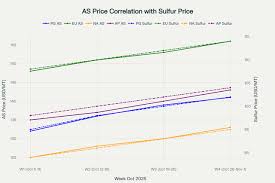
Elevated sulfur costs are becoming an important issue for fertilizer producers as higher input expenses put pressure on margins. Mosaic's experience highlights a broader challenge facing the phosphate fertilizer industry: how resilient are fertilizer supply chains when the cost of a critical raw material changes rapidly?
Sulfur is an important input in phosphate fertilizer production, particularly in the manufacture of phosphoric acid. Changes in sulfur availability and pricing can therefore flow through the fertilizer value chain, affecting production economics, margins and ultimately procurement decisions.
For fertilizer manufacturers, traders and agricultural buyers, the issue goes beyond one quarter's financial performance. Persistent sulfur volatility can influence sourcing strategies, inventory management and the geographic competitiveness of fertilizer production.
Why Sulfur Matters to Phosphate Fertilizer Production
Sulfur plays an important role in the production process for phosphate fertilizers. It is used to produce sulfuric acid, which is then required for processing phosphate rock into phosphoric acid and downstream phosphate fertilizers.
This creates an important connection between the sulfur market and fertilizer economics.
When sulfur prices rise, fertilizer producers may face higher production costs even if phosphate fertilizer selling prices remain relatively stable. The resulting margin pressure can make production economics more difficult, particularly when producers are already dealing with elevated energy, logistics and operating expenses.
For procurement teams, sulfur should therefore be viewed as a strategic input rather than simply another commodity purchase.
Higher Sulfur Costs Can Squeeze Producer Margins
Mosaic's elevated sulfur costs illustrate how input inflation can affect fertilizer profitability.
A fertilizer producer cannot always immediately pass higher raw-material costs through to customers. Market competition, contract structures and fertilizer demand can limit the speed or extent of price adjustments.
This creates a margin squeeze:
Higher sulfur costs → higher production expenses → limited ability to raise fertilizer prices → lower producer margins.
The impact can become more significant when sulfur prices remain elevated for an extended period.
For fertilizer traders, understanding this relationship can help explain changes in producer margins that may not be immediately visible from fertilizer prices alone.
Sulfur Supply Is a Supply-Chain Risk
The importance of sulfur extends beyond its price. Availability is also a strategic consideration.
Sulfur supply is closely linked to industrial processes and refinery operations, meaning changes in global energy markets and industrial activity can influence sulfur availability.
This creates an unusual dynamic for fertilizer producers. Their demand for sulfur is connected to agricultural markets, while sulfur supply is influenced by industries outside agriculture.
As a result, fertilizer manufacturers can be exposed to supply-chain developments that originate outside the fertilizer sector.
What Supply Chain Resilience Means for Fertilizer Producers
Supply-chain resilience refers to a company's ability to continue operating effectively when input availability, prices or logistics conditions change.
For fertilizer producers, resilient sulfur procurement can involve several strategies:
Supplier diversification: Avoiding excessive dependence on a single source.
Geographic diversification: Maintaining access to sulfur from multiple regions.
Inventory planning: Holding appropriate stocks to manage temporary supply disruptions.
Long-term contracts: Establishing greater visibility over future availability and pricing.
Market monitoring: Tracking sulfur fundamentals before shortages or price spikes become severe.
These strategies can help reduce vulnerability, although they cannot completely eliminate exposure to commodity-price volatility.
Why Procurement Strategy Is Becoming More Important
When input markets are stable, procurement teams can focus heavily on price optimization. During volatile periods, the emphasis can shift toward balancing price with security of supply.
A slightly cheaper sulfur source may not necessarily be the most attractive option if it creates greater exposure to supply interruptions or transportation disruptions.
This means procurement managers may increasingly evaluate suppliers using a broader set of criteria:
Price competitiveness.
Product quality and consistency.
Reliability of supply.
Geographic diversification.
Contract flexibility.
Logistics capabilities.
Financial and operational resilience.
Such an approach can help fertilizer producers protect production continuity while managing costs.
The Geographic Dimension of Sulfur Supply
Sulfur markets are global, but logistics play an important role in determining delivered costs.
A producer may have access to competitively priced sulfur at the source, but freight costs, port availability and transportation disruptions can significantly change the economics by the time the material reaches the fertilizer plant.
For phosphate fertilizer manufacturers, this means procurement decisions need to consider delivered sulfur cost, not simply the headline market price.
Changes in freight rates or regional supply availability can also create differences between sulfur markets, giving traders opportunities to identify arbitrage and alternative sourcing routes.
Impact on Phosphate Fertilizer Competitiveness
Sulfur costs can influence the relative competitiveness of phosphate fertilizer producers in different regions.
A manufacturer located close to reliable sulfur supplies may have a cost advantage over a producer that must import sulfur over long distances.
This can affect production decisions and international trade flows.
If sulfur costs remain elevated, higher-cost producers may face greater pressure to optimize operations or reconsider production levels. Conversely, producers with efficient access to sulfur could become more competitive in export markets.
For traders, this creates another variable to consider when assessing regional fertilizer supply.
Supply Resilience Is More Than Holding Inventory
Maintaining additional inventory can provide protection against short-term disruptions, but inventory alone cannot solve structural supply problems.
Large inventories require capital and storage capacity. Holding excessive stocks can also expose producers to price declines.
A more resilient strategy can combine inventory management with supplier diversification, long-term relationships and flexible logistics.
For procurement teams, the objective is therefore not simply to maximize inventory. It is to create enough flexibility to respond when market conditions change.
Long-Term Contracts Can Improve Visibility
Long-term sulfur supply agreements can provide fertilizer producers with greater visibility over availability and potentially reduce exposure to short-term market disruptions.
However, contract structures need to balance security with flexibility.
Fixed-price agreements can protect buyers during rising markets but may become less attractive when sulfur prices decline. Variable-price contracts can preserve market alignment but leave buyers more exposed to volatility.
The appropriate structure depends on the producer's risk tolerance, production requirements and expectations for sulfur markets.