Sustainable Crop Protection Technology Wins ACS Green Chemistry Challenge Recognition
Recognition through the ACS Green Chemistry Challenge highlights how advances in crop protection are increasingly being judged not only by their ability to control pests and diseases, but also by how efficiently they use materials, reduce environmental impacts and improve the sustainability of agricultural production.
Agricultural chemicals play an essential role in protecting crops and maintaining food production.
Farmers rely on herbicides, fungicides, insecticides and other crop-protection products to reduce losses caused by weeds, insects and plant diseases.
But conventional crop protection can also create environmental challenges.
Concerns around chemical persistence, application rates, runoff, toxicity and resource consumption have encouraged researchers to search for more sustainable approaches.
Green chemistry is becoming an important part of that transition.
What the Recognition Signals
The American Chemical Society's Green Chemistry Challenge has helped highlight technologies that demonstrate practical applications of green chemistry.
Recognition in this area is significant because it connects environmental performance with scientific and commercial innovation.
For crop protection, the objective is not simply to replace one chemical with another.
The more ambitious goal is to redesign the chemistry and delivery system so that the product can provide effective protection while using fewer resources and creating fewer environmental burdens.
Crop Protection Faces a Difficult Sustainability Balance
Agricultural chemicals must satisfy several requirements simultaneously.
A successful crop-protection product needs to:
Control the target pest or disease
Protect the crop
Remain effective under field conditions
Be practical for farmers
Maintain an acceptable safety profile
Avoid unnecessary environmental exposure
These requirements create a difficult optimization problem.
Increasing potency may reduce the amount of product needed.
But potency alone does not guarantee a better environmental profile.
The full lifecycle of the product must be considered.
Green Chemistry Starts With Molecular Design
Sustainable crop protection can begin at the molecular-design stage.
Researchers can consider environmental and manufacturing characteristics alongside biological activity.
Important factors include:
Potency
Selectivity
Persistence
Degradation
Toxicological profile
Manufacturing efficiency
Material requirements
This approach can help developers avoid treating sustainability as an issue that is addressed only after a product has already been designed.
Lower Application Rates Can Reduce Material Demand
One of the clearest opportunities is reducing the amount of active ingredient required to achieve effective crop protection.
If a new product provides equivalent or better control at a lower application rate, the amount of chemical transported, stored and applied can decline.
That can reduce:
However, lower application rates must still provide reliable field performance.
Selectivity Is Central to Sustainable Crop Protection
A crop-protection product is most useful when it targets the intended pest or pathogen while minimizing effects on non-target organisms.
Greater selectivity can reduce unintended biological impacts.
Researchers are therefore investigating molecules and mechanisms designed to interact more specifically with biological targets found in:
Insects
Weeds
Fungi
Plant pathogens
This is increasingly important as agriculture faces greater scrutiny over biodiversity and ecosystem health.
Sustainability does not end with the discovery of a new active ingredient.
Formulation determines how the product behaves during storage and application.
Modern formulations can potentially improve:
Stability
Solubility
Dispersion
Target adhesion
Rainfastness
Controlled release
Better delivery can allow farmers to achieve the desired biological effect using less material.
This creates an important relationship:
Better formulation → Better delivery → Lower required dose → Lower material footprint
Precision Delivery Can Reduce Environmental Exposure
Agricultural technology is increasingly moving toward precision application.
Instead of applying the same amount of chemical uniformly across a field, farmers can use data and equipment to target areas where treatment is actually needed.
Technologies include:
When combined with improved chemistry, these systems can potentially reduce unnecessary applications.
Biological Solutions Are Expanding
Sustainable crop protection is also moving beyond conventional synthetic chemistry.
Researchers are exploring:
These approaches can provide additional tools for managing pests and diseases.
However, biological products also need to demonstrate reliable performance, scalable manufacturing and practical field application.
Manufacturing Sustainability Matters
The environmental benefits of a crop-protection product depend partly on how it is manufactured.
A highly effective active ingredient can still have a large environmental footprint if its synthesis requires:
Numerous reaction steps
Large solvent volumes
Hazardous reagents
High energy input
Extensive purification
Green chemistry therefore encourages researchers to redesign manufacturing routes.
Potential improvements include:
Fewer synthetic steps
Higher reaction yields
Catalytic processes
Safer solvents
Reduced waste
Solvent recovery
Process Mass Efficiency Can Improve Economics
More efficient synthesis can reduce the amount of material required to produce the active ingredient.
This can lower:
Raw-material costs
Waste-treatment costs
Solvent consumption
Energy requirements
The result can be a process that is both greener and economically attractive.
That is an important reason green chemistry is increasingly viewed as an innovation strategy rather than solely an environmental initiative.
Safer Solvents Can Reduce Manufacturing Risk
Solvents are widely used in agrochemical synthesis.
Replacing problematic solvents with safer alternatives can reduce environmental and occupational risks.
However, the replacement must still provide appropriate:
Reaction performance
Solubility
Stability
Recovery potential
Cost
A sustainable solvent strategy therefore requires chemical engineering as well as environmental assessment.
Catalysts can increase reaction efficiency while reducing the quantity of reagents required.
They can also improve selectivity and reduce unwanted byproducts.
For agrochemical manufacturers, this can contribute to:
Higher yield
Less waste
Lower energy consumption
Fewer purification stages
Reduced manufacturing cost
These benefits can make catalytic process improvements attractive from both sustainability and business perspectives.
Renewable Feedstocks Could Change the Raw-Material Equation
Another area of interest is the use of renewable feedstocks.
Some chemical building blocks can potentially be derived from:
Biomass
Plant-based materials
Fermentation products
Other renewable sources
However, renewable does not automatically mean sustainable.
Researchers must consider:
Lifecycle analysis is therefore essential.
Biobased Chemistry Needs Lifecycle Validation
A crop-protection molecule derived partly from renewable resources may appear environmentally preferable.
But if producing the feedstock requires large quantities of fertilizer, water or energy, the overall advantage may be smaller than expected.
This is why sustainability assessments increasingly examine the complete value chain.
The question is not simply:
Where did the carbon come from?
It is:
What environmental impacts were generated from feedstock production through manufacturing, application and eventual degradation?
Product Degradation Is an Important Design Goal
Environmental persistence is another important consideration.
A crop-protection product must remain active long enough to provide effective protection.
But excessive persistence can increase environmental exposure.
Researchers therefore seek an appropriate balance.
An ideal product may provide:
Sufficient field stability + Effective target control + Predictable degradation
This concept can be incorporated into molecular design.
Soil Health Adds Another Dimension
Crop-protection chemicals interact with soil ecosystems.
Soil contains complex communities of microorganisms that contribute to:
Sustainable crop protection therefore needs to consider what happens after application.
Understanding degradation products and environmental fate can help developers assess the broader impact of new technologies.
Water Quality Is Increasingly Important
Agricultural chemicals can potentially move through runoff or leaching.
This makes water protection an important component of sustainable crop protection.
Developers can consider characteristics such as:
Solubility
Mobility
Persistence
Degradation
Application timing
Better formulation and precision application can also reduce unnecessary movement outside the target area.
Integrated Pest Management Remains Important
Green chemistry does not mean that chemical crop protection must operate independently.
Integrated pest management combines different approaches to reduce reliance on any single intervention.
These can include:
Sustainable crop protection technologies can therefore become components of broader agricultural systems.
Resistance Management Is a Sustainability Issue
Overuse of a single mode of action can accelerate resistance.
When pests or pathogens become resistant, farmers may need to apply higher rates, use additional products or switch to more intensive control strategies.
This can increase environmental and economic pressure.
New crop-protection technologies therefore need to consider resistance management from the beginning.
Potential strategies include:
New modes of action
Rotation
Mixtures
Precision application
Monitoring
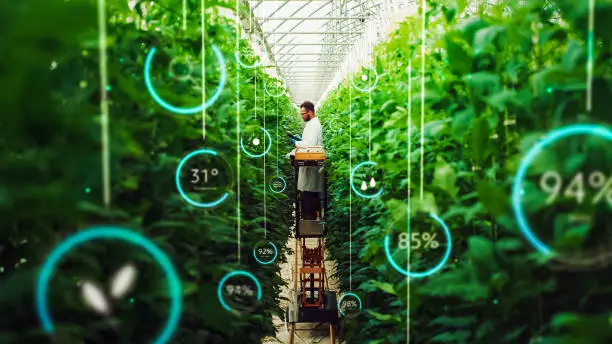
Digital Agriculture Can Multiply the Benefits
The sustainability impact of improved chemistry can increase when combined with digital agriculture.
Farmers can use field data to determine:
Where pests are present
When disease risk is increasing
How much product is needed
Which areas require treatment
This allows chemical inputs to become more targeted.
The future of crop protection may therefore involve a combination of:
Better molecules + Better formulations + Better data + Better application
AI Could Improve Crop-Protection Design
Artificial intelligence is increasingly being applied to agricultural and chemical research.
AI systems can help analyze:
Molecular structures
Biological activity
Toxicological data
Environmental fate
Resistance patterns
This could allow researchers to identify candidates that balance efficacy with sustainability earlier in development.
Computational screening could also reduce the number of compounds requiring extensive laboratory testing.
Recognition Can Encourage Commercial Adoption
Scientific recognition can have an important commercial effect.
A technology that receives institutional attention can gain credibility among:
Agricultural companies
Investors
Regulators
Farmers
Research organizations
That can help bridge the gap between laboratory innovation and commercial deployment.
Recognition also gives other developers a concrete example of how green chemistry principles can be translated into agricultural products.
The Economics of Sustainable Crop Protection
Farmers ultimately need solutions that work economically.
A sustainable product must therefore provide sufficient value relative to its cost.
Important considerations include:
If a greener technology is also more efficient, its commercial adoption can accelerate.
Regulation Is Raising the Bar
Agrochemical regulation increasingly considers environmental and human-health impacts.
This creates additional incentives for companies to develop products with favorable environmental profiles.
A product designed around green chemistry from the beginning may have advantages in demonstrating responsible use and environmental performance.
However, regulatory requirements vary by market and remain demanding.
Sustainability Must Be Measurable
The industry cannot rely on broad claims such as "green" or "eco-friendly."
Meaningful sustainability requires measurable indicators.
Potential metrics include:
These metrics allow companies to compare technologies objectively.
What the Recognition Means for Agrochemical Innovation
The broader significance of ACS Green Chemistry Challenge recognition can be summarized through several lessons.
1. Sustainability Starts With Chemistry
Environmental performance can be designed into molecules and processes.
2. Potency Can Reduce Material Demand
More effective products may require lower application rates.
Better delivery can improve efficiency and reduce waste.
4. Manufacturing Matters
Cleaner synthesis can significantly reduce the environmental footprint of agricultural chemicals.
5. Precision Agriculture Amplifies Chemical Innovation
Targeted application can reduce unnecessary chemical use.
6. Lifecycle Assessment Is Essential
A product should be evaluated from raw materials through manufacturing, use and degradation.
7. Recognition Can Accelerate Adoption
Institutional validation can help promising technologies move toward broader commercial use.
The Future of Sustainable Crop Protection
The next generation of crop-protection products is likely to combine multiple innovations.
These may include:
More selective active ingredients
Lower-dose chemistries
Biological control agents
Advanced formulations
Controlled-release systems
Precision application
AI-assisted discovery
Renewable feedstocks
Cleaner manufacturing
The most successful technologies will likely be those that improve agricultural productivity while reducing resource use and environmental impact simultaneously.
Conclusion
Recognition through the ACS Green Chemistry Challenge highlights a broader transformation taking place in agricultural chemistry.
Crop protection is no longer evaluated solely by whether a product can control a pest, weed or disease.
The industry is increasingly asking a more demanding question:
Can the same agricultural benefit be delivered with less material, less waste, lower environmental impact and greater efficiency?
Answering that question requires innovation across the entire value chain.
Molecular design can improve selectivity.
Formulation can improve delivery.
Green chemistry can reduce manufacturing waste.
Precision agriculture can reduce unnecessary application.
Digital technologies can optimize timing and dosage.
Together, these approaches can redefine what sustainable crop protection means.
The significance of institutional recognition is therefore larger than a single award or technology.
It demonstrates that environmental performance and agricultural productivity do not have to be opposing objectives.
The long-term opportunity is to develop crop-protection systems in which chemistry becomes more precise, manufacturing becomes more efficient and farmers can protect yields while using fewer resources.
That is the direction in which green chemistry can help shape the next generation of agricultural innovation.