When the Strait of Hormuz Shakes, Chemical Trade Feels It First
The Strait of Hormuz is usually discussed as an oil-market chokepoint. But in 2026, its disruption is exposing another vulnerability: the global chemical supply chain.
The strait connects the Persian Gulf with the Gulf of Oman and the wider Indian Ocean. In normal conditions, it carries a major share of global energy flows, including roughly one-fifth of global LNG trade. Qatar and the UAE are particularly dependent on the route for LNG exports to Asian markets. (U.S. Energy Information Administration)
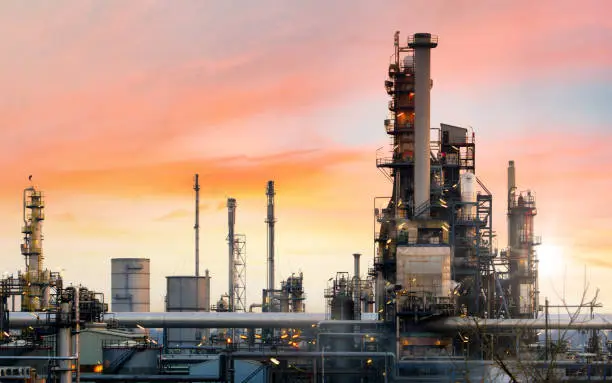
For chemical markets, however, the impact goes beyond energy prices. The Gulf is a major production and export hub for ethylene, polyethylene, polypropylene, methanol, ammonia, fertilizers, aromatics and other petrochemical products. When vessels cannot move normally through Hormuz, the disruption can quickly spread from shipping schedules to feedstock availability, production economics and delivered chemical prices.
Why Hormuz Matters to Chemical Buyers
The Gulf's importance to chemicals comes from its combination of:
Low-cost hydrocarbons
Large petrochemical complexes
Export-oriented production
Proximity to Asian markets
Deepwater ports
Integrated oil-to-chemicals infrastructure
Saudi Arabia, Qatar, the UAE, Kuwait and other Gulf producers supply chemical products to customers across Asia, Africa and Europe.
This means that a disruption at Hormuz can affect both the availability of chemicals and the cost of reaching alternative suppliers.
S&P Global noted in July that shipping bottlenecks and uncertainty were expected to keep Middle Eastern chemical supply options unattractive even if passage through the strait remained technically available. (S&P Global)
That distinction is important.
A strait does not have to be completely closed to disrupt chemical trade.
The Current Situation
As of August 27, 2026, shipping through Hormuz has begun to increase slightly, but activity remains far below normal.
Kpler data reported by Reuters showed 10 commodity vessels transited the strait on August 26, compared with eight the previous day and a 10-day moving average of 15. The vessels included fuel tankers, an LPG carrier and other commodity vessels. (Reuters)
This suggests that the waterway is not completely inactive, but shipping companies continue to operate cautiously.
The situation is further complicated by reports that some vessels are switching off transponders, meaning observed traffic may not represent the complete number of ships moving through the region. (The Wall Street Journal)
Meanwhile, Iran has threatened dozens of vessels with fines, detention or cargo confiscation over alleged violations of its transit protocols. That creates another layer of risk for shipowners and charterers. (Reuters)
Chemical Supply Chains Feel the Impact Through Three Channels
The effect on chemical markets can be divided into three major channels.
1. Feedstock Disruption
Many Gulf chemical producers depend on locally available oil and gas feedstocks.
If energy infrastructure, exports or shipping operations are disrupted, the consequences can move downstream:
Oil & gas → feedstocks → petrochemicals → polymers/intermediates → manufactured products
This is why the chemical industry can feel the impact of a geopolitical event very quickly.
The International Energy Agency has reported that the disruption has already constrained feedstock availability and that petrochemicals have experienced some of the steepest losses among affected sectors. (IEA)
2. Freight Costs
Even when a chemical producer continues operating, transportation can become more expensive.
Shipowners may demand higher compensation for:
For low-margin bulk chemicals, transportation can represent a significant portion of the final delivered price.
3. Delivery Reliability
Perhaps the biggest issue for chemical buyers is not price but certainty.
A buyer may technically be able to purchase material from the Gulf, but if the expected delivery window changes from three weeks to six or eight weeks, the economics of the purchase can change completely.
Production facilities cannot always wait.
That forces buyers to consider alternative origins even when Gulf material remains cheaper.
Which Chemicals Are Most Exposed?
The risk varies considerably by product.
Petrochemical Feedstocks
Products linked closely to Gulf oil and gas production are particularly exposed.
Examples include:
Ethylene
Propylene
Methanol
Aromatics
LPG
Naphtha
Polymers
Large Gulf polymer producers export significant volumes of:
Polyethylene
Polypropylene
PVC-related feedstocks
Other commodity polymers
A disruption can therefore affect plastics converters far beyond the Middle East.
Fertilizers
The Gulf is also strategically important for fertilizer and chemical feedstocks.
The WTO's monitoring of the current crisis specifically identifies fertilizers and inputs such as urea, ammonium nitrate, ammonium sulfate, DAP, MAP, sulfur and sulfuric acid among affected trade categories. (World Trade Organization)
This makes Hormuz disruption relevant not only to petrochemical buyers but also to agricultural supply chains.
Asia Is Particularly Vulnerable
The chemical supply chain is especially exposed in Asia because many Gulf products traditionally move eastward.
The same pattern exists in LNG: EIA estimates that approximately 83% of Hormuz LNG flows in 2024 went from Persian Gulf countries to Asian markets, with China, India and South Korea among the largest destinations. (U.S. Energy Information Administration)
Chemical trade follows similar geographic logic.
Asian manufacturers often source Middle Eastern feedstocks and petrochemicals because of the region's cost advantages and proximity.
If Gulf supply becomes unreliable, Asian buyers may have to turn toward:
China
South Korea
Southeast Asia
India
United States
Europe
But substitution is not always immediate.
Alternative producers may have different specifications, available capacity, freight economics or lead times.
China Becomes the Swing Supplier
One of the most interesting consequences is the changing role of China.
S&P Global has identified China as a potential regional swing supplier as Middle Eastern chemical supply becomes less reliable. (S&P Global)
That could change regional trade flows.
Instead of:
Middle East → Asia
the market could increasingly see:
China → Asia
while other producers attempt to replace China's displaced volumes elsewhere.
This creates a domino effect across global chemical trade.
Rerouting Is Not a Simple Solution
When a major shipping route becomes risky, the obvious solution is to find another route.
But chemical transportation is more complicated.
Alternative routes can involve:
Longer distances
Higher bunker consumption
Additional port calls
Different vessel availability
Higher insurance costs
Port congestion
Different regulatory requirements
For certain Gulf exports, there may also be limited practical alternatives because the geography of the Persian Gulf naturally concentrates maritime traffic around Hormuz.
This is why chemical companies cannot simply assume that every shipment can be rerouted.
The Cost of “Just-in-Time” Procurement Becomes Visible
Hormuz is also exposing a weakness in traditional chemical procurement models.
For years, many companies optimized supply chains around:
Low inventory + low purchase price + reliable delivery
Geopolitical disruption changes the equation.
A company with only a few days of inventory may suddenly have to pay premium prices for emergency material.
A company holding additional safety stock may be able to wait.
This creates a new procurement calculation:
Cost of inventory vs. cost of supply disruption
For critical chemicals, holding additional inventory can become economically rational even when carrying costs increase.
Chemical Buyers Are Rethinking Supplier Concentration
The crisis is also accelerating a shift toward multi-origin sourcing.
Instead of relying on one Gulf supplier, buyers may establish:
Primary supplier → Middle East
Secondary supplier → India
Emergency supplier → China or Southeast Asia
This approach may increase procurement complexity, but it reduces the probability that one geopolitical event completely stops production.
For chemical marketplaces, this creates an opportunity to identify alternative suppliers before a shortage occurs.
What Chemical Procurement Teams Should Monitor
A modern chemical procurement dashboard should monitor more than chemical prices.
It should track:
Indicator | Why It Matters |
|---|
Hormuz vessel traffic | Indicates physical supply movement |
AIS vessel data | Identifies delays and route changes |
War-risk premiums | Indicates logistics cost pressure |
Freight rates | Determines delivered cost |
Port congestion | Signals potential delays |
Gulf plant operating rates | Indicates product availability |
Feedstock prices | Signals production-cost pressure |
Alternative-origin prices | Identifies substitution opportunities |
Inventory levels | Measures shortage risk |
Sanctions/regulatory changes | Determines whether shipments can move |
The combination is much more valuable than monitoring any single indicator.
The Role of Real-Time Maritime Intelligence
The current crisis demonstrates why chemical procurement is becoming increasingly dependent on maritime intelligence.
A buyer can no longer rely solely on:
Supplier says shipment will arrive in 20 days.
Instead, procurement teams increasingly need to verify:
Where is the vessel?
Which route is it taking?
Has it entered Hormuz?
Is the vessel waiting offshore?
Has its AIS signal disappeared?
Are comparable vessels moving normally?
This turns maritime data into a procurement tool rather than simply a logistics function.
The Impact on Chemical Prices
The price effect will vary by chemical.
For highly traded commodities, the initial impact may appear through freight and risk premiums.
For chemicals with concentrated Gulf production, however, physical shortages can eventually become the bigger issue.
The sequence can look like:
Geopolitical shock
↓
Lower vessel traffic
↓
Longer delivery times
↓
Higher freight and insurance
↓
Reduced inventory availability
↓
Buyer stockpiling
↓
Spot-price increases
↓
Alternative sourcing
This is why chemical prices can continue rising even when crude prices stabilize.
The Strait Does Not Need to Stay Closed Forever
Another important point is that reopening the strait would not immediately return chemical trade to normal.
Reuters reported on August 27 that traffic has increased slightly, while Iran and Oman continue discussions around a temporary navigational corridor. (Reuters)
Even if a stable corridor is established, companies may remain cautious because:
Insurance contracts take time to normalize.
Shipowners need confidence in maritime security.
Vessels and crews may need repositioning.
Backlogs must be cleared.
Inventories need to be rebuilt.
Long-term contracts may need renegotiation.
The market can therefore experience a long tail of disruption after physical shipping begins to recover.
What This Means for Chemical Suppliers
For Gulf producers, the immediate priority is maintaining reliable export channels.
But the crisis could also permanently change customer behavior.
Asian buyers that previously relied heavily on Middle Eastern supply may now demand:
Alternative-origin options
Flexible delivery terms
Larger safety stocks
Multiple approved suppliers
More transparent shipment tracking
This could reduce the competitive advantage of a Gulf supplier whose only selling point is low production cost.
Reliability is becoming part of the product.
What This Means for Chemical Marketplaces
The disruption also highlights a major opportunity for digital chemical procurement platforms.
A marketplace could combine:
Supplier price + chemical availability + vessel tracking + freight + tariff + geopolitical risk + estimated arrival time
to calculate a dynamic landed-cost and supply-risk score.
For example:
Supplier | Price | Freight | ETA | Risk | Overall |
|---|
Gulf Supplier A | Low | High | 35 days | High | Medium |
Indian Supplier B | Medium | Medium | 20 days | Low | High |
Chinese Supplier C | Higher | Low | 15 days | Low | High |
The cheapest supplier may no longer be the best supplier.
The best supplier is the one that offers the strongest combination of price, availability, delivery reliability and geopolitical resilience.
Outlook
The Strait of Hormuz crisis is proving that chemical trade is highly sensitive to geopolitical chokepoints.
As of August 27, vessel traffic has recovered slightly but remains below its normal level, while negotiations between Iran and Oman continue and maritime security risks remain elevated. (Reuters)
For the chemical industry, the lesson extends far beyond the current crisis.
Global chemical supply chains were designed around cost efficiency. They are now being redesigned around resilience.
The companies that adapt fastest will be those that know not only where their chemicals are cheapest, but also where they are moving, how vulnerable the route is, what alternatives exist and what the real delivered cost will be if the route suddenly changes.
When Hormuz shakes, chemical trade feels it quickly because the strait is not merely an energy chokepoint.
It is a supply-chain chokepoint for the molecules that feed global manufacturing.