400 Billion Dollars in Pledged US Pharma Manufacturing Investment: Which Commitments Are Actually Under Construction
The US pharmaceutical manufacturing landscape is being reshaped by a wave of domestic investment commitments linked to tariffs, supply security and pressure to expand production inside the country. The White House has pointed to roughly $400 billion in pledged pharmaceutical manufacturing investment, highlighting major commitments from companies including Johnson & Johnson and CSL.
The headline figure signals a major change in long-term manufacturing strategy, but a pledge does not automatically mean a new plant is under construction. For chemical suppliers, API manufacturers, equipment providers and pharmaceutical buyers, the more useful question is how much capital has moved from a corporate announcement into site development, construction, equipment installation and production.
Johnson & Johnson provides one of the clearest examples. The company has committed more than $55 billion to US-based manufacturing, research and technology through early 2029 and reported that roughly $12 billion had already been invested through the end of 2025, with significant investment underway in 2026.
CSL offers another useful case. Its $1.5 billion Kankakee, Illinois expansion is a defined manufacturing project expected to become operational by 2031, giving buyers a much clearer physical asset to track than a broad multi-year corporate investment pledge.
The $400 Billion Figure Needs a Project Level Reality Check
Large investment totals can create the impression that hundreds of billions of dollars are immediately flowing into new pharmaceutical plants. The underlying commitments cover different types of spending, including manufacturing facilities, research and development, technology, site expansions and other US operations.
One analysis of the White House investment tracker identified approximately $428 billion across 26 announced pharmaceutical and biotechnology commitments. That figure illustrates why the headline total should be viewed as an aggregate of announced commitments rather than a direct measure of construction spending already taking place.
For chemical traders and procurement managers, this distinction matters because an announced investment does not immediately create new demand for solvents, excipients, intermediates, APIs, specialty chemicals, process gases or packaging materials.
The purchasing impact usually develops in stages. Engineering and site development create one demand cycle, construction creates another and commissioning creates a different set of requirements before routine commercial production begins.
Johnson & Johnson Shows How a Large Pledge Converts Into Spending
Johnson & Johnson's more than $55 billion US investment commitment provides a useful benchmark because the company has disclosed progress against the overall figure.
In its first-quarter 2026 earnings call, Johnson & Johnson said it had invested approximately $12 billion through the end of 2025, representing about 22% of the $55 billion commitment. The company also said significant investment was already underway in 2026, with manufacturing investments including facilities in North Carolina and Pennsylvania.
That makes the J&J commitment more tangible than a simple future spending promise. At the same time, the full $55 billion should not be treated as $55 billion of new pharmaceutical plant construction.
The commitment covers manufacturing, technology and research and development. Buyers tracking future chemical demand therefore need to identify the individual facilities and production programs attached to the broader corporate number.
The White House has also highlighted J&J's planned $2 billion manufacturing facility at the FUJIFILM site in Holly Springs, North Carolina, showing how a large corporate commitment can contain specific projects with identifiable locations and investment values.
CSL's Kankakee Expansion Is a More Defined Manufacturing Project
CSL's $1.5 billion Kankakee investment provides a different type of benchmark. The company announced the Illinois expansion in March 2026 to increase production of plasma-derived therapies and build on more than $3 billion already invested in its US operations since 2018.
The project is expected to become operational by 2031. That long timeline demonstrates why announced investment should not be interpreted as immediate additional pharmaceutical output.
For suppliers, however, a defined expansion still creates a valuable opportunity to monitor procurement activity. Engineering contractors, equipment suppliers, construction material providers and chemical companies can track the project well before the facility reaches commercial production.
CSL's investment also shows how domestic manufacturing expansion can target highly specialized pharmaceutical production rather than simply adding generic drug capacity.
Announced, Funded and Under Construction Are Different Stages
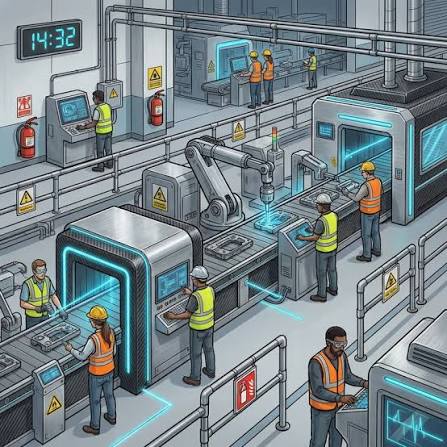
Pharmaceutical investment tracking becomes more useful when buyers divide projects into clear stages rather than treating every announcement equally.
An announced commitment means a company has publicly stated an investment intention. The project may still require detailed planning, permitting, site selection, financing decisions or final capital approval.
A defined project has a specific location, investment amount, facility purpose and development timeline. This stage gives suppliers significantly better visibility into potential future demand.
A construction project has moved into physical development, with site work, building construction or major equipment installation underway. This represents a much stronger indicator of future demand for industrial materials and services.
A commissioning project is approaching production. At this stage, demand can shift toward process chemicals, cleaning chemicals, specialty gases, production inputs, packaging materials and other recurring supplies.
Finally, commercial production represents the point at which the new capacity begins affecting pharmaceutical supply volumes and recurring procurement requirements.
This staging approach is particularly important when analyzing the White House's aggregate investment figures because a single headline number can combine projects at very different points in the development cycle.
Why the Difference Matters for Chemical Suppliers
Pharmaceutical manufacturing projects generate demand long before a facility produces its first commercial batch. Construction and commissioning require specialized materials, while production creates recurring demand for chemicals and pharmaceutical-grade inputs.
A new biologics facility, for example, can require high-purity process chemicals, cleaning agents, specialty gases and water-treatment products during commissioning. Once production starts, those requirements can become recurring procurement categories.
API facilities create another demand profile. Solvents, intermediates, reagents, catalysts and other chemical inputs can become strategically important once production lines begin qualification and commercial manufacturing.
This means chemical suppliers should not wait for a plant's official production date before tracking the opportunity.
Early project intelligence can help suppliers qualify products, identify distributors, establish regulatory documentation and prepare inventory before commercial purchasing begins.
Tariffs Are Changing the Investment Decision
The investment wave is closely connected to US trade policy. Pharmaceutical companies face pressure to increase domestic manufacturing capacity as policymakers seek greater supply-chain resilience and use tariff policy to encourage production inside the United States.
Reuters reported in August that global pharmaceutical companies had announced nearly $500 billion in US investment, with major commitments from Pfizer, Eli Lilly, Johnson & Johnson, AstraZeneca, Roche and other manufacturers. The investment wave reflects efforts to strengthen domestic infrastructure, reduce supply-chain exposure and respond to potential tariff costs.
That creates an important commercial question for pharmaceutical procurement teams. A company may announce a large US manufacturing commitment, but the benefits of that investment may not appear in supply availability for several years.
Until new capacity becomes operational, manufacturers may still depend on imported APIs, intermediates, excipients, specialty chemicals and other production materials.
For chemical buyers, this means tariff exposure and domestic capacity development need to be evaluated together.
Construction Activity Is the Better Signal for Near Term Demand
The strongest procurement signal is not the size of a company's overall investment pledge. It is evidence that a specific facility has entered development and has a defined construction or commissioning schedule.
A $1 billion facility with active construction can create more immediate supplier opportunities than a $20 billion corporate commitment spread across several years of research, technology and manufacturing investment.
This distinction also improves market forecasting. Buyers can rank projects according to expected completion dates, manufacturing type and likely chemical consumption rather than relying on corporate headline figures.
Johnson & Johnson's disclosed spending progress and CSL's defined Kankakee expansion demonstrate two different stages within the broader US investment cycle.
Buyer Action Checklist for Tracking US Pharma Capacity
Pharmaceutical buyers and chemical suppliers should build project-level monitoring into procurement planning as US manufacturing investment accelerates.
1. Separate pledges from physical projects
Create separate categories for corporate commitments, defined projects, active construction and facilities approaching commissioning.
2. Track facility locations
Record the state, city and specific manufacturing site associated with every major investment.
3. Identify the manufacturing technology
Determine whether the project involves APIs, biologics, vaccines, plasma-derived therapies, sterile injectables, oral medicines or another production category.
4. Estimate the chemical demand profile
Map likely requirements for solvents, intermediates, specialty chemicals, process gases, excipients and water-treatment inputs.
5. Monitor construction milestones
Track site preparation, building completion, equipment installation and commissioning instead of relying only on announcement dates.
6. Check expected production dates
A facility scheduled for 2031 should not be treated as an immediate source of domestic pharmaceutical capacity.
7. Review current import dependence
Identify which materials the new facility may eventually replace through domestic production and which inputs will likely remain internationally sourced.
8. Qualify suppliers early
Use the construction and commissioning window to qualify chemical suppliers, documentation and alternative sources before production ramps up.
9. Recalculate landed costs
Compare current imported supply economics against the expected cost structure of future US production.
10. Build a multi-year procurement forecast
Connect announced projects with expected commissioning dates to estimate when domestic capacity could change sourcing requirements.
The Real Measure of Reshoring Is Production, Not Pledges
The roughly $400 billion investment figure demonstrates the scale of the US pharmaceutical industry's response to tariff pressure and supply-chain policy. It also signals that major drugmakers are committing significant capital to domestic manufacturing, research and technology.
But the more meaningful measure for chemical buyers is how much of that money has moved from corporate announcements into physical assets. Johnson & Johnson's reported $12 billion already invested against its $55 billion commitment provides evidence of progress, while CSL's Kankakee expansion provides a clearly defined manufacturing project with a long-term production target.
The next phase of US pharmaceutical reshoring will therefore be easier to measure through construction activity, equipment installation, commissioning and commercial output than through headline investment totals.
For chemical suppliers, the opportunity lies in tracking these projects early and matching future production requirements with qualified supply capacity. For pharmaceutical buyers, the priority is understanding when promised domestic capacity will actually become available and how it will change the balance between US production and imported inputs. Ready to source pharmaceutical chemicals from verified global suppliers? Explore competitive offers on our platform today.

Acesulfame Potassium (E950)
Found this useful?