
Denmark's Schrödinger Continues Its Founding Role in Ajax's Drug Discovery Platform
Schrödinger's connection to Ajax Therapeutics goes back to the biotech's creation in 2019, when Schrödinger, Eli Lilly and Memorial Sloan Kettering Cancer Center helped establish the company around a computationally driven approach to discovering next-generation medicines. Ajax was designed to combine Schrödinger's computational chemistry capabilities with Lilly's pharmaceutical expertise and scientific work from MSK. (schrodinger.com)
Schrödinger's Technology Was Central to the Model
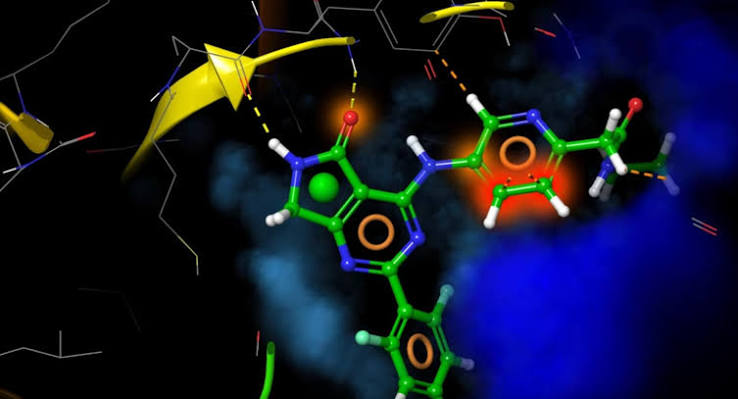
The founding structure gave Ajax access to Schrödinger's physics-based computational platform for identifying and optimizing potential drug candidates. This approach was particularly relevant to Ajax's focus on JAK2 inhibitors, where computational modeling could support the design of molecules capable of binding to specific protein conformations. Ajax's lead program, AJ1-11095, ultimately emerged from this research strategy. (schrodinger.com)
Ajax's Platform Now Moves to Lilly
Lilly's agreement to acquire Ajax for up to $2.3 billion changes the ownership of the platform but not the scientific significance of its origins. The acquisition gives Lilly full access to Ajax's lead Type II JAK2 inhibitor and related research capabilities, effectively bringing a program originally built through a collaboration involving Lilly and Schrödinger deeper into Lilly's own pipeline. (investor.lilly.com)
A Different Outcome for Schrödinger
For Schrödinger, Ajax represents an example of how its computational drug-discovery technology can contribute to the creation of independent biotechnology companies and eventually produce assets attractive to major pharmaceutical buyers. Schrödinger's role was not simply that of an external software supplier; it was part of Ajax's original formation and scientific strategy.
Computational Drug Discovery Gains Validation
The Ajax transaction also provides another data point for the broader adoption of computational approaches in pharmaceutical R&D. Rather than replacing laboratory research, computational chemistry can help identify and optimize candidates before they enter increasingly expensive experimental and clinical stages. Ajax's progression from a 2019 founding collaboration to a potential $2.3 billion Lilly acquisition illustrates the commercial value that can emerge when these platforms are combined with disease-specific expertise.
The Intelligence Takeaway
Schrödinger's connection to Ajax demonstrates how computational chemistry platforms can influence drug discovery well beyond individual software licenses or research collaborations. A company co-founded around Schrödinger's technology ultimately produced a differentiated JAK2 inhibitor that attracted Lilly's acquisition interest. As Lilly absorbs Ajax into its pipeline, the transaction provides a notable case study in how computational drug discovery, academic science and pharmaceutical capital can converge into a commercially valuable biotech platform.

Bitumen
Found this useful?