Automotive Powder Coatings Market Set to Reach $3.59 Billion by 2031 as VOC Standards Tighten
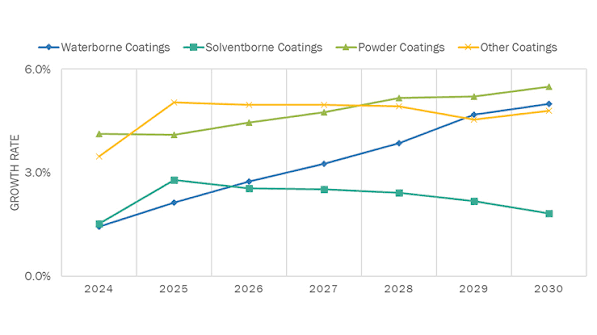
The global automotive powder coatings market is projected to grow from $2.78 billion in 2026 to $3.59 billion by 2031, a compound annual growth rate of 5.22 percent. That trajectory is not just a story about vehicle production volumes. It is a story about volatile organic compound (VOC) emissions rules steadily closing the door on solvent-based automotive finishes.
For chemical buyers and formulators, that regulatory pressure is turning into real, sustained demand for powder-based resin systems and pigments across body panels, wheels, chassis parts and under-hood components.
What Is Powder Coating and Why Automakers Are Switching to It
Powder coating applies a dry, finely ground mix of resin and pigment to a metal substrate using an electrostatic charge. The part is then cured under heat, which fuses the powder into a continuous, durable film.
Unlike liquid solvent-based paint, powder coating contains no liquid carrier that evaporates during application or curing. That single difference is why the technology has become the preferred route for manufacturers trying to cut VOC output.
Powder systems also bring practical manufacturing advantages that matter to automakers beyond compliance:
Overspray can typically be recovered and reused, which lowers material waste compared to spray-applied liquid coatings.
Cured powder films tend to resist chipping, corrosion and UV degradation better than many solvent-based alternatives, which matters for wheels and chassis components exposed to road conditions.
A single coating step often replaces multiple liquid coating and drying stages, shortening line time.
Key Drivers Behind the $3.59 Billion Forecast
Several forces are converging to push the market from $2.78 billion in 2026 toward $3.59 billion in 2031.
Vehicle manufacturing activity itself is expanding, particularly in Asia, which keeps raising baseline demand for every category of automotive coating. On top of that volume growth, automakers are under sustained pressure to improve coating efficiency and product performance while keeping application costs under control.
Powder coating answers both needs at once. It delivers a high-performance, cost-effective surface finish while sidestepping the VOC exposure that solvent-based systems carry. That combination is what analysts point to as the structural driver behind the market's steady climb through 2031.
VOC Emissions Standards Reshaping the Coatings Landscape
Environmental regulation is the backbone of this shift. Solvent-based coatings release VOCs as they dry, and those compounds contribute to ground-level ozone formation and broader air quality concerns.
As emissions standards tighten across major automotive manufacturing regions, solvent-based systems face rising compliance costs, additional abatement equipment and, in some jurisdictions, outright restrictions. Powder coatings avoid most of that regulatory burden because they release little to no VOCs during application or cure.
This is why the market narrative has shifted from "powder coating as a niche option" to "powder coating as the default compliance pathway" for OEMs and tier suppliers alike.
Asia Pacific dominated the global automotive powder coatings market in 2025, accounting for the majority of value share worldwide. That concentration reflects the region's position as the center of global vehicle manufacturing, alongside coating regulations that are increasingly aligned with those in Europe and North America.
For chemical suppliers, this means:
Resin and pigment producers with established Asia Pacific manufacturing or distribution footprints are best positioned to serve the fastest-growing share of demand.
Buyers sourcing outside the region should expect longer lead times and higher logistics costs relative to suppliers with regional capacity.
Regional price competition among established coatings producers is likely to intensify as more capacity comes online to meet OEM demand.
Applications Across Automotive Manufacturing
Powder coating has expanded well beyond decorative body panel finishes. It is now standard or growing in several structural and functional applications across a vehicle:
Wheels, where corrosion resistance and impact durability are critical.
Chassis and suspension components, which face constant exposure to road debris, moisture and salt.
Under-hood brackets and hardware, where heat resistance and long-term coating stability matter more than cosmetic finish.
Trim and structural body parts, where manufacturers want consistent film thickness and reduced touch-up requirements.
This broadening application base is part of why demand growth is expected to hold steady rather than spike and plateau.
Supply Chain Considerations for Coating Formulators
Powder coating formulations depend on a relatively concentrated set of raw material inputs, which makes supply chain planning important for buyers. Resin systems, most commonly polyester and epoxy-polyester hybrid chemistries for automotive use, sit alongside pigments such as titanium dioxide that provide opacity, brightness and color consistency.
Buyers should watch a few practical points as demand scales toward 2031:
Pigment and resin feedstock pricing can shift independently of finished coating demand, so procurement teams benefit from tracking upstream raw material markets directly rather than relying solely on finished coatings pricing.
Qualifying a secondary supplier for key resins or pigments reduces exposure if a primary producer faces a plant disruption or allocation constraint.
Regional regulatory alignment on VOC limits is not fully uniform, so formulations qualified for one market may need adjustment before they can be sold into another.
What Procurement Teams Should Watch Through 2031
The path from $2.78 billion to $3.59 billion is not guaranteed to be linear. Vehicle production cycles, raw material cost swings and the pace of further VOC regulation will all influence how quickly the market actually reaches that figure.
What is clearer is the direction of travel. Solvent-based automotive coatings are facing structural headwinds that powder coating technology does not share, and that gap is unlikely to close before 2031.
For procurement and sourcing teams, the practical takeaway is to build supplier relationships now, particularly for pigments and resin systems tied to Asia Pacific production capacity, rather than waiting until demand growth tightens available supply.
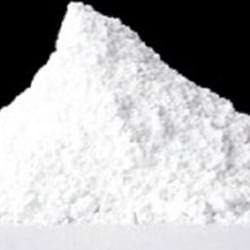
Titanium Dioxide
Found this useful?