Avantium's Delfzijl FDCA Plant and Zeon's Bioethanol Butadiene Pilot: Biobased Building Blocks Reach Commercial Scale
Avantium's Delfzijl FDCA Plant and Zeon's Bioethanol Butadiene Pilot: Biobased Building Blocks Reach Commercial Scale
Two announcements in 2026 capture the uneven progress of biobased chemical building blocks. In the Netherlands, Avantium completed commissioning of the purification unit at its FDCA Flagship Plant in Delfzijl, clearing the final major process step before first commercial production of furandicarboxylic acid from plant sugars. In Japan, Zeon finished construction of a bench-scale facility to demonstrate high-efficiency conversion of plant-based ethanol into butadiene, with commercialisation targeted only for 2034. Placed side by side, the projects show how far apart technologies that both aim to replace fossil monomers can sit on the maturity curve: one is entering the market, the other is still generating the data required for pilot design.
FDCA is the key monomer for polyethylene furanoate (PEF), a biobased polyester positioned as a higher-barrier alternative to PET in bottles and packaging. Butadiene is a high-volume building block for synthetic rubbers and elastomers. Both molecules have long been targets for renewable routes; the difference in 2026 is that one has crossed the commercial threshold while the other remains years from it.
Avantium’s FDCA Flagship Reaches the Commercial Gate
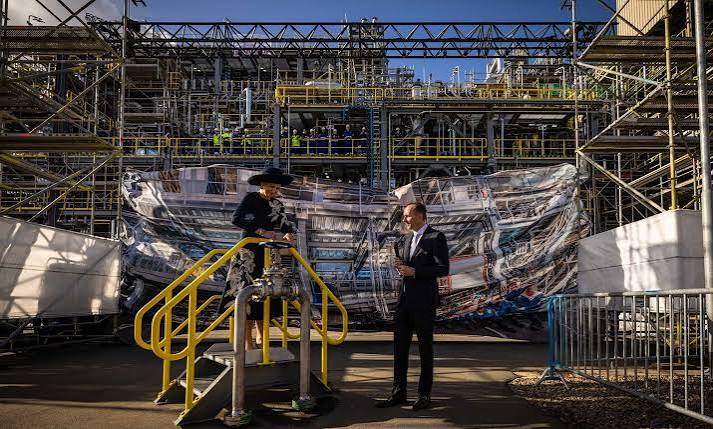
Avantium’s Delfzijl plant is described as the world’s first commercial-scale FDCA facility. By early September 2026 the company had commissioned the utility systems, sugar dehydration unit, oxidation unit and, finally, the purification unit. With all major process blocks complete, attention has shifted to integrated start-up, production of the first FDCA batches, product qualification and the start of commercial deliveries under existing offtake agreements, expected toward the end of 2026 subject to successful ramp-up.
The technology converts plant-derived sugars into FDCA via Avantium’s YXY process. Successful start-up at Delfzijl is intended to provide the commercial-scale validation needed to advance licensing discussions and to de-risk further capacity. Full design rates are projected to take roughly 24 months after initial start-up—a typical timeline for a first-of-kind continuous chemical plant.
Zeon’s Ethanol-to-Butadiene Project at Bench Scale
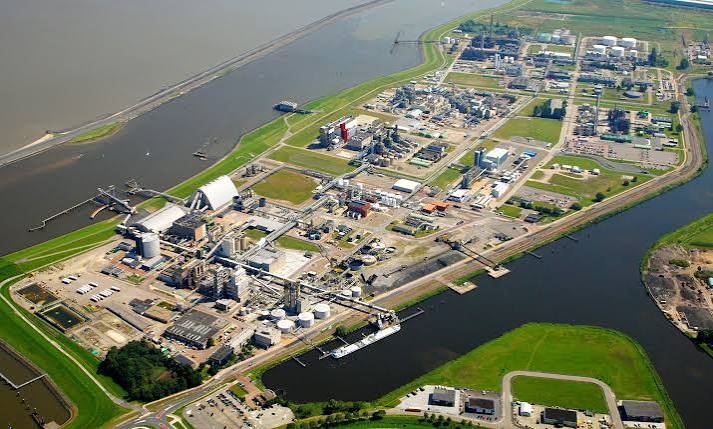
Zeon, working with Yokohama Rubber and supported by Japan’s NEDO programme, has completed a bench facility at its Tokuyama plant to demonstrate the conversion of plant-based or other sustainable ethanol into butadiene at high efficiency. The unit is designed to produce meaningful quantities of butadiene and to generate the process data required for subsequent scale-up. Full operation is scheduled from early 2027, followed by pilot-scale work aimed at technology establishment by around 2030 and commercialisation targeted for 2034.
The butadiene produced at bench scale will be used to make prototype polybutadiene rubber; Yokohama Rubber will then evaluate that rubber in tyre compounds. The project therefore sits firmly in the demonstration and data-collection phase rather than in commercial production. Its timeline reflects the additional engineering, catalyst, purification and economic hurdles that still separate a promising laboratory or bench route from a bankable world-scale plant.
Two Points on the Same Maturity Curve
The contrast is instructive. Avantium has already raised and spent the capital for a commercial flagship, negotiated offtake agreements, and is now solving the final start-up and qualification problems that every first-of-kind plant encounters. Zeon is still proving continuous operability, yield, selectivity and product quality at a scale small enough to allow rapid iteration. One project is about delivering tonnes and validating a business model; the other is about generating the design basis for the next engineering package.
Both face the classic biobased challenges—feedstock cost and availability, process intensity, capital intensity, and the need to match or exceed the performance of incumbent fossil molecules. The difference is that FDCA now has a commercial reference plant, while ethanol-to-butadiene does not.
Implications for the Biobased Monomer Landscape
The pairing illustrates why “biobased chemicals” cannot be treated as a single category. Some molecules and processes have reached the point of commercial risk reduction; others remain in the long, capital-intensive valley between proof-of-concept and first commercial tonne. Investors, offtakers and policymakers must distinguish between technologies that are ready for scale-up capital and those that still require patient demonstration funding.
For brand owners and compounders seeking renewable content, FDCA/PEF offers a nearer-term route into packaging. Renewable butadiene for tyres and elastomers remains a longer-dated opportunity whose economics and logistics will only become clear once pilot and early commercial data exist.
Outlook
Avantium’s Delfzijl FDCA plant is moving from commissioning into first production and commercial sales, marking a genuine commercial-scale milestone for a sugar-derived monomer. Zeon’s bench-scale ethanol-to-butadiene facility, by contrast, is the starting point of a multi-year demonstration and pilot programme aimed at 2034 commercialisation. Together they map the real distance that still separates many biobased building-block ambitions from market reality. Progress is occurring, yet it remains highly molecule- and process-specific. The next several years will show whether FDCA can translate its first-plant advantage into broader licensing and capacity growth, and whether ethanol-to-butadiene can clear the successive scale-up hurdles on the timetable Zeon has set.
Calcium Citrate (E333(iii))
Found this useful?