Europe's electric vehicle industry is entering a new phase where battery recycling is becoming as important as battery manufacturing. New recycling facilities across the region now perform professional battery dismantling, safe discharging, black mass production and metal-fraction processing, creating a more complete circular value chain for critical battery materials. Rather than viewing used batteries as waste, manufacturers increasingly recognize them as valuable sources of raw materials that can re-enter industrial production.
For procurement managers, chemical traders, battery material suppliers and investors, this transformation extends beyond environmental performance. Battery recycling is strengthening supply security, reducing dependence on imported raw materials and becoming an increasingly important element of ESG strategy.
Why Battery Recycling Matters More Than Ever
Demand for electric vehicles continues to increase, bringing greater attention to the long-term availability of battery materials.
Lithium, nickel, cobalt, manganese and other critical metals remain essential for battery production, yet primary mining alone may not satisfy future demand efficiently. Recycling provides an additional source of valuable materials while reducing dependence on newly extracted resources.
As more EV batteries reach the end of their service life, recycling capacity becomes increasingly important for maintaining stable material supply.
What Happens Inside a Modern Battery Recycling Facility?
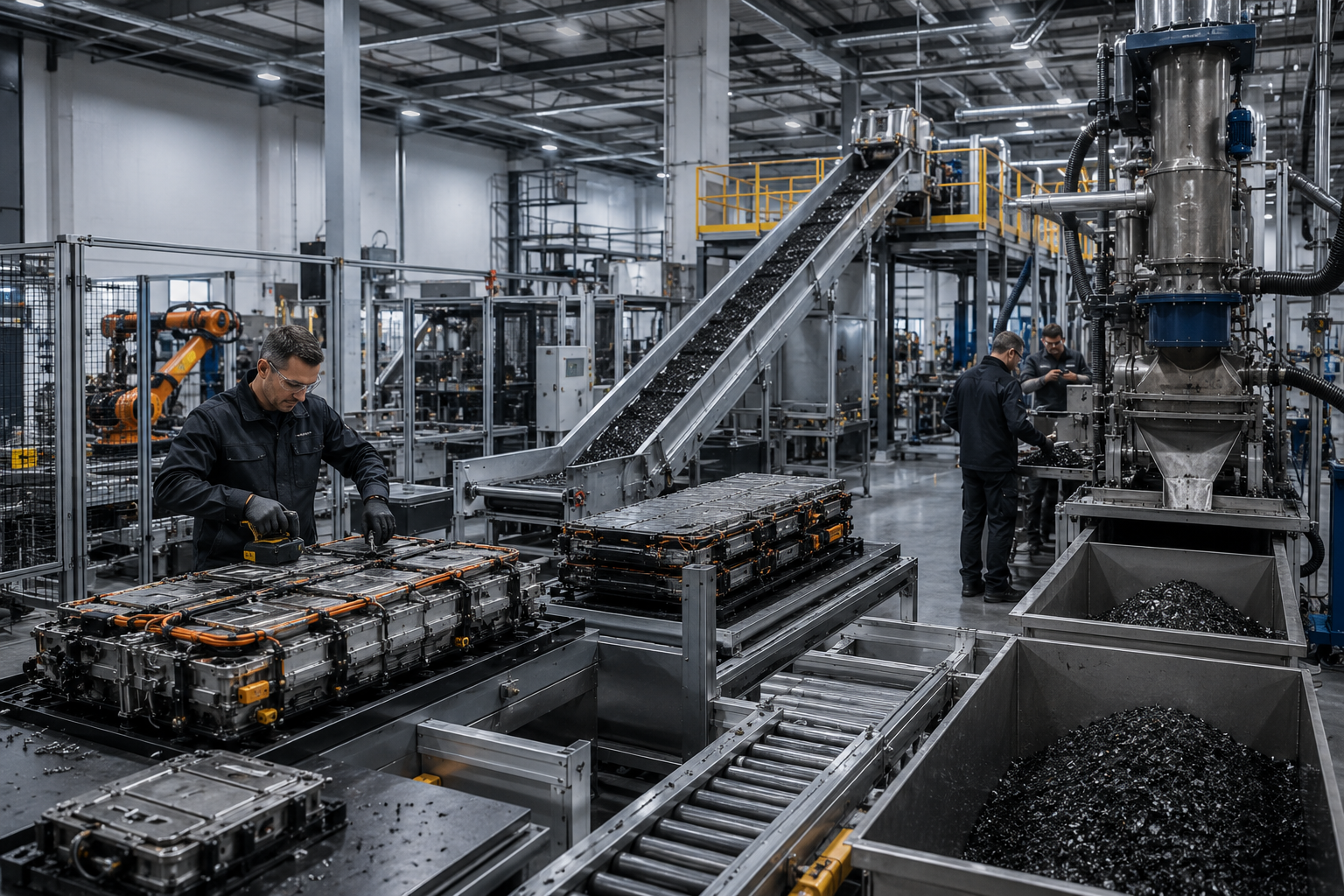
Today's recycling facilities use specialized processes designed to recover valuable materials safely and efficiently.
The process generally includes several stages:
Collection and inspection of end-of-life battery packs.
Controlled battery discharging to eliminate electrical hazards.
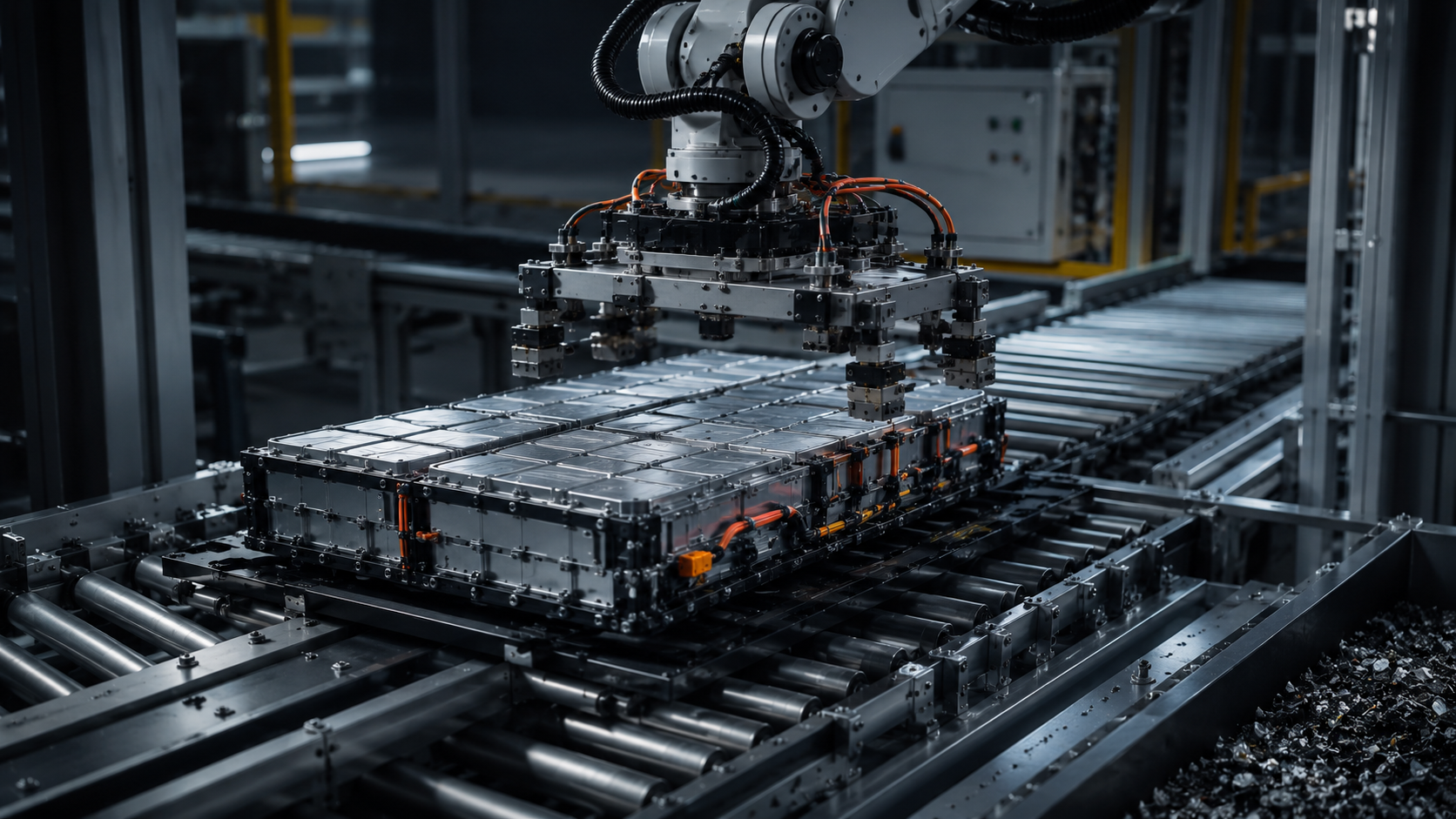
Professional dismantling into modules and components.
Mechanical processing to produce black mass.
Separation of metal fractions for further refining and reuse.
Each stage supports the recovery of materials that can return to battery and chemical manufacturing.
Why Black Mass Has Become a Strategic Feedstock
Black mass is one of the most valuable intermediate products generated during battery recycling.
It contains concentrated quantities of critical battery materials that can be refined into high-purity chemicals and metals suitable for manufacturing new batteries.
Growing black mass production offers several strategic advantages:
Greater recovery of valuable battery metals.
Reduced dependence on imported raw materials.
Support for regional battery manufacturing.
Lower demand for primary mining.
Improved circular resource utilization.
These benefits strengthen both commercial resilience and sustainability objectives.
Circular Economy Principles Are Reshaping the EV Supply Chain
Battery recycling has become one of the strongest practical examples of the circular economy.
Instead of extracting new resources for every battery produced, manufacturers increasingly recover valuable materials from existing products. This approach reduces waste while extending the useful life of critical resources.
For chemical companies, recycled battery materials are becoming an increasingly important feedstock alongside conventionally mined materials.
Battery recycling contributes to all three pillars of ESG.
From an environmental perspective, recycling reduces waste and conserves natural resources. The social dimension includes safer waste management, skilled employment and responsible resource stewardship. Governance focuses on traceability, compliance and transparent management of recycled materials.
This broad contribution explains why recycling investments increasingly feature in corporate sustainability strategies.
What Procurement Teams Should Evaluate
As recycled battery materials become more widely available, procurement strategies are evolving.
Buyers should assess suppliers based on:
Material recovery capabilities.
Product quality and consistency.
Processing capacity.
Traceability systems.
Environmental compliance.
Supply reliability.
Long-term expansion plans.
These factors help determine whether recycled materials can support reliable commercial supply.
Recycling Strengthens Europe's Raw Material Strategy
Europe has invested heavily in building domestic recycling infrastructure to reduce reliance on imported battery materials.
Expanding regional processing capacity supports greater supply chain resilience while allowing valuable metals to remain within the European manufacturing ecosystem. This approach aligns industrial competitiveness with circular economy objectives and strengthens long-term resource security.
As recycling volumes continue to increase, secondary raw materials are expected to play a larger role in future battery production.
What Buyers Should Watch Going Forward
Battery recycling is evolving into a strategic industry rather than simply a waste management activity. Facilities capable of battery dismantling, safe discharging, black mass production and metal-fraction processing are helping Europe close the EV value chain while creating new sources of critical raw materials.
For procurement professionals, the growing availability of recycled battery materials presents opportunities to diversify sourcing strategies and strengthen supply resilience. Companies investing in advanced recycling technologies, transparent material traceability and consistent processing quality are likely to become increasingly important partners as the circular battery economy continues to expand.
Ready to source battery materials and specialty chemicals from verified global suppliers? Explore competitive offers on our platform today.