Biodegradable Chemicals Moving From Niche to Mainstream
Biodegradable chemicals are moving steadily beyond niche applications as manufacturers, regulators and customers place greater emphasis on chemical products that can break down after use and reduce persistent environmental impacts.
The shift is particularly visible in Europe, where sustainability, circularity and safe-and-sustainable-by-design principles are increasingly being incorporated into industrial policy. The European Commission's revised Safe and Sustainable by Design framework, adopted in 2026, explicitly encourages companies to consider safety, sustainability and functionality across the full product lifecycle.
For chemical producers, this creates a new competitive opportunity.
Biodegradability is no longer simply an environmental characteristic.
It can increasingly become a commercial differentiator.
Why Biodegradability Is Becoming More Important
Traditional chemical products have generally been evaluated around:
Performance
Cost
Availability
Stability
Shelf life
Processing efficiency
Environmental persistence is now becoming another important consideration.
Customers increasingly want materials that can provide the required technical performance while reducing their environmental footprint after use.
This is particularly relevant in applications where chemicals ultimately enter:
Water systems
Soil
Household wastewater
Agricultural environments
Packaging systems
Personal-care products
That is creating new demand for formulations designed with end-of-life behavior in mind.

Regulation Is Helping Move the Market
Regulation is becoming one of the strongest drivers behind biodegradable chemistry.
The EU's new detergents and surfactants regulation, Regulation 2026/405, maintains biodegradability requirements for surfactants and extends the framework to additional materials over time. Films and polymers used in detergent capsules are scheduled to face biodegradability requirements from 2032, while certain other intentionally added organic substances will face criteria from 2034.
This is important because regulation can turn sustainability from an optional purchasing preference into a market-access requirement.
Surfactants Are an Early Mainstream Market
Surfactants are among the clearest examples of biodegradable chemistry moving into mainstream use.
They are widely used in:
Detergents
Personal care
Industrial cleaning
Agriculture
Textile processing
Oil and gas applications
The new EU framework requires surfactants used in detergents to meet biodegradability criteria, including a benchmark of at least 60% mineralisation within 28 days under specified test methods.
This creates a significant commercial incentive for suppliers that can deliver both performance and demonstrable biodegradability.
Biodegradable Does Not Mean Bio-Based
These concepts are often confused.
A chemical can be:
Bio-based but not readily biodegradable.
And it can be:
Fossil-based but biodegradable.
Bio-based describes the origin of the feedstock.
Biodegradable describes what happens to the material after it enters an appropriate environment and undergoes biological degradation.
That distinction matters for procurement teams.
A sustainable chemical strategy should therefore evaluate both:
Feedstock origin
End-of-life behavior
rather than assuming one automatically guarantees the other.
Performance Still Comes First
The biggest challenge for biodegradable chemicals is maintaining technical performance.
Customers generally will not accept a material simply because it is biodegradable if it:
Performs poorly
Has inadequate shelf life
Degrades too quickly during use
Costs substantially more
Creates processing problems
Cannot meet regulatory specifications
The strongest commercial products therefore need to combine:
Performance + Cost + Biodegradability
That is where the real competitive opportunity exists.
Specialty Chemicals Are Particularly Well Positioned
Biodegradability fits naturally with the specialty-chemical business model.
Specialty producers compete through differentiated characteristics rather than price alone.
Biodegradable products can differentiate themselves through:
Environmental performance
Formulation technology
Application-specific functionality
Certification
Regulatory compliance
Renewable feedstocks
End-of-life characteristics
This can potentially reduce direct commodity-style price competition.
The Opportunity Extends Beyond Detergents
Although detergents are receiving significant regulatory attention, biodegradable chemistry has applications across multiple industries.
Potential areas include:
Agriculture
Personal care
Cosmetics
Lubricants
Water treatment
Coatings
Adhesives
Packaging
Textile chemicals
Cleaning products
This broad application base gives chemical producers multiple routes to commercialization.
Agriculture Could Become a Major Growth Market
Agricultural chemicals are increasingly being evaluated for their environmental behavior.
Biodegradable formulations can potentially reduce persistence in soil and water while maintaining required agricultural performance.
Potential applications include:
Adjuvants
Surfactants
Coatings
Controlled-release materials
Formulation aids
Soil-treatment products
This aligns with Europe's broader push toward safe-and-sustainable-by-design chemical development.
Packaging Creates Another Opportunity
Packaging is undergoing major regulatory and commercial change.
The EU's packaging framework is pushing manufacturers toward greater recyclability, reduced waste and more sustainable material systems. Packaging represents roughly 40% of Europe's plastic consumption, while only 42% of fossil-fuel-based plastic waste was recycled in 2023.
Biodegradable chemicals can contribute to this transition through:
Coatings
Adhesives
Barrier materials
Additives
Polymer intermediates
However, biodegradability must be evaluated carefully because a biodegradable material is not automatically the best solution for every recycling system.
Water-Based Applications Could Benefit Strongly
Chemicals that eventually enter wastewater are another important opportunity.
Biodegradable formulations can potentially reduce environmental persistence in applications such as:
Industrial cleaners
Detergents
Surfactants
Personal-care ingredients
Process chemicals
This is particularly important as regulators increasingly focus on substances that persist or accumulate in the environment.
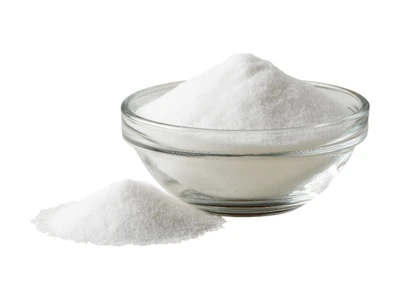
Citric Acid Anhydrous (E330)
Bio-Based Chemistry Supports the Transition
Biodegradable chemistry and bio-based chemistry can reinforce each other.
Renewable feedstocks can provide alternatives to fossil resources, while biodegradable formulations can address end-of-life concerns.
The combination creates a broader sustainability proposition:
Renewable feedstock → Chemical production → Product performance → Biodegradable end-of-life
But again, the two attributes must be verified independently.
The Market Is Growing, but Penetration Remains Limited
The broader bio-based chemicals market is expanding rapidly.
A 2026 market estimate places global bio-based chemicals at roughly $120 billion in 2026, with Europe accounting for nearly half of the global market in 2025.
At the same time, the Bio-based Industries Consortium estimates that only around 8% of Europe's €655 billion chemicals industry is currently bio-based.
That suggests the transition is still relatively early.
The same is true for biodegradable chemistry.
The mainstream opportunity is large precisely because penetration remains incomplete.
Cost Is Still the Biggest Barrier
Conventional chemicals benefit from enormous production infrastructure.
Fossil-based chemical value chains have:
Large-scale plants
Established feedstock markets
Mature logistics
Integrated production
Optimized manufacturing processes
New biodegradable alternatives often have to compete against this infrastructure.
Their cost disadvantage can come from:
Smaller production scale
More expensive feedstocks
Specialized processing
Limited manufacturing capacity
Certification costs
Customer qualification requirements
The products most likely to achieve mainstream adoption will therefore be those that can narrow the cost gap while maintaining performance.
Scale Could Change the Economics
As demand grows, production scale can improve.
Higher volumes can lead to:
Lower manufacturing costs
Better feedstock purchasing
Larger production facilities
Improved logistics economics
Greater supplier competition
This creates a potential commercialization cycle:
Demand → Investment → Scale → Lower cost → More adoption
The challenge is getting the market far enough along that cycle.
Certification Will Become More Important
Biodegradability claims need evidence.
Customers increasingly need to distinguish between:
Readily biodegradable
Inherently biodegradable
Ultimately biodegradable
Compostable
Bio-based
Partially biodegradable
These terms are not interchangeable.
Testing, certification and documentation will therefore become increasingly important parts of chemical procurement.
For suppliers, the ability to provide reliable technical documentation could become a competitive advantage.
Procurement Teams Need Better Evaluation Criteria
Procurement departments should not evaluate biodegradable chemicals solely on price.
A broader framework should consider:
Technical performance
Biodegradation profile
Testing methodology
Regulatory compliance
Feedstock origin
Lifecycle impact
Supplier reliability
Commercial scale
Long-term availability
The cheapest product may not be the cheapest option once compliance and environmental requirements are included.
Supply Security Remains Critical
A sustainability-driven product still needs a reliable supply chain.
Procurement teams should assess:
Manufacturing capacity
Feedstock availability
Geographic concentration
Production redundancy
Lead times
Logistics requirements
Supplier financial strength
This becomes particularly important when biodegradable chemicals are produced at smaller scale than conventional alternatives.
Specialty Producers Can Build Pricing Power
If a biodegradable chemical solves a genuine customer problem, suppliers may be able to command a premium.
That premium becomes easier to defend when the product offers multiple benefits simultaneously:
Technical performance + regulatory compliance + environmental advantage
This is much stronger than selling biodegradability as a standalone marketing claim.
The Green Premium Will Not Last Forever
As more suppliers enter the market, price premiums may decline.
That is actually a sign of market maturation.
Early-stage products can command premiums because supply is limited.
As manufacturing scales, competition increases and customers become more demanding.
The winners will eventually need to compete on:
Cost
Quality
Performance
Reliability
Sustainability
In other words, biodegradable chemistry will eventually need to become normal chemistry with better environmental characteristics, not a premium niche product.

Chemical Companies Are Already Thinking Beyond Compliance
The strategic opportunity is broader than meeting regulation.
Companies can use biodegradable products to differentiate their portfolios.
This can help them target customers with sustainability objectives in:
Consumer goods
Food packaging
Personal care
Agriculture
Automotive
Industrial manufacturing
That creates opportunities for higher-value specialty chemical businesses.
Biodegradability Can Become Part of Product Design
The next stage is likely to move biodegradability upstream in the development process.
Instead of asking:
"Can we make this chemical biodegradable?"
companies may increasingly ask:
"Can we design this chemical to perform effectively and degrade appropriately after use?"
That is a much more fundamental change.
It makes environmental performance part of product development rather than an afterthought.
Safe-and-Sustainable-by-Design Reinforces the Trend
The EU's revised Safe and Sustainable by Design framework emphasizes integrating sustainability, safety and functionality throughout the lifecycle of chemicals and materials.
That approach is important because biodegradability is only one part of overall sustainability.
A truly sustainable chemical also needs to consider:
Toxicity
Resource use
Energy consumption
Carbon footprint
Circularity
Functional performance
End-of-life behavior
This broader framework could influence how new specialty chemicals are developed and commercialized.
The Mainstream Transition Will Be Selective
Biodegradable chemicals will not replace conventional chemicals everywhere.
Some applications require extreme:
Stability
Heat resistance
Chemical resistance
Longevity
Shelf life
In those applications, rapid biodegradation may actually be undesirable.
The strongest opportunities will therefore be in applications where the chemical is intended to enter the environment or wastewater after its useful life.
Investors Should Watch Commercial Proof
For investors, the most important signal is not another sustainability announcement.
It is commercial adoption.
Useful indicators include:
New production capacity
Customer qualification
Long-term offtake agreements
Revenue growth
Margin performance
Regulatory approvals
Repeat orders
Manufacturing scale
A biodegradable chemical that customers repeatedly purchase at commercially attractive margins is far more significant than a successful laboratory demonstration.
What This Means for Chemical M&A
Biodegradable chemistry could also influence chemical M&A.
Strategic buyers may increasingly value specialty businesses with:
Proprietary biodegradable formulations
Strong customer relationships
Regulatory know-how
Sustainable product portfolios
Scalable manufacturing
Attractive end-market exposure
That could make sustainability-oriented specialty platforms increasingly attractive acquisition targets.
Looking Ahead
Biodegradable chemicals are moving toward mainstream adoption, but the transition will not happen simply because customers want greener products.
The economics need to work.
The technology needs to perform.
The supply chain needs to scale.
And the environmental claims need to withstand regulatory and technical scrutiny.
Europe is already creating stronger market signals. New EU detergent rules establish biodegradability requirements today while extending them to additional polymers and organic substances over the next decade.
Meanwhile, broader investment in bio-based chemicals is expanding the pool of potential renewable and biodegradable alternatives. Europe's bio-based chemical industry still represents only a relatively small share of total chemical production, suggesting substantial room for future growth.
The strategic lesson for chemical companies is clear:
Biodegradability is moving from a niche selling point toward a mainstream product attribute.
The companies that capture the most value will be those that can combine biodegradability with competitive cost, reliable supply and strong technical performance.
Key Takeaways
Biodegradable chemicals are moving from niche applications toward mainstream industrial markets.
Regulation is becoming a major driver, particularly in European detergents and surfactants.
The EU's 2026 detergents regulation extends biodegradability requirements to additional materials over time.
Biodegradable and bio-based are different characteristics and should not be treated as interchangeable.
Specialty chemicals are particularly well positioned to monetize biodegradable formulations.
Agriculture, personal care, cleaning, coatings, packaging and water-related applications offer significant opportunities.
Cost remains one of the biggest barriers to mass adoption.
Certification, testing and traceability will become increasingly important.
The strongest products will combine biodegradability with technical performance rather than relying on environmental claims alone.
Commercial scale and repeat customer demand will determine which technologies move from niche to mainstream.
For chemical companies, biodegradability could become an increasingly important source of product differentiation and pricing power.
Found this useful?