Bioprocessing Order Growth Intelligence: Mid-Teens Growth Signals Sector Health
While quarterly earnings often dominate financial headlines, experienced industrial analysts frequently pay closer attention to order growth. Orders represent future customer commitments rather than completed sales, making them one of the strongest leading indicators of manufacturing activity.
Danaher's report of mid-teens growth in bioprocessing orders has therefore attracted significant attention across the life sciences industry. Although quarterly revenue can fluctuate because of shipment timing, customer scheduling or accounting recognition, incoming orders typically provide a clearer view of underlying market demand.
For procurement professionals, laboratory suppliers and specialty chemical manufacturers, this distinction offers valuable market intelligence. Strong order growth suggests that biotechnology companies continue investing in production capacity despite broader economic uncertainty.
Why Orders Often Matter More Than Revenue
Revenue measures products that have already been delivered.
Orders measure customer demand that will support future production.
Because manufacturing cycles within biotechnology can extend over several months, revenue may not immediately reflect changing market conditions.
Orders, however, frequently provide earlier visibility into:
This makes order growth one of the most closely monitored indicators throughout advanced manufacturing industries.
Understanding Revenue Timing Noise
Quarterly revenue is influenced by several temporary factors.
These include:
As a result, one quarter's revenue performance does not always accurately represent actual customer demand.
Order growth helps reduce this uncertainty by measuring purchasing commitments before products are delivered.
Consequently, analysts frequently compare both metrics together rather than relying on revenue alone.
Why Mid-Teens Growth Matters
Mid-teens order growth represents a healthy expansion rate for a mature industrial business.
Such performance generally indicates:
Continued customer investment.
Stable research activity.
Manufacturing expansion.
Healthy production pipelines.
Confidence across biotechnology markets.
Ongoing capital spending.
Although individual quarters should never be viewed in isolation, sustained order growth often signals improving market fundamentals.
For suppliers throughout the life sciences ecosystem, these trends can provide valuable insight into future demand.
What Bioprocessing Demand Reveals
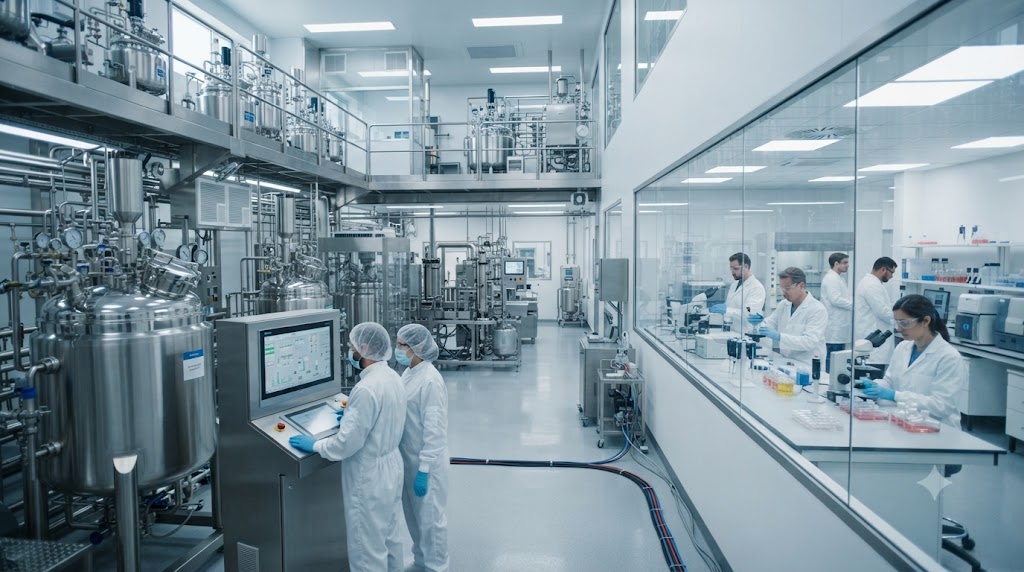
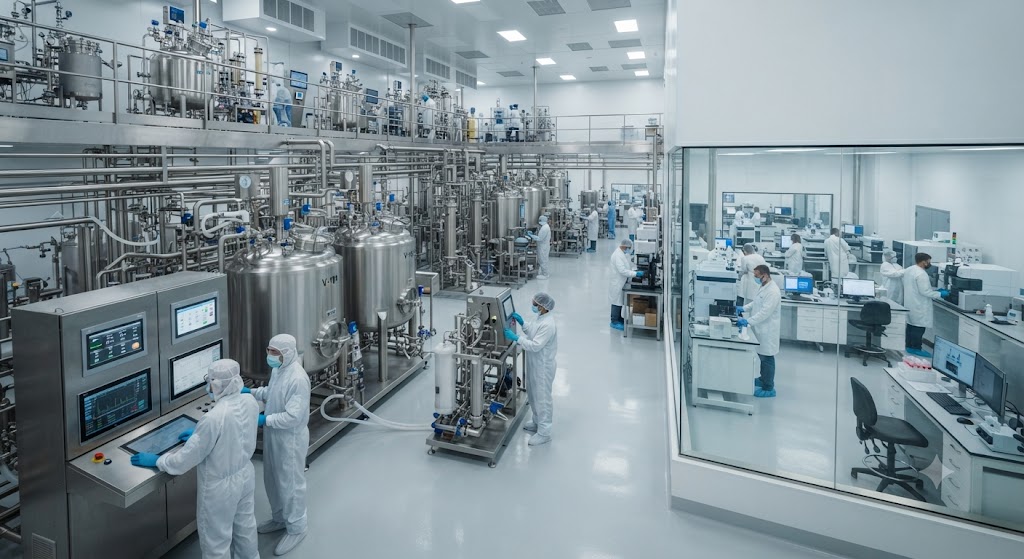
Bioprocessing supports the production of biologics, vaccines, cell therapies, monoclonal antibodies and numerous advanced pharmaceutical products.
Growth within this market frequently reflects broader investment across life sciences manufacturing.
Increasing orders may indicate:
New production facilities.
Capacity expansion.
Clinical manufacturing.
Commercial biologics production.
Laboratory equipment investment.
Process optimisation.
These developments typically generate demand across numerous specialty chemical and laboratory supply chains.
Why Procurement Teams Should Pay Attention
Bioprocessing facilities consume a wide range of specialised materials.
These include:
High-purity solvents.
Process chemicals.
Buffer solutions.
Filtration materials.
Cleaning agents.
Laboratory reagents.
When order growth strengthens, procurement teams throughout these supply chains often experience increasing customer activity.
Monitoring order trends therefore provides earlier intelligence than waiting for revenue growth alone.
It enables suppliers to anticipate demand before production volumes fully increase.
Order Growth Supports Long-Term Capacity Planning
Manufacturing investments within biotechnology require significant planning.
Companies rarely expand production capacity based solely on short-term optimism.
Instead, sustained order growth often supports decisions involving:
These investments create additional opportunities throughout the broader chemical and laboratory supply chain.
The Difference Between Cyclical Recovery and Structural Demand
Analysts frequently distinguish between temporary improvements and structural growth.
Temporary demand may result from:
Inventory rebuilding.
Delayed purchases.
Project timing.
Seasonal factors.
Structural demand usually reflects:
Expanding biologics production.
New therapeutic approvals.
Long-term healthcare investment.
Growing pharmaceutical manufacturing.
Capacity expansion.
Order growth helps analysts determine which trend is developing because customer commitments often extend beyond immediate production requirements.
Life Sciences Continue Demonstrating Resilience
Compared with many industrial sectors, life sciences manufacturing has historically demonstrated relatively stable investment patterns.
Drivers include:
These structural factors help support continued investment even during periods of broader economic uncertainty.
Strong bioprocessing orders therefore reinforce confidence in the sector's long-term fundamentals.
What Chemical Suppliers Can Learn
Suppliers serving pharmaceutical manufacturers should monitor leading indicators rather than relying exclusively on historical financial results.
Important signals include:
Together, these indicators provide valuable intelligence regarding future procurement opportunities.
Companies responding early to strengthening demand frequently position themselves more effectively than competitors waiting for revenue data alone.
Looking Beyond Quarterly Headlines
Quarterly earnings remain important, but they rarely tell the complete story.
Order growth often reveals:
Customer confidence.
Future production.
Investment intentions.
Manufacturing activity.
Supply chain expansion.
Long-term demand.
By combining both financial and operational indicators, procurement professionals gain a more comprehensive understanding of market direction.
Final Takeaway
Danaher's mid-teens growth in bioprocessing orders offers one of the clearest signals yet that underlying life sciences manufacturing demand remains healthy.
Unlike quarterly revenue, which may fluctuate because of shipment timing and accounting recognition, incoming orders provide earlier visibility into future production activity and customer investment.
For procurement professionals, specialty chemical suppliers and laboratory manufacturers, this distinction carries significant strategic value.
Healthy order growth suggests continued investment across biotechnology production, reinforcing confidence in long-term demand for high-value laboratory chemicals, process materials and pharmaceutical manufacturing inputs.
As additional companies report earnings throughout 2026, order trends will likely remain one of the industry's most valuable indicators of future manufacturing activity.
Ready to source High-Purity Sodium Hydroxide for Bioprocessing from verified global suppliers? Explore competitive offers on our platform today.