Borouge-NOVA Merger Ranks Among 2026's Most Consequential Polyolefins Consolidations
If 2023-2024 was about survival in polyolefins, 2026 is about scale. And no deal defines that shift better than the creation of Borouge Group International.
What started as a merger discussion between Abu Dhabi's ADNOC and Austria's OMV to combine their polyolefin holdings — Borouge and Borealis — turned into a three-way $60 billion power play with the acquisition of North American giant NOVA Chemicals.
This is not just another JV tidy-up. This is the birth of the world's fourth largest polyolefin producer.
#### The Deal: How We Get to $60 Billion
The structure is deliberately complex, but brilliant:
1. OMV and ADNOC to merge polyolefins businesses Borouge and Borealis — Borealis is 75% OMV / 25% ADNOC, while Borouge is 54% ADNOC / 36% Borealis. Merging them creates a new entity: Borouge Group International (BGI).
2. BGI then acquires NOVA Chemicals for $13.4 billion including debt. The seller is Mubadala. NOVA is a leading North American polyethylene producer.
3. The acquisition, together with the recontribution of Borouge-4, would create a new $60+ billion global polyolefins champion, set to be the world's fourth largest by nameplate production capacity.
The numbers after closing:
* Valuation: AED220bn+ ($60bn) global integrated chemicals powerhouse
* Capacity: 13.6 million metric tonnes per annum across 62 plants spanning North America, Europe and the Middle East – more than doubling Borouge's current capacity.
* Ownership: Jointly owned and controlled by ADNOC and OMV, with headquarters in Vienna and Abu Dhabi. The ADNOC stake will then be transferred to XRG, ADNOC's new energy investment arm.
* Timeline: The combining of Borouge and Borealis and acquisition of Nova are likely to complete in Q1-2026. Transactions are on track to close before the end of March 2026.
Why This Ranks #1 Among 2026 Consolidations
There have been bolt-ons and recycling JV's this year, but nothing comes close to BGI in consequence. Here's the ranking logic:
1. It Creates True Geographic Immunity
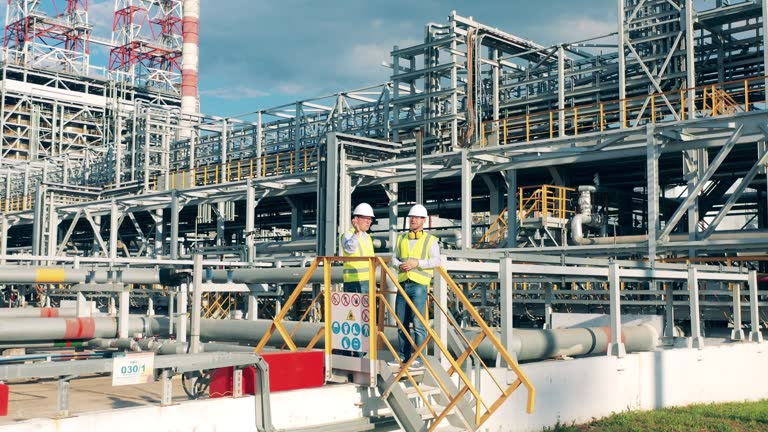
Most polyolefin majors are regionally trapped. Dow and ExxonMobil are US-centric. Sinopec is China. Borouge was Middle East-centric.
BGI will be the first to have world-scale, low-cost feedstock in all three super-regions: cheap ethane in Abu Dhabi and North America (via NOVA), and advanced recycling and specialty compounds in Europe via Borealis. That's a hedge against exactly the kind of regional energy shocks we saw in 2022-2025.
2. It Solves the Technology Gap
NOVA brings SCLAIRTECH and Advanced SCLAIRTECH - arguably the best bimodal HDPE tech for pressure pipes and high-performance films. Borouge brings Borstar. Borealis brings Borlink for wire & cable and Queo for plastomers. Combined, BGI owns the entire premium PE and PP stack.
As the company itself put it: "By combining Borouge and Borealis and acquiring NOVA Chemicals, we are creating a world-scale polyolefins leader with differentiated technology"
3. It Forces Everyone Else to Respond
When you create a $60bn fourth-largest player with a stated $2.2 billion dividend target post-closing, you reset the cost of capital for the sector. LyondellBasell ($30.15B market cap), Borealis alone, and even SABIC now have to justify their scale.
The deal contemplates subject to respective agreements with Mubadala, a possible acquisition of Nova Chemicals as part of OMV's and ADNOC's negotiations — it started as a framework, and ended as a forced consolidation blueprint.
ADNOC and OMV have been in talks since 2023 about a merger of Borouge and Borealis, which would have created a chemicals group with over $20 billion in annual sales. Adding NOVA tripled that ambition.
Bottom Line: The Borouge-NOVA merger isn't just a 2026 deal. It's the end of the era where polyolefins were a collection of regional champions. BGI is now the template: Middle Eastern feedstock + European technology + North American market access. If you don't have all three, you're sub-scale.
Expect Dow, ExxonMobil Chemical, and LyondellBasell to be forced into their own counter-moves in the next 12 months.
Ascorbic Acid
Found this useful?