Brenntag's $17.8 Billion Distributor Crown: Why Chemical Distribution Is Consolidating Around Security of Supply, Not Just Scale
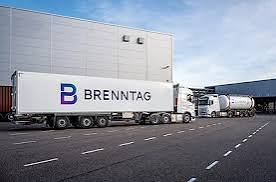
The 2026 ICIS Top 100 Chemical Distributors ranking places Germany-based Brenntag at the top with $17.8 billion in 2025 sales, followed by Tricon Energy at $14.0 billion, Univar Solutions at $11.5 billion, Sinochem Petrochemical Distribution at $8.7 billion, and Nagase & Co at $6.0 billion.
However, the most important message from this year's ranking may not be the size of the companies.
ICIS global editor Joseph Chang highlighted the impact of the Middle East conflict and resulting supply-chain disruptions, noting that security of supply has moved to the forefront of distributor priorities.
That signals a broader change in chemical distribution. Scale remains important, but distributors are increasingly being evaluated on their ability to keep products moving when trade routes, production sites, freight availability, and regional supply conditions become disrupted.
Why Scale Alone Is No Longer Enough
Large distribution networks traditionally provide advantages through:
Purchasing power
Warehousing capacity
Customer reach
Logistics infrastructure
Supplier relationships
Geographic coverage
But disruption can expose weaknesses even within large networks.
A distributor may have significant sales volume but still face difficulties if a key supplier, shipping route, production region, or logistics corridor becomes unavailable.
This makes network resilience an increasingly important competitive factor alongside revenue scale.
Security of Supply Becomes a Commercial Asset
Chemical distributors sit between producers and industrial customers.
During stable market conditions, their value can be measured largely through efficient distribution, inventory management, and customer service.
During disruption, their role becomes more strategic.
Distributors can create value through:
Alternative supplier identification
Regional inventory positioning
Emergency sourcing
Multiple logistics routes
Local warehousing
Supplier diversification
Customer allocation management
In this environment, maintaining supply can become more valuable than simply achieving the lowest possible procurement cost.
Inventory Strategy Is Changing
The shift toward security of supply has direct implications for distributor inventory strategies.
A lean inventory model can reduce working-capital requirements, but it can also leave customers exposed when supply disruptions occur.
Distributors may therefore need to balance:
Inventory Efficiency ↔ Supply Security
Maintaining additional stocks of strategically important chemicals can increase carrying costs, but it can also provide protection against:
Shipping disruptions
Plant outages
Geopolitical events
Sudden supplier shortages
Extended lead times
Regional logistics bottlenecks
The optimal inventory strategy is increasingly likely to depend on the criticality of the chemical rather than applying one uniform inventory policy.
Supplier Diversification Becomes More Important
The same logic applies to sourcing.
A distributor relying heavily on one producer or one geographic region may face greater disruption risk than a distributor with multiple qualified supply sources.
Supplier diversification can include:
Multiple manufacturers
Multiple production regions
Alternative ports
Different freight routes
Regional warehouse networks
Backup suppliers for critical products
This can also improve negotiating flexibility when market conditions change.
The Middle East Conflict Highlights the Risk
ICIS specifically connected the 2026 distributor ranking with supply-chain disruptions resulting from the Middle East conflict.
For chemical distributors, geopolitical disruption can affect much more than the availability of a single product.
It can influence:
Shipping routes
Freight costs
Insurance premiums
Port operations
Feedstock availability
Production economics
Delivery schedules
As a result, distributors increasingly need visibility across the entire supply chain rather than focusing only on supplier pricing.
Distribution Networks Are Becoming Strategic Infrastructure
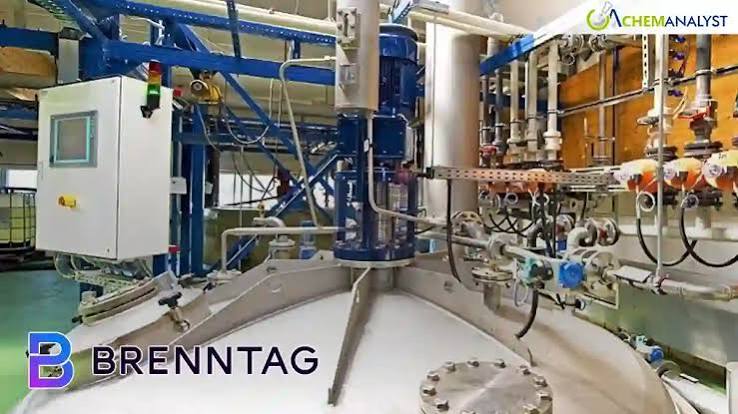
A major chemical distributor's network of warehouses, terminals, transportation relationships, technical services, and supplier contracts can function as a form of commercial infrastructure.
This infrastructure can help manufacturers avoid building their own large inventories or maintaining direct relationships with numerous producers.
For smaller and mid-sized industrial buyers, distributors can therefore provide:
Local availability
Smaller shipment quantities
Technical support
Regulatory documentation
Flexible delivery
Access to multiple producers
This makes distribution networks particularly valuable when supply chains become fragmented.
What Procurement Teams Should Watch
Chemical buyers should increasingly evaluate distributors using resilience indicators alongside price.
Important questions include:
1. Where Is Inventory Located?
Regional warehouse coverage can determine how quickly a distributor can respond to disruption.
2. How Diversified Are Suppliers?
Multiple qualified producers can reduce dependence on a single source.
3. What Alternative Routes Exist?
Backup ports and transportation routes can reduce exposure to logistics disruptions.
4. Which Products Are Held in Stock?
Critical chemicals may require different inventory policies from readily available commodities.
5. How Strong Is the Distributor's Market Intelligence?
Early visibility into production outages, freight disruption, and geopolitical developments can improve procurement decisions.
Consolidation Could Strengthen Distribution Resilience
The scale of the companies appearing at the top of the ICIS ranking also highlights the continuing importance of consolidation.
Larger distributors can potentially support broader:
Warehouse networks
Supplier portfolios
Geographic coverage
Logistics capabilities
Technical services
Market intelligence systems
However, scale does not automatically guarantee resilience. The quality of the network, diversification of suppliers, inventory positioning, and ability to respond quickly to disruptions remain critical.
Looking Ahead
The 2026 ICIS ranking shows that chemical distribution remains a highly concentrated and strategically important part of the global chemical supply chain.
Brenntag's $17.8 billion in 2025 sales establishes the scale of the leading distributor, but the more important industry development may be the changing definition of distributor value.
Chemical distribution is increasingly about more than moving products from manufacturers to customers.
It is becoming a combination of inventory management, supplier diversification, logistics resilience, market intelligence, and risk management.
For chemical buyers, this means the right distribution partner may increasingly be the one capable of maintaining supply when normal trade flows are disrupted — not simply the one offering the lowest quoted price.
Key Takeaways
Brenntag led the 2026 ICIS Top 100 Chemical Distributors ranking with $17.8 billion in 2025 sales.
Tricon Energy, Univar Solutions, Sinochem Petrochemical Distribution, and Nagase & Co followed the top position.
ICIS linked the current distribution environment to Middle East conflict and supply-chain disruption, putting security of supply at the forefront of distributor priorities.
Inventory positioning is becoming an important part of distributor competitiveness.
Supplier and geographic diversification can reduce exposure to individual disruptions.
Procurement teams should evaluate distributors on resilience, inventory availability, logistics networks, and market intelligence alongside price.
Scale remains important, but supply-chain security is becoming a more strategic component of distributor value.
Sources
https://www.prnewswire.com/news-releases/icis-top-100-chemical-distributors-ranking-for-2026-unveiled-302799783.html | https://www.icis.com/explore/press-releases/icis-top-100-chemical-distributors-ranking-for-2026-unveiled/ | https://zexprwire.com/icis-top-100-chemical-distributors-ranking-for-2026-unveiled/

Polyethylene Glycol - Taiwan
Found this useful?