Capex Rankings by Region: Who's Actually Spending on New Chemical Capacity in 2026?

Capex Rankings by Region: Who's Actually Spending on New Chemical Capacity in 2026?
The global chemical industry is entering 2026 with a strange contradiction: companies are cutting costs and closing plants in some regions while simultaneously committing billions of dollars to new capacity elsewhere.
That makes capital expenditure one of the clearest ways to see where chemical companies actually believe the industry's future lies.
The spending pattern is increasingly regional. Asia is receiving the largest structural wave of new chemical investment, the Gulf is expanding its feedstock advantage into downstream chemicals, North America is selectively adding capacity where energy and feedstock economics work, while Europe is becoming much more selective.
This is important because announced projects can be misleading. The better question is not where is capacity being announced? but where are companies still willing to put real capital to work?
1. Asia: The Clear Capacity Leader
Asia remains the center of global chemical capacity expansion.
Oliver Wyman estimates that China already represents around 50% of global chemical capacity and that Chinese producers are responsible for approximately 70% of new chemical-capacity additions through 2027. (oliverwyman.com)
That investment is not limited to basic petrochemicals. China is increasingly moving into higher-value materials, specialty chemicals and integrated production chains.
The strategy is straightforward:
Build scale → integrate feedstocks → capture domestic demand → compete for export markets.
But there is a major downside.
China's investment wave has already produced significant overcapacity in several commodity chemicals. Sinopec, for example, reported that its chemical business remained loss-making in the first half of 2026, while ethylene output fell 15.5% amid industry overcapacity and private-sector competition. (Reuters)
So Asia ranks first for capital deployment, but that does not automatically mean first for returns on capital.
Asia score: ★★★★★ — Maximum spending, rising overcapacity risk
2. Gulf: Turning Feedstock Advantage Into Chemical Capacity
The Gulf is taking a different approach.
Saudi Arabia, the UAE and other Gulf producers are leveraging relatively advantaged hydrocarbon feedstocks to expand petrochemical production and increasingly move downstream.
The strategic objective is to capture more value from each barrel or molecule of hydrocarbons rather than simply exporting crude or basic feedstocks.
This makes the Gulf particularly attractive for energy-intensive chemical production.
The region's investment case is strengthened by:
Competitive feedstock costs
Integrated refinery-petrochemical complexes
Large-scale infrastructure
Export-oriented production
Government-backed industrial investment
Increasing focus on downstream products
The Gulf is therefore becoming an increasingly important destination for new global chemical capacity, particularly where production economics depend heavily on feedstock costs.
Gulf score: ★★★★☆ — Strong structural investment case
3. North America: Selective, Not Retreating
North American chemical investment is becoming much more selective.
The region retains one of the world's strongest advantages in natural-gas-based feedstocks, particularly in the United States. But companies are no longer willing to build capacity simply because feedstock economics look attractive.
Projects increasingly need a clear commercial rationale.
BASF provides a useful example. Its Geismar, Louisiana expansion is scheduled to start in 2026 and will increase North American MDI capacity from approximately 380,000 tonnes per year to around 600,000 tonnes per year. BASF describes the project as its largest standalone investment in North America. (BASF)
At the same time, BASF expects its total investment volume to decline to around €3 billion in 2026, below depreciation and amortization. (BASF)
That combination tells the story:
North America is still attracting chemical capital — but capital is being concentrated in projects with strong economics rather than spread broadly across the portfolio.
The region is also benefiting from demand associated with semiconductors, data centers, advanced manufacturing and industrial reshoring.
North America score: ★★★★☆ — Strong economics, disciplined spending
4. Europe: The Investment Pullback Is Becoming Structural
Europe is the biggest contrast to Asia.
European chemical companies continue to invest, but the scale and type of investment are changing.
High energy costs, carbon costs, regulation and weak industrial demand are making large commodity-chemical projects increasingly difficult to justify.
European producers are therefore focusing capital on:
Specialty chemicals
Semiconductor materials
Advanced materials
Energy efficiency
Plant modernization
Decarbonization
High-value applications
BASF's investment strategy illustrates this shift. While the company is strengthening its European sites, including new semiconductor-grade sulfuric acid and electronic-grade ammonium hydroxide plants in Ludwigshafen, its overall 2026 investment budget is expected to fall to around €3 billion. (BASF)
European chemical companies are also increasingly restructuring rather than expanding.
Recent results show companies continuing cost-cutting and restructuring efforts, while analysts warn that Chinese overcapacity and weak industrial demand could continue creating pressure on European chemical prices. (Reuters)
Europe score: ★★☆☆☆ — Selective investment, limited commodity expansion
The 2026 Regional Capex Map
Region | 2026 Capex Direction | Main Investment Theme | Competitive Position |
|---|---|---|---|
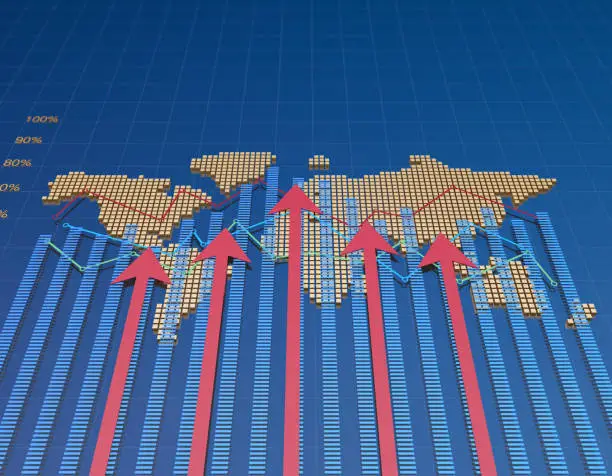
Asia | ↑↑↑ | New capacity & integration | Highest expansion |
Gulf | ↑↑ | Petrochemicals & downstream | Strong cost advantage |
North America | ↑ | Selective large projects | Strong economics |
Europe | ↓ / selective | Specialties & strategic resilience | Cost challenged |
The important point is that capex is no longer following demand alone.
It is following cost position + feedstock + industrial policy + strategic market access.
The Real Capex Winner May Not Be the Region Spending the Most
There is a major distinction between capacity growth and profitable capacity growth.
Asia may add the most tonnes, but if demand does not keep pace, utilization and margins can deteriorate.
That is already visible in China's chemical sector. Sinopec's 2026 results show how additional capacity can coexist with weak chemical profitability. (Reuters)
Meanwhile, a smaller investment in North America or the Gulf may generate better returns if the producer has structurally cheaper feedstock and a stronger export position.
This creates a new metric for chemical investors:
Not “Who is building the most?” but “Who can build and operate profitably?”
Why Europe's Capex Decline Matters
Europe's reduced investment has consequences beyond European producers.
When companies stop replacing or expanding commodity capacity, the region gradually becomes more dependent on imports.
That could create opportunities for producers in:
China
India
The Gulf
North America
Southeast Asia
But it also creates supply-chain risks.
European buyers may increasingly need to evaluate alternative origins, freight exposure, tariffs and geopolitical risks when sourcing chemicals previously produced domestically.
This means Europe's capex decline could ultimately reshape global chemical trade flows.
The Capex Signal Chemical Buyers Should Watch
For procurement teams, capital expenditure can be an early-warning indicator.
A producer investing heavily in a product may eventually have more capacity and potentially greater pricing pressure.
A producer closing plants and cutting capex may face tighter availability later.
Therefore, buyers should track:
New plant announcements
Final investment decisions
Construction progress
Startup dates
Capacity expansions
Plant closures
Maintenance shutdowns
Regional utilization
Feedstock investments
Company-level capex guidance
The most useful question becomes:
“What will this company's capacity footprint look like two years from now?”
The Emerging Global Chemical Investment Model
The 2026 capex landscape suggests that the chemical industry is splitting into different regional models.
Asia: Build scale.
Gulf: Exploit feedstock advantage and move downstream.
North America: Invest where economics are compelling.
Europe: Protect strategic capabilities and specialize.
This is a very different model from the previous era, when large chemical companies could pursue broad global expansion with relatively similar investment logic across regions.
Today, location itself has become a competitive advantage.
Outlook
The 2026 chemical capex rankings tell a bigger story than simply who is spending billions.
They show where the industry's next generation of capacity is likely to emerge.
Asia is still the expansion engine. The Gulf is strengthening its position as a low-cost chemical hub. North America remains competitive but disciplined. Europe is moving from capacity growth toward selective, high-value investment.
The result will be a chemical industry with an increasingly uneven global production map.
For chemical buyers, investors and suppliers, that means the most important capex question is no longer:
“How much is the industry investing?”
It is:
“Where is the industry still confident enough to invest — and what does that tell us about the chemical supply chain of 2030?”

Activated Carbon (Powder) - India
Found this useful?