CATL's Debrecen Cell Plant Starts Trial Production
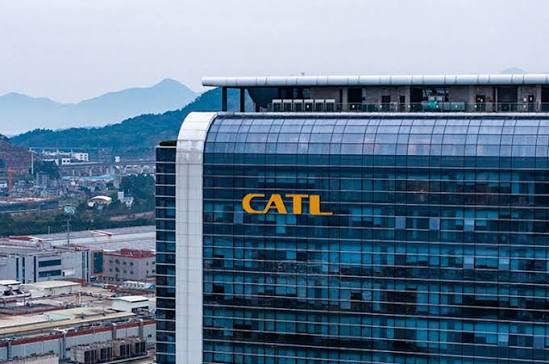
CATL has started trial production at its newly built battery cell factory in Debrecen, Hungary, marking an important step toward large-scale European battery manufacturing.
Trial operations began on September 22, 2026, with the first two cell production lines entering the commissioning phase. The trial period is intended to set up, optimize, and validate production equipment and manufacturing processes before series production begins.
The development is strategically important for Europe's electric-vehicle supply chain because CATL plans to build the Debrecen complex into a 100 GWh manufacturing base, which the company says will become its largest production base outside China once all facilities are ready.
Why the Debrecen Start Matters
CATL announced the Debrecen investment in August 2022 as its second European battery plant, following its German facility.
The project is designed to bring battery-cell manufacturing closer to European automotive customers and integrate CATL more deeply into the continent's electric-mobility supply chain.
For European manufacturers, local battery production can provide potential advantages through:
Shorter supply chains
Greater regional production capacity
Reduced dependence on imports from Asia
Improved coordination with European vehicle plants
More localized battery supply
Greater flexibility in production planning
Hungary has developed a significant automotive and EV manufacturing footprint, making Debrecen strategically positioned within Europe's growing battery ecosystem.
From Battery Modules to Cell Manufacturing
The Debrecen site is not starting from zero.
CATL has already been manufacturing battery modules at the location since autumn 2024 and reports cumulative production of approximately 537,000 modules.
The start of cell trial production therefore represents an expansion in the site's manufacturing capabilities.
Moving further upstream into cell manufacturing can allow the facility to participate in a larger portion of the battery value chain, from cell production through module and downstream battery-system manufacturing.
100 GWh Planned Capacity
Once fully developed, CATL says the Hungarian plant is planned to reach 100 GWh of annual capacity.
That would make Debrecen CATL's largest manufacturing base outside China.
However, the current milestone should not be interpreted as the plant already operating at 100 GWh.
Only the first two production lines have entered trial operations, and CATL has not provided a definitive timetable for the beginning of full series production in its announcement.
This distinction is important for supply-chain analysts because installed or planned capacity does not immediately translate into commercial output.
Permits and Environmental Conditions
The trial-production milestone followed an important permitting process.
CATL received an occupancy permit in August 2026 and subsequently completed the relevant permits and preconditions required under its Integrated Pollution Prevention and Control (IPPC) permit before starting trial operations.
The permitting process also involved repeated inspections by the Hajdú-Bihar County Government Office.
CATL said previously identified deficiencies had been resolved before trial production began. The company has also stated that employee health, safety, and environmental indicators will continue to be monitored during the trial period, with results submitted to authorities.
For battery projects, this highlights how environmental permitting and operational compliance can become critical milestones alongside construction and equipment installation.
What Trial Production Means for the Supply Chain
Trial production is primarily a technical validation stage.
The first two lines must be used to:
Commission production equipment
Optimize manufacturing processes
Validate operating parameters
Identify production issues
Establish quality controls
Prepare for series manufacturing
This means the next major indicator will be the transition from trial operations to sustained commercial production.
For procurement teams, monitoring this transition is more useful than treating the September launch as immediate full-scale supply availability.
European EV Supply Chain Integration
CATL's stated objective is to serve leading European automakers that have established substantial EV production capacity in Hungary.
This creates a potentially important regional connection between:
Battery cells → Modules → EV manufacturing → European automotive supply chains
Local cell production can reduce the physical distance between battery manufacturing and vehicle assembly plants, potentially improving logistics coordination and supply responsiveness.
The investment therefore has implications beyond CATL itself, affecting the broader industrial ecosystem around Hungary's automotive and battery manufacturing clusters.
Competitive Intelligence
Companies tracking the European battery market should monitor several indicators following the Debrecen trial-production launch.
1. Series Production
The timing of full commercial cell production will be a key indicator of project progress.
2. Capacity Ramp-Up
Actual production volumes will show how quickly the facility moves toward its planned capacity.
3. Production Lines
The performance and commissioning of additional production lines will provide a clearer picture of the project's eventual scale.
4. Customer Integration
New supply relationships with European automakers could indicate how rapidly Debrecen becomes embedded in regional EV production.
5. Regulatory Compliance
Continued environmental, health, and safety monitoring will remain important as production scales.
Procurement Considerations
Battery and automotive procurement teams should distinguish between planned capacity, trial capacity, and commercially available supply.
Important factors to monitor include:
Series-production timing
Cell specifications
Production chemistry
Quality qualification
Customer approvals
Delivery schedules
Local logistics
Supplier capacity
Regulatory compliance
The gradual ramp-up also means buyers may need to maintain diversified sourcing until Debrecen reaches stable commercial production.
Strategic Implications for Europe
CATL's Debrecen development illustrates Europe's continuing effort to build a more localized battery manufacturing ecosystem.
For Europe, the strategic value lies not only in adding battery capacity but also in developing regional manufacturing networks connecting:
Battery materials
Cell manufacturing
Module production
Automotive assembly
Charging infrastructure
Energy-storage applications
The closer these activities become geographically, the more integrated Europe's broader e-mobility supply chain can become.
Looking Ahead
CATL's September 22 trial-production launch is an important commissioning milestone, but the next stage will be the transition toward stable series production.
The planned 100 GWh Debrecen complex could eventually become one of the most significant battery manufacturing hubs in Europe's automotive supply chain.
For chemical, battery, automotive, and procurement professionals, the project will therefore be worth monitoring through its capacity ramp-up, customer qualification, production-line expansion, and regulatory performance.
The broader lesson is that Europe's battery supply chain is continuing to move toward greater regional manufacturing capacity, with large projects such as Debrecen connecting Asian battery technology and investment with European automotive production.
Key Takeaways
CATL began trial cell production on September 22, 2026 at its new Debrecen factory.
The first two cell production lines entered trial operations.
The facility had received its occupancy permit in August and completed the relevant IPPC preconditions before trial production.
CATL has already produced approximately 537,000 battery modules at Debrecen since autumn 2024.
The fully developed Hungarian plant is planned to reach 100 GWh of annual capacity.
CATL has not yet announced a definitive timetable for full series production.
Debrecen is intended to strengthen CATL's integration with European automotive and e-mobility supply chains.
Sources

Ascorbic Acid (E300)
Found this useful?