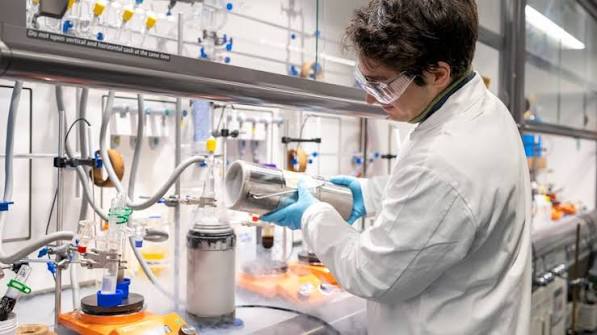
When discussing competitiveness in the chemical industry, attention usually focuses on feedstock costs, energy prices, logistics and manufacturing capacity.
Increasingly, however, another factor is becoming just as important: people.
Chemical manufacturing remains one of the world's most technically demanding industries. Designing, operating and maintaining modern production facilities requires highly trained chemists, chemical engineers, process engineers, automation specialists and safety professionals.
Recent industry publications suggest that the availability of this specialised workforce is becoming an increasingly important competitive advantage.
For procurement professionals, talent trends may appear distant from day-to-day purchasing decisions. In reality, they can influence supplier reliability, operational resilience and long-term manufacturing capability.
Why Talent Matters in Chemical Manufacturing
Unlike many industries, chemical manufacturing depends upon specialised technical knowledge throughout the production process.
Highly skilled personnel are responsible for:
Process optimisation.
Plant safety.
Quality assurance.
Environmental compliance.
Maintenance planning.
Production troubleshooting.
Research and product development.
Replacing experienced technical professionals is often significantly more difficult than replacing standard manufacturing labour.
As a result, workforce quality directly influences operational performance.
Scientific Talent Has Become a Strategic Resource
Several industry publications during 2026 have highlighted growing concern regarding the global distribution of scientific talent.
Rather than asking only where production capacity will be built, companies are increasingly asking:
Where are chemistry graduates choosing to work?
Which countries continue attracting chemical engineers?
Where are research investments expanding?
Which regions are retaining experienced industrial specialists?
These questions increasingly influence long-term investment decisions.
Europe Faces a Dual Challenge
Published European industry analysis highlights a particularly complex challenge.
Chemical manufacturers are simultaneously expected to:
Improve environmental performance.
Reduce carbon emissions.
Maintain global competitiveness.
Modernise manufacturing assets.
Continue innovation.
Achieving all of these objectives requires a highly skilled technical workforce capable of managing increasingly sophisticated industrial operations.
Consequently, workforce availability has become an important component of long-term industrial competitiveness.
Talent Influences More Than Research
Discussions about scientific talent often focus on laboratories and innovation.
In reality, workforce availability influences the entire chemical value chain.
Experienced engineers support:
Safe plant operation.
Higher equipment reliability.
Better process efficiency.
Faster problem resolution.
Stronger environmental performance.
More reliable customer supply.
Operational excellence depends as much on experienced personnel as on modern equipment.
Workforce Trends Influence Supplier Capability
For procurement organisations, workforce quality represents another dimension of supplier assessment.
Companies that consistently attract and retain highly qualified technical professionals are often better positioned to:
Maintain production stability.
Improve manufacturing efficiency.
Support product innovation.
Respond effectively during operational disruptions.
Invest in long-term process improvements.
These characteristics contribute directly to supplier resilience over time.
What Procurement Teams Should Monitor
Although procurement departments rarely manage workforce planning directly, talent trends can provide useful indicators of long-term supplier capability.
Areas worth monitoring include:
Investment in technical training programmes.
Graduate recruitment initiatives.
Expansion of research and development facilities.
Partnerships with universities and research institutes.
Automation and digital manufacturing investment.
Workforce retention and succession planning.
These indicators help assess whether suppliers are strengthening their long-term operating capability rather than simply expanding production capacity.
Talent Supports Supply Chain Resilience
Recent supply chain disruptions demonstrated that resilient operations depend on both physical infrastructure and experienced personnel.
Well-trained technical teams help organisations:
Recover more quickly from production interruptions.
Improve maintenance planning.
Reduce unplanned shutdowns.
Optimise process efficiency.
Maintain consistent product quality.
Respond effectively to changing regulatory requirements.
In this sense, human capital has become another element of supply chain resilience.
The Competition for Talent Is Becoming Global
The movement of scientific and engineering talent increasingly reflects broader global competition for advanced manufacturing capability.
Companies and countries investing in:
Research infrastructure.
Innovation ecosystems.
Professional development.
Modern production technologies.
Collaborative industrial clusters.
are often better positioned to attract and retain the specialists required to operate increasingly sophisticated chemical manufacturing facilities.
For procurement professionals, these developments provide another perspective when evaluating the long-term competitiveness of supplier regions.
Looking Ahead to H2 2026
The chemical industry's future competitiveness will depend not only on feedstock availability, energy costs and capital investment, but also on its ability to attract, develop and retain highly skilled scientific and engineering talent. Modern chemical manufacturing is becoming increasingly complex, requiring expertise in automation, digital operations, sustainability, process safety and advanced materials alongside traditional chemical engineering skills.
Published industry analysis suggests that workforce capability is emerging as a strategic differentiator between regions. Countries and companies that successfully build strong talent ecosystems will be better positioned to operate efficiently, innovate consistently and maintain reliable production over the long term. Those facing persistent shortages of experienced technical professionals may encounter increasing operational and competitive challenges even where physical manufacturing capacity remains available.
For procurement professionals, talent trends should be viewed as another component of supplier risk assessment. Evaluating a supplier's investment in people, technical capability and workforce development—alongside financial strength, manufacturing performance and market position—provides a more comprehensive understanding of long-term operational resilience. In an industry where reliability depends as much on expertise as infrastructure, human capital is becoming an increasingly important indicator of sustainable supply capability.
Ready to source industrial and specialty chemicals from verified global suppliers with strong operational capabilities? Explore competitive offers on our platform today.