Chemical Safety Assessment: The Tools Industry Uses to Evaluate Substance Risk
The first half of 2026 reshaped global chemical trade more dramatically than many procurement teams expected. While geopolitical disruption temporarily constrained exports from the Gulf, China's chemical industry rapidly increased production and shipments across multiple product categories, effectively becoming the world's swing supplier.
Rather than replacing every disrupted shipment, Chinese producers focused on markets where manufacturing capacity already existed, logistics remained reliable and export demand justified higher operating rates. The result was a significant increase in international availability of methanol, polyethylene, purified terephthalic acid, styrene and numerous specialty chemicals.
Why China Became the Global Swing Supplier
Every commodity market depends on suppliers capable of increasing production when unexpected shortages emerge. During H1 2026, China fulfilled this role better than any other country.
Several structural advantages supported this transition.
China already possessed enormous integrated petrochemical capacity capable of responding quickly to changing demand.
Export infrastructure remained operational through major coastal ports despite elevated freight volatility.
Manufacturers demonstrated flexibility by redirecting products toward international markets instead of relying solely on domestic consumption.
Unlike new production projects that require years to complete, existing Chinese facilities simply adjusted utilisation rates and export priorities.
This responsiveness helped stabilise global supply chains during one of the most volatile trading periods since the pandemic.
Commodity Chemicals That Benefited Most
Several chemical families experienced noticeable increases in Chinese export activity throughout the first half of the year.
Methanol remained one of the most visible examples. Buyers that previously depended on Gulf suppliers increasingly turned toward Chinese cargoes as shipping uncertainty affected traditional supply routes.
Polyethylene also experienced stronger Chinese exports, particularly in markets where buyers prioritised immediate availability over historical sourcing preferences.
Other important export categories included:
PTA for polyester manufacturing, supported by China's massive integrated production base.
Styrene, where Chinese producers increased regional shipments across Asia.
Selected solvents and intermediates serving coatings, adhesives and industrial manufacturing.
High-value specialty chemicals where Chinese suppliers already maintained established customer relationships.
Not every product experienced identical growth. Export expansion generally reflected available production capacity and commercial attractiveness rather than government direction alone.
The Logistics Advantage During Market Disruption
Production capacity alone did not explain China's success.
Reliable logistics proved equally valuable.
Chinese ports continued processing significant export volumes while many buyers searched for alternative suppliers capable of maintaining predictable shipping schedules.
For procurement managers, dependable delivery often became more valuable than achieving the absolute lowest purchase price.
Several operational strengths supported Chinese exporters:
Large container port capacity reduced bottlenecks during periods of elevated demand.
Extensive domestic transport networks moved raw materials efficiently between inland production centres and coastal export terminals.
Strong relationships with international shipping companies improved scheduling flexibility.
Combined, these advantages enabled Chinese exporters to respond faster than many competing regions.
Structural Winners Versus Crisis Winners
As Gulf exports recover toward roughly 75 percent of pre-crisis levels, buyers should avoid assuming every Chinese export gain will become permanent.
Instead, procurement teams should distinguish between sectors where China's competitiveness reflects long-term structural advantages and those that benefited primarily from temporary market disruption.
Structural strengths include:
Specialty chemicals requiring sophisticated manufacturing expertise.
Food additives and sweeteners supported by large-scale production and established quality systems.
Pharmaceutical intermediates with mature export supply chains.
Performance chemicals serving electronics, coatings and advanced manufacturing.
These segments depend less on temporary freight disruptions and more on manufacturing capability, technical expertise and customer confidence.
By contrast, commodity polymers and basic petrochemicals remain far more sensitive to production economics.
When Gulf suppliers restore full operational capacity, pricing competition will become considerably stronger.
How Gulf Recovery Changes the Competitive Landscape
Middle Eastern producers continue rebuilding export volumes following earlier disruptions.
Although capacity has not fully returned to previous levels, physical trade flows increasingly indicate that regional supply chains are stabilising despite isolated shipping incidents.
For commodity products, this development introduces renewed pricing pressure on Chinese exporters.
Procurement professionals should expect several market shifts during H2 2026:
Greater price competition in polyethylene and other commodity polymers.
Narrower export margins for Chinese producers.
Increased supplier competition across Asian destination markets.
More diversified sourcing strategies among multinational buyers.
Chinese manufacturers will likely remain important suppliers, but maintaining crisis-era market share will become substantially more challenging as traditional exporters regain commercial momentum.
Beijing's Selective Export Strategy Remains Important
China's role as a major exporter is influenced not only by industrial capacity but also by policy decisions.
One of the clearest examples during H1 2026 has been the continuation of urea export restrictions, which are expected to remain in place through approximately August. Rather than allowing unrestricted exports across every product category, Beijing has continued to prioritise domestic supply stability where necessary.
This selective approach demonstrates that China is not pursuing export growth at any cost. Instead, policymakers appear willing to support international competitiveness in sectors where domestic supply remains comfortable while maintaining tighter control over products considered strategically important.
For buyers, this creates a market where policy developments deserve almost as much attention as production statistics.
Trade Defence Measures Continue to Shape Export Opportunities
Chinese exporters also face increasing scrutiny in several overseas markets.
The European Union has continued expanding anti-dumping investigations and trade defence measures across selected chemical segments. These actions are unlikely to remove China from global trade, but they can alter regional pricing, supplier selection and procurement strategies.
International buyers should monitor several developments throughout H2:
Changes to anti-dumping duties affecting specific chemical categories.
New compliance requirements for products entering European markets.
Regional sourcing shifts as exporters redirect cargoes toward Asia, Africa and Latin America.
Additional certification requirements requested by downstream manufacturers.
These factors may influence delivered costs even when factory prices remain competitive.

Looking Ahead to H2 2026
Chemical safety assessment is built on a well-established scientific framework that is applied across major regulatory systems worldwide. Whether under the European Union's REACH Regulation or the United States' TSCA programme, the process consistently evaluates four core elements: hazard identification, dose–response assessment, exposure assessment and risk characterisation. Together, these steps determine not simply whether a substance has hazardous properties, but whether it can be used safely under specific conditions with appropriate risk management measures.
For procurement professionals, understanding this framework improves the ability to interpret supplier documentation and engage more effectively with technical, regulatory and quality teams. A Chemical Safety Report or Safety Data Sheet should not be viewed as a simple compliance document; it is evidence describing the assumptions, exposure scenarios and control measures that support safe use of a substance. Evaluating whether those assumptions align with an organisation's own operations is an essential part of responsible procurement.
The key lesson for H2 2026 is that chemical safety is increasingly becoming a collaborative responsibility across the supply chain. Procurement, regulatory affairs, environmental health and safety (EHS), quality assurance and suppliers all contribute to ensuring that chemicals are sourced, handled and used safely. Organisations that integrate scientific risk assessment into supplier qualification and purchasing decisions will strengthen regulatory compliance, improve operational resilience and support safer, more sustainable chemical supply chains.
Ready to source industrial and specialty chemicals from verified suppliers with comprehensive safety documentation and regulatory compliance? Explore competitive offers on our platform today.
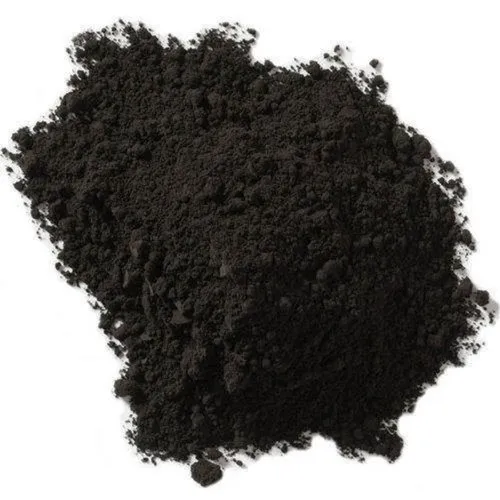
Activated Carbon (Granular) - India
Found this useful?