Chemours’ Refrigerant Business Targets a 50% Cut in European Automotive Emissions
Introduction
Chemours is highlighting the potential of its refrigerant business to support significant reductions in automotive air-conditioning emissions across Europe. A new industry study, co-led by Chemours and Solstice Advanced Materials, found that coordinated measures across the automotive value chain could reduce cumulative refrigerant emissions by approximately 50% between 2030 and 2050.
The study also estimates that annual automotive refrigerant emissions could be reduced by more than 60% by 2050 compared with baseline projections. The findings point to opportunities for manufacturers, suppliers, service providers, and refrigerant producers to work together on technologies and practices that reduce emissions throughout a vehicle’s lifecycle.
Refrigerants Become an Important Automotive Emissions Issue
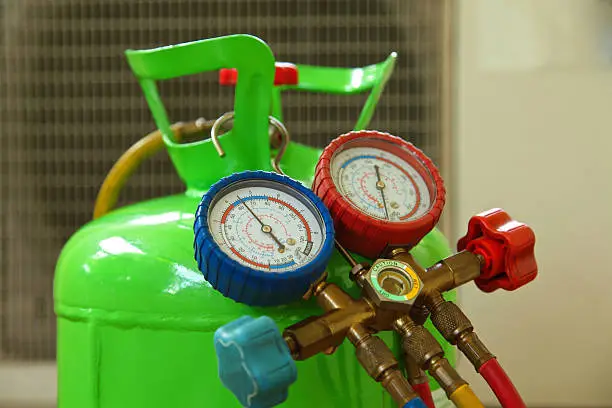
Vehicle air-conditioning systems use refrigerants that can escape into the atmosphere during manufacturing, operation, servicing, and end-of-life disposal. As Europe continues to strengthen its climate and environmental policies, reducing these emissions is becoming increasingly important.
Chemours’ refrigerant portfolio includes Opteon, a range of lower-global-warming-potential refrigerants designed for applications including automotive air conditioning.
The new study focuses not only on the refrigerant itself but on the entire automotive lifecycle. This broader approach recognizes that emissions can be reduced through improvements in equipment, maintenance, servicing, recovery, reclamation, and recycling.
Study Points to 50% Cumulative Reduction
The industry study estimates that approximately 183,000 metric tons of refrigerant emissions could be prevented between 2030 and 2050, representing roughly a 50% reduction compared with the baseline scenario.
By 2050, annual emissions could be reduced by more than 60% compared with current baseline projections.
The findings suggest that substantial reductions do not necessarily require entirely new technologies. Instead, many of the proposed measures can build on technologies and practices that are already available across the automotive value chain.
Focus on the Entire Vehicle Lifecycle
One of the study’s central messages is that refrigerant management should extend beyond the initial vehicle manufacturing stage.
Potential measures include improved component durability, better air-conditioning system monitoring, maintenance practices, refrigerant recovery, reclamation, and recycling.
These measures can reduce the amount of refrigerant released during vehicle operation and servicing while also supporting a more circular approach to refrigerant management.
The study involved stakeholders across the vehicle lifecycle, including automotive manufacturers, suppliers, and refrigerant specialists, emphasizing the need for cooperation rather than relying on a single technology or participant.
Refrigerant Recovery and Recycling Support Circularity
Reclamation and recycling are particularly important elements of the proposed emissions-reduction strategy.
Instead of treating refrigerant recovered from vehicles as waste, recovery systems can allow refrigerants to be processed and reused where appropriate. This can reduce the need for new refrigerant production while limiting emissions associated with end-of-life vehicles and servicing.
Chemours has emphasized circularity as part of its broader sustainability strategy. For the automotive sector, greater recovery and recycling could therefore complement the adoption of lower-GWP refrigerants.
Potential Benefits for Electric Vehicles
The study's recommendations are not limited to conventional internal-combustion vehicles.
Automotive air-conditioning systems remain relevant for hybrid and battery-electric vehicles, meaning refrigerant-management improvements can continue to deliver environmental benefits as Europe's vehicle fleet transitions toward electrification.
This is significant because thermal management and cabin climate control remain important considerations in electric vehicles. As EV adoption increases, reducing refrigerant emissions can become part of the broader environmental performance of vehicle systems.
Consumer Costs Could Remain Neutral
Another notable finding is that the proposed measures could potentially be implemented without creating a significant net cost for consumers.
The study estimates that investments in measures such as improved component maintenance and durability could be offset by longer component lifetimes and reduced repair costs. Its analysis concludes that the overall net cost to consumers could be effectively neutral under the proposed approach.
This could make emissions-reduction measures more attractive to vehicle manufacturers, service providers, and policymakers because environmental improvements would not necessarily have to come at the expense of vehicle affordability.
Role of Chemours’ Refrigerant Business
For Chemours, the study reinforces the importance of its Thermal & Specialized Solutions business and its Opteon refrigerant portfolio.
The company has been positioning lower-GWP refrigerants as an important part of the transition toward more sustainable cooling technologies. Chemours has also reported that its lower-GWP products helped avoid more than 350 million metric tons of CO₂-equivalent emissions globally in 2025.
The automotive market provides another opportunity for Chemours to apply this technology while supporting increasingly stringent environmental requirements.
Regulatory Pressure Supports the Transition
Europe's regulatory environment is an important driver behind the move toward lower-emission refrigerant technologies.
The European F-Gas regulatory framework is designed to reduce the use and emissions of high-global-warming-potential fluorinated gases. As these requirements become more stringent, automotive manufacturers and their supply chains are likely to place greater emphasis on refrigerant selection, leakage prevention, recovery, and lifecycle management.
For refrigerant manufacturers, these regulatory trends can create opportunities for lower-GWP products while increasing the importance of compliance and technical support.
Industry Collaboration Will Be Critical
Chemours and Solstice Advanced Materials co-led the technical working group behind the study, but achieving the projected reductions would require action across the automotive industry.
Automakers, component suppliers, refrigerant producers, repair networks, regulators, and recycling organizations all have roles to play. Coordinated standards and lifecycle-based policies could help ensure that improvements made at one stage of the vehicle's life are not undermined by gaps elsewhere.
Chemours has emphasized that the study demonstrates the value of collaboration across the entire automotive value chain.
Outlook for Automotive Refrigerants
The automotive refrigerant market is likely to remain closely connected to Europe's broader climate and vehicle-electrification objectives.
The study suggests that significant reductions can be achieved through a combination of lower-GWP refrigerants, better system maintenance, improved component durability, monitoring, recovery, reclamation, and recycling.
For Chemours, these developments could support continued demand for its Opteon portfolio while strengthening the company's position in the transition toward lower-emission refrigeration and air-conditioning technologies.
Conclusion
Chemours’ refrigerant business is positioning itself to play a role in Europe's efforts to reduce automotive air-conditioning emissions. A new industry study co-led by Chemours and Solstice Advanced Materials estimates that coordinated measures could deliver approximately a 50% reduction in cumulative automotive refrigerant emissions between 2030 and 2050, while annual emissions could fall by more than 60% by 2050.
The findings emphasize that emissions reductions can come from a combination of technologies and lifecycle practices rather than a single solution. Improved maintenance, component durability, refrigerant recovery, reclamation, recycling, and lower-GWP refrigerants can work together to reduce environmental impact.
As Europe continues its transition toward lower-carbon transportation, the management of automotive refrigerants could become an increasingly important part of the industry's sustainability strategy.