China Helium Export Controls: A New Category of Trade Policy Risk
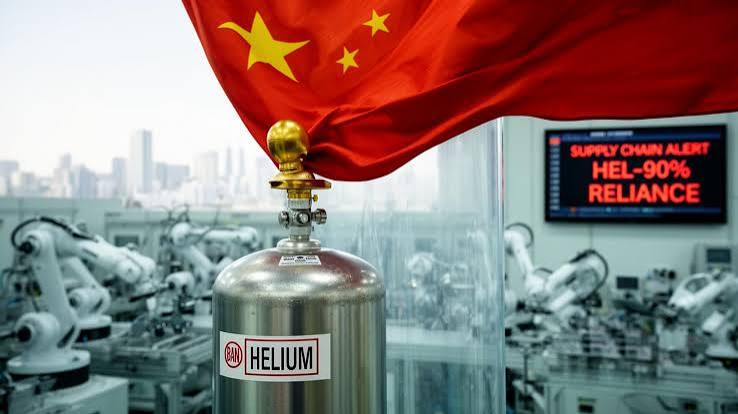
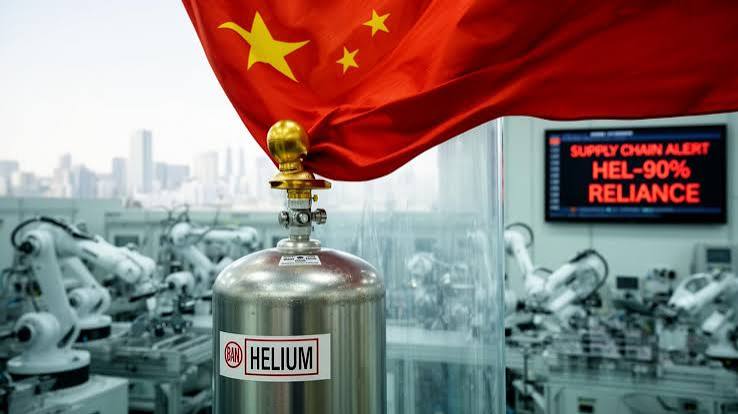
China’s temporary suspension of helium exports on July 10, 2026 introduces an important new consideration for chemical trade compliance programmes. According to Associated Press reporting, the measure was introduced under China’s Foreign Trade Law as escalating conflict in Iran tightened global helium availability. Helium is essential for semiconductor fabrication, magnetic resonance imaging, aerospace systems, scientific research, fibre-optic manufacturing, leak detection, and other advanced industrial applications. The decision therefore affects a product whose commercial importance is much greater than its relatively small traded volume might suggest.
The restriction should be interpreted carefully. China produces less helium than the United States, Qatar, and Russia and remains dependent on imported supply, including material connected to Qatar’s natural-gas and LNG industry. Available reporting indicates that the export halt is intended primarily to preserve supply for Chinese domestic users, particularly semiconductor manufacturers, during an international shortage. It may still have geopolitical and commercial consequences, but there is currently insufficient evidence to describe it conclusively as a deliberate attempt to use helium exports as diplomatic leverage.
This distinction does not reduce the importance of the policy. Traditional chemical trade compliance systems often concentrate on import tariffs, anti-dumping duties, sanctions, customs classification, and restricted-party screening. The helium decision demonstrates that governments can also restrict the outward movement of strategically important chemical inputs when domestic availability becomes threatened. A material can remain legally importable in the destination market, commercially contracted, and technically approved, yet still become unavailable because the exporting jurisdiction introduces a temporary prohibition, licence requirement, quota, or domestic-priority rule.
The measure also follows a wider international pattern in which critical resources and industrial inputs are increasingly managed through export controls. China has already developed extensive controls around selected strategic minerals and rare-earth products, while Russia introduced helium export restrictions earlier in 2026 amid the same global shortage. These developments show that trade policy risk is expanding beyond traditional metals and dual-use technologies into gases, feedstocks, and other specialised industrial materials.
Why Specialty-Gas Procurement Requires an Export-Control Risk Framework
For procurement professionals, the first lesson is that supplier qualification should include the exporting country’s legal authority to restrict supply. A long-term contract does not eliminate sovereign intervention risk. Buyers should identify whether the product is subject to export licensing, emergency domestic-allocation powers, strategic-reserve rules, sanctions, or national-security controls in the country of origin. Contracts should address export-permit responsibility, regulatory-change notification, allocation during government restrictions, alternative origin rights, force majeure treatment, and access to substitute production sites.
Helium requires particular attention because global supply is geographically concentrated and closely linked to natural-gas processing infrastructure. A disruption affecting LNG production in one region, combined with export controls in another, can create a compound shortage even where no single country dominates the market. Buyers in semiconductor, healthcare, aerospace, and specialty-gas distribution should therefore assess source concentration at the molecule level rather than relying only on the number of contracted distributors. Several distributors may ultimately obtain product from the same upstream producing country or liquefaction facility.
The same analytical framework should be extended cautiously to other specialty gases, including neon, krypton, and xenon. China’s helium action does not prove that these gases are already subject to equivalent controls, nor that restrictions are imminent. It does, however, demonstrate that industrial gases can fall within emergency trade-policy measures when governments consider them strategically important. Procurement teams should therefore classify specialty gases as potentially export-control-sensitive inputs and monitor origin-country policy, production concentration, purification capacity, storage limitations, and end-use restrictions accordingly.
Trade compliance teams should also build an export-control register alongside existing tariff and anti-dumping databases. The register should record the exporting jurisdiction, responsible authority, legal basis for controls, licence requirements, effective date, duration, exemptions, end-use restrictions, re-export limitations, and supplier confirmation status. Because measures can be introduced quickly, procurement, legal, logistics, and operations teams need a common escalation procedure that identifies affected purchase orders and inventory exposure as soon as a policy change is announced.
For helium buyers, immediate action should include confirming whether contracted shipments are physically outside China, checking whether export documentation has already been approved, identifying alternative supply from the United States or other available origins, reviewing on-site inventory, and prioritising critical applications. Organisations should also determine whether helium recovery, recycling, purification, or reduced-consumption technologies can lower dependence on replacement supply. These measures will not eliminate market exposure, but they can reduce the operational impact of sudden export restrictions.
China’s July 10 decision is therefore significant less because China controls the global helium market and more because it establishes a clear compliance precedent. Specialty industrial gases can be subjected to rapid export intervention when national supply security and strategic manufacturing priorities are involved. Chemical trade compliance programmes that monitor only the cost of importing materials are incomplete. Modern frameworks must also evaluate whether suppliers remain legally permitted to export them.
Looking for specialty-gas trade compliance intelligence? Add export licensing, domestic-allocation powers, origin concentration, and regulatory-change clauses to procurement risk assessments rather than relying only on tariffs and import controls.