China's Pivot to Regional Swing Supplier for Chemicals
For years, China was the buyer every styrene and methanol exporter built strategy around. In 2026, that relationship flipped. China has pivoted from its traditional role as a net importer to a regional swing supplier for both chemicals, a shift with real consequences for anyone who used to count on Chinese demand rather than Chinese supply.
The Styrene Reversal Has Been Building for Years
China's styrene story is less a sudden 2026 event and more the culmination of a decade long capacity build-out finally tipping the balance. Twenty years ago, China accounted for only about 6 percent of global styrene demand. Today it makes up almost half of total global demand, and its production capacity has grown even faster than that demand.
The scale of that expansion is significant. A wave of new plants has put over half of the world's total styrene capacity inside China, driven by a deliberate strategy to reduce import reliance, secure key chemicals for domestic factories and keep more value inside the country's own supply chain.
The trade flow consequences arrived quickly once capacity caught up with demand. At their peak, Chinese styrene imports made up almost 14 percent of global demand, with exporters in South Korea, Taiwan, the Middle East and parts of Europe depending on China as their primary market. As Chinese production ramped up, that import need dropped fast, leaving producers that once sold mainly into China searching for new buyers.
By the first quarter of 2026, China's styrene exports reached 114,800 tonnes, flowing primarily to South Korea, India and Europe. That volume marks a genuine role reversal rather than a temporary export surplus.
Methanol's Shift Has a More Immediate Trigger
China's methanol pivot has moved faster and is tied more directly to the 2026 Strait of Hormuz disruption. Iran normally supplies around half of China's total annual methanol imports, and that flow has been sharply curtailed since the conflict began.
Rather than facing a supply crisis, China leaned on its inland production base. Domestic methanol operating rates have risen sharply since the disruption started, and Chinese market participants have remained broadly unconcerned about import availability even as coastal inventories have declined below the typical range of 900,000 to 1.1 million tonnes.
Supply from outside the Gulf has helped keep the picture balanced. Regular trade flows from Trinidad and Tobago, Southeast Asia, Chile, Russia, Oman and Venezuela have supported China's methanol fundamentals in the absence of Iranian volumes, though market watchers continue to monitor whether depleting coastal stocks will eventually constrain how much spot cargo China can keep exporting into the region.
The Broader Export Surge Behind Both Stories
Styrene and methanol are not isolated cases. China's overall commodity chemicals and plastics exports have been climbing sharply through 2026, with May volumes hitting a record of about 6.2 million tonnes, up 6 percent from April alone. Exports rose 43 percent year on year between March and May 2026, led by polypropylene, ethylene glycols and styrene, with polyethylene, particularly linear low density grades, adding further momentum.
China's feedstock flexibility helps explain why it has been able to swing into an exporter role while much of the rest of Asia has struggled with Middle East supply disruption. Unlike most regional producers, who rely heavily on naphtha imported from the Middle East, China draws on a more diversified feedstock slate that includes domestic coal, along with imported ethane, LPG, methanol and naphtha. That diversification gave Chinese producers more room to keep running, and exporting, while Gulf origin naphtha flows tightened elsewhere.
What This Means for Buyers Across Asia and Beyond
For traders and buyers who built sourcing strategies around China as a demand center, this shift changes the competitive landscape in a few concrete ways.
China is now a direct competitor in some export markets. Producers in South Korea, Taiwan, the Middle East and Europe that once relied on Chinese demand now find Chinese material competing for the same customers in India, Europe and elsewhere.
Pricing power has shifted with the trade flow reversal. As China has moved from a minor player to a key price influencer in styrene specifically, its export decisions now carry more weight in setting regional price direction than they did even a few years ago.
The methanol shift may prove more reversible than the styrene shift. China's styrene export role reflects structural capacity investment, while its methanol export behavior is more directly tied to the ongoing Hormuz disruption and could shift back if Iranian supply normalizes.
Depleting coastal methanol stocks are worth monitoring. If China's coastal inventories continue falling, the volume of spot methanol cargo available for export could tighten even without a change in the underlying Hormuz situation.
Feedstock diversification is a genuine competitive advantage. Buyers evaluating supplier resilience during future Middle East disruptions should note that China's varied feedstock base gives it more flexibility than producers dependent on a single import route.
Reassessing China's Role in Global Chemical Trade
China's move from net importer to regional swing supplier for styrene and methanol reflects two different forces arriving at a similar outcome. Styrene reflects a long planned capacity strategy finally reaching critical mass, while methanol reflects a faster adaptation to a geopolitical shock. Buyers and producers across Asia should treat China less as a predictable demand center and more as an active, sometimes unpredictable, supply competitor going forward. Ready to source styrene monomer from verified global suppliers? Explore competitive offers on our platform today.
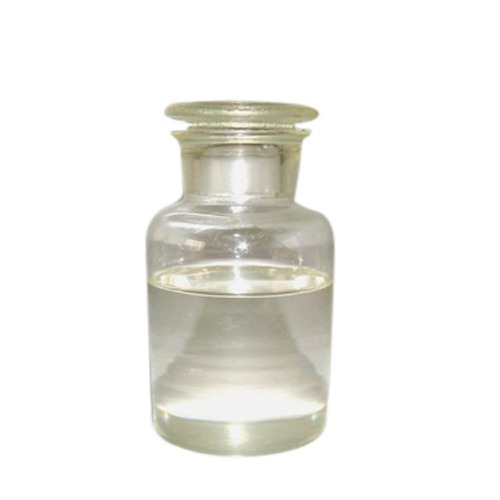
Styrene Monomer
Found this useful?