Ecolab's $1.8 billion acquisition of Ovivo's electronics water division marks one of the company's most significant strategic investments in recent years. While the acquisition targets the fast growing semiconductor industry, its implications extend well beyond chip manufacturing. Food producers, ingredient suppliers and procurement professionals who rely on Ecolab for water treatment, sanitation and hygiene services should pay close attention to this shift.
The transaction reflects a broader trend in industrial water management. As artificial intelligence drives demand for advanced semiconductor production and data center expansion, companies with expertise in high performance water technologies are becoming increasingly valuable. For food manufacturers, the acquisition raises important questions about future innovation, supplier priorities and opportunities created by cross industry technology transfer.
Why Ecolab Is Expanding Beyond Traditional Markets
For decades, Ecolab built its reputation by providing water treatment, cleaning and food safety solutions across food processing, hospitality and healthcare. These industries continue to represent a substantial part of its business.
However, semiconductor manufacturing presents a different type of opportunity. Modern chip fabrication plants consume enormous volumes of highly purified water during production. Every stage of semiconductor manufacturing demands exceptional water quality because even microscopic contaminants can damage delicate electronic components.
The rapid expansion of artificial intelligence infrastructure has accelerated investment in semiconductor fabrication facilities around the world. As new fabrication plants come online, demand for advanced water purification systems continues to increase, creating an attractive growth market for companies with expertise in industrial water management.
Understanding Ultrapure Water
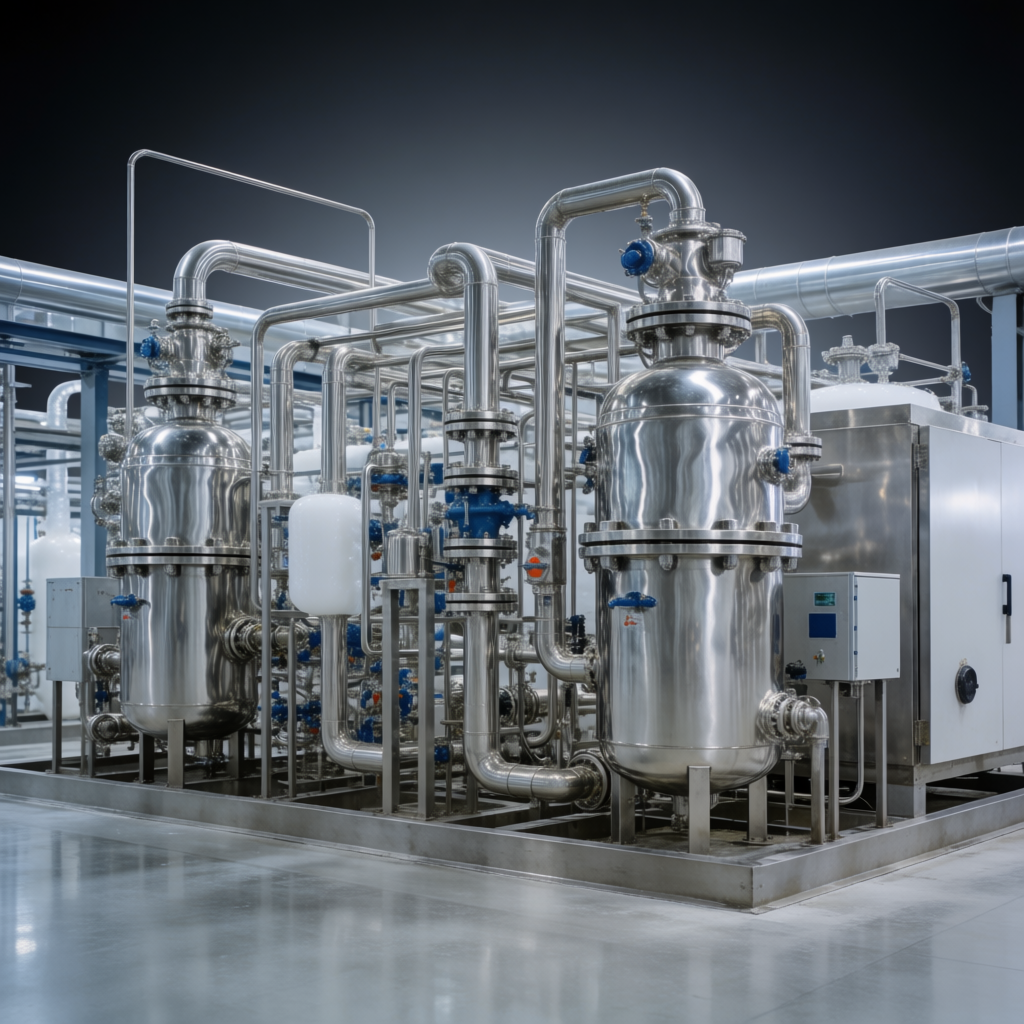
Ultrapure water is among the cleanest forms of water produced in industrial applications. Manufacturers remove dissolved minerals, organic compounds, bacteria, particles and dissolved gases until contamination reaches extremely low levels.
Unlike ordinary treated water, ultrapure water must consistently meet rigorous quality standards throughout the production process.
Its characteristics include:
Extremely low levels of dissolved solids that reduce the risk of product defects.
Near complete removal of microorganisms that could interfere with precision manufacturing.
Minimal organic contamination that protects sensitive production equipment.
Stable water chemistry that supports highly controlled manufacturing environments.
Producing this level of purity requires sophisticated treatment technologies including advanced filtration, reverse osmosis, ion exchange, ultraviolet treatment and continuous monitoring systems.
Why Ovivo's Electronics Water Business Matters
Ovivo has established itself as a specialist in water treatment technologies designed specifically for semiconductor manufacturing. Its electronics division focuses on engineering systems capable of producing the ultrapure water required by leading chip manufacturers.
By acquiring this business, Ecolab gains more than additional revenue. It also acquires technical expertise, intellectual property and customer relationships within one of the world's fastest growing industrial sectors.
The acquisition aligns with several long term market drivers:
Expanding artificial intelligence applications require greater semiconductor production capacity.
Governments continue investing in domestic chip manufacturing to strengthen supply chain resilience.
Data center construction increases demand for advanced electronic components.
Water efficiency has become a competitive priority for semiconductor manufacturers facing environmental regulations and rising operating costs.
These trends position ultrapure water technologies as an increasingly valuable industrial capability.
How Food Manufacturers Should View This Acquisition
At first glance, semiconductor manufacturing and food production appear to have little in common. Yet both industries depend heavily on effective water management, sanitation and process reliability.
Food manufacturers already rely on Ecolab for services such as:
Water treatment programs that improve production efficiency.
Cleaning and sanitation chemicals that maintain food safety standards.
Process optimization that reduces water and energy consumption.
Monitoring systems that help facilities meet regulatory requirements.
As Ecolab expands its capabilities in advanced water purification, some of the engineering knowledge developed for semiconductor applications may eventually strengthen technologies used in food processing.
Highly efficient filtration systems, digital monitoring platforms and predictive maintenance tools developed for electronics manufacturing could improve industrial water management across multiple sectors.
Supply Chain Implications for Food Ingredient Buyers
Although Ecolab is entering a new market, food ingredient procurement teams should not assume the company will shift its attention away from food manufacturing. Instead, the acquisition demonstrates a strategy to diversify revenue while expanding its expertise in advanced water technologies.
Procurement managers should monitor several areas over the coming years:
Investment in research and development. A larger technology portfolio could accelerate innovation in water treatment products used by food manufacturers.
Digital water management. Semiconductor facilities rely heavily on real time monitoring and predictive maintenance. Similar digital capabilities could become more common in food processing plants.
Resource allocation. Buyers should watch whether Ecolab maintains its strong service levels in food manufacturing while expanding into higher growth industrial sectors.
Sustainability initiatives. Water recycling and efficiency technologies developed for semiconductor customers may create new opportunities for food processors seeking to reduce water consumption.
The Growing Value of Advanced Water Treatment
Water has become one of the most strategically important resources across manufacturing industries. Companies face increasing pressure to reduce consumption, improve recycling rates and comply with stricter environmental regulations.
Advanced treatment technologies help manufacturers achieve several business objectives:
Reduce operating costs through improved water recovery.
Increase equipment reliability by minimizing scaling and contamination.
Improve product quality through consistent process conditions.
Support sustainability targets by lowering freshwater demand.
These priorities apply to both semiconductor fabrication plants and food production facilities, even though the required water quality differs significantly.
The acquisition reinforces the idea that water treatment is evolving from a support function into a competitive advantage.
Could Semiconductor Innovation Benefit Food Processing?
Technology developed for one industry often finds applications in another. Semiconductor manufacturing has historically driven advances in automation, sensors and precision engineering that later spread across other industrial sectors.
The same pattern could emerge with ultrapure water technologies.
Potential areas where food manufacturers could benefit include:
More accurate water quality monitoring using advanced sensor technology.
Improved membrane filtration systems with longer operating life.
Smarter chemical dosing systems that reduce waste while maintaining performance.
Enhanced predictive maintenance that identifies problems before production interruptions occur.
These innovations could improve operational efficiency while supporting stricter food safety and sustainability goals.
What This Means for Global Procurement Strategies
Large multinational suppliers increasingly serve multiple industries rather than focusing on a single market. This diversification can strengthen long term financial performance while creating opportunities for technology sharing.
For procurement professionals, the acquisition highlights several important considerations:
Review strategic suppliers regularly to understand how corporate investments may affect future products and services.
Evaluate suppliers based on their innovation capabilities as well as pricing.
Monitor developments in industrial water technology because they may influence future operating costs.
Maintain open communication with key suppliers regarding long term investment priorities and service commitments.
Understanding these broader business strategies allows procurement teams to make more informed sourcing decisions instead of reacting only to short term price changes.
The Bottom Line for Procurement Teams
Ecolab's acquisition of Ovivo's electronics water division represents far more than an expansion into semiconductor manufacturing. It reflects the growing importance of advanced water treatment technologies as industries pursue greater efficiency, sustainability and operational resilience.
For food manufacturers, the immediate impact is unlikely to be major operational change. However, the longer term outlook is more significant. Investments driven by the semiconductor industry may accelerate innovation in filtration, monitoring and water management solutions that eventually benefit food production as well.
Procurement professionals should view this acquisition as an indicator of where industrial water technology is heading. Companies that continue investing in innovation across multiple sectors are often better positioned to deliver improved solutions over time.