EU End of Life Vehicle Regulation and plastics demand
The European Union introduces strict new circularity rules for the automotive sector this summer. The EU End of Life Vehicle Regulation takes effect on August 13, 2026 and immediately alters how manufacturers source polymers for car interiors, bumpers and under the hood components.
This legislation forces automakers to integrate significant volumes of recycled plastics into new vehicle production. Procurement managers and chemical traders now scramble to secure compliant material before the deadline arrives.
The mandate transforms end of life scrap from a disposal problem into a critical feedstock. Commodity plastics markets across Europe and beyond will feel the ripple effects as virgin resin demand shifts and recycled premiums harden.
Buyers of polypropylene and engineering polymers must adapt their contracts to meet these new legal thresholds. The sections below detail the exact requirements and the resulting supply chain shocks.
The EU End of Life Vehicle Regulation Explained
The updated legislation replaces older directives and sets ambitious circular economy goals for the auto industry. Lawmakers designed the framework to keep vehicle materials inside the European economy rather than sending them to landfills or export markets.
Automakers must now track the material composition of every component they install. This digital product passport requirement forces tier one suppliers to declare the exact origin and recycled content of their plastic parts.
The regulation covers passenger cars, vans and heavy commercial vehicles. Manufacturers face strict penalties if they fail to meet the material recovery and recycled content thresholds by the specified compliance dates.
Mandatory Recycled Content Targets for Auto Plastics
The law establishes clear percentage targets for post consumer recycled plastics in new vehicles. Manufacturers must incorporate specific minimum thresholds into new car production by 2030.
Closed loop target: Automakers must use 25 percent recycled plastic derived specifically from end of life vehicles.
Broad source target: A separate rule requires 25 percent of all plastic used in new vehicles to come from any post consumer recycled source.
These targets create immediate demand for high quality recycled resins. Chemical traders now see automotive buyers competing directly with packaging companies for limited supplies of premium recycled polypropylene and recycled polyethylene.
How the 2026 Circularity Law Disrupts Commodity Plastics
The August 13, 2026 effective date triggers a massive shift in polymer procurement strategies. Virgin resin producers face declining volume commitments from their largest automotive clients as buyers pivot to recycled alternatives.
This pivot compresses margins for standard virgin commodities. Producers of basic injection moulding grades must lower prices to retain market share outside the automotive sector.
Meanwhile, recycled polymer grades command significant premiums. The price gap between virgin and recycled material widens as automakers pay top dollar to secure the certified tonnages they need for legal compliance.
Polypropylene and Polyamide Supply Chain Shifts
Polypropylene dominates automotive plastic use, appearing in bumpers, dashboards and door panels. The new rules force compounders to blend high percentages of recycled polypropylene into these critical structural and aesthetic parts.
Engineering plastics like polyamide face even tighter constraints. Recycled polyamide suitable for under the hood applications requires complex chemical recycling processes, and current European capacity falls far short of projected automotive demand.
Supply chains must restructure to handle this shift. Compounders invest heavily in local sorting and washing facilities to guarantee the purity of their recycled feedstock.
Chemical Recycling Versus Mechanical Recycling in Automotive
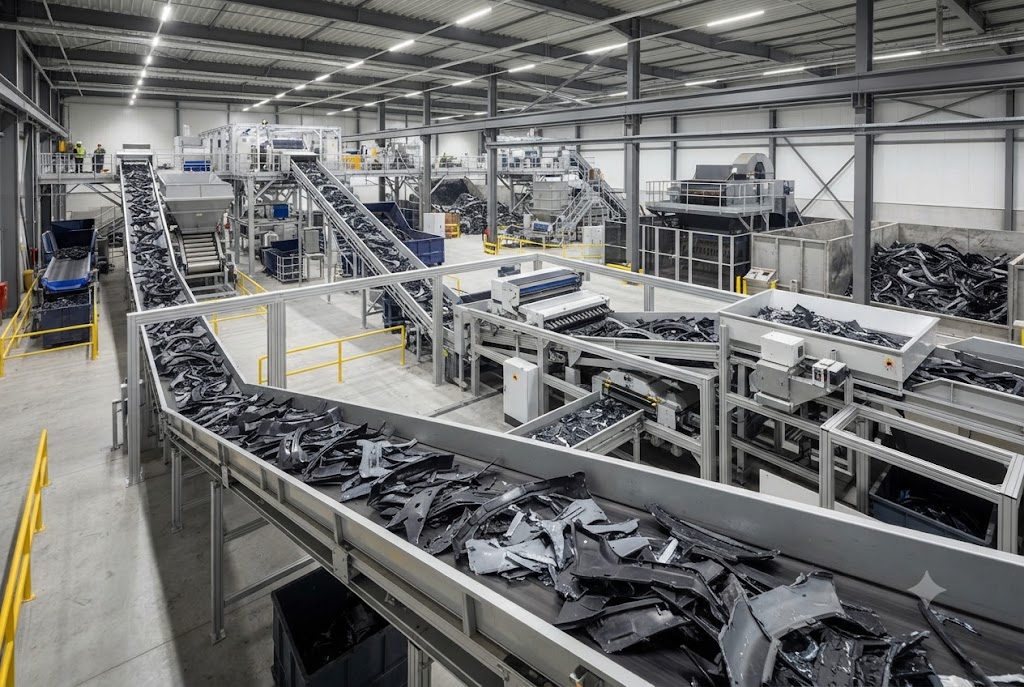
Mechanical recycling handles the bulk of current automotive plastic recovery. Shredders wash and melt down sorted polypropylene and polyethylene scrap to produce pellets for non critical interior components.
Chemical recycling steps in where mechanical methods fail. Automakers need virgin like quality for exterior panels and safety components, and depolymerisation or pyrolysis processes break plastic waste down to its molecular building blocks to achieve this purity.
Investment flows heavily toward chemical recycling plants across Europe. However, these facilities take years to build and commission, leaving a near term supply gap that mechanical recyclers must stretch to fill.
The Role of Digital Product Passports in Traceability
The new legislation mandates a digital product passport for every vehicle sold in the bloc. This digital record tracks the exact material composition, recycled content percentage and disassembly instructions for every plastic component.
Tier one suppliers must upload this data to a centralised European database before the vehicle leaves the assembly line. Auditors access this information during end of life dismantling to verify that the original manufacturer met all circularity targets.
Chemical traders and resin producers must integrate their own batch data into these digital systems. This requirement forces the entire supply chain to adopt blockchain or secure cloud platforms to maintain an unbroken chain of custody.
Companies that fail to maintain accurate digital records face severe market access restrictions. Automakers will simply drop suppliers who cannot provide instantaneous verification of their recycled polymer claims.
The Knock on Effect for Virgin Polymer Pricing
Virgin polymer pricing decouples from traditional feedstock costs in the automotive segment. Buyers accept higher prices for certified recycled material, which pulls overall market averages upward even when crude oil prices soften.
Producers of virgin resin respond by launching their own certified mass balance products. They blend recycled or bio based feedstocks into their existing cracker networks to offer compliant grades without building entirely new recycling plants.
This strategy blurs the line between virgin and recycled markets. Procurement teams must scrutinise mass balance certificates carefully to ensure the documentation satisfies strict automotive auditors.
Regional Market Deep Dive for Recycled Polymers
Western Europe leads the charge in building advanced sorting and washing infrastructure. Germany and France host the largest mechanical recycling hubs, and local compounders secure long term feedstock agreements directly with dismantling facilities.
Eastern Europe provides cost effective compounding services for the broader region. Manufacturers in Poland and the Czech Republic blend imported recycled pellets with virgin resin to meet specific automotive specifications at competitive rates.
Southern Europe focuses heavily on chemical recycling investments. Italy and Spain attract venture capital for pyrolysis plants that process mixed plastic waste into naphtha equivalents for virgin polymer production.
The United Kingdom operates outside the direct EU framework but aligns closely with the circularity goals. British automakers adopt similar recycled content targets voluntarily to maintain seamless trade with their continental assembly plants.
What Procurement Teams Must Do Before August 2026
Procurement managers need to audit their current polymer supply chains immediately. Identify every plastic component in your bill of materials and determine the current recycled content percentage for each part.
Engage directly with mechanical and chemical recyclers to secure long term allocation agreements. Spot market purchases will not provide the consistent quality and certified volumes that automotive compliance demands.
Work closely with your compounders to test new recycled blends in your specific moulding tools. Processing parameters change when you introduce high percentages of post consumer resin, and early trials prevent costly production delays later.
The transition to circular automotive manufacturing fundamentally rewrites the rules of polymer sourcing. Ready to source high density polyethylene from verified global suppliers? Explore competitive offers on our platform today.
High Density Polyethylene (HDPE)
Found this useful?